PHOTO
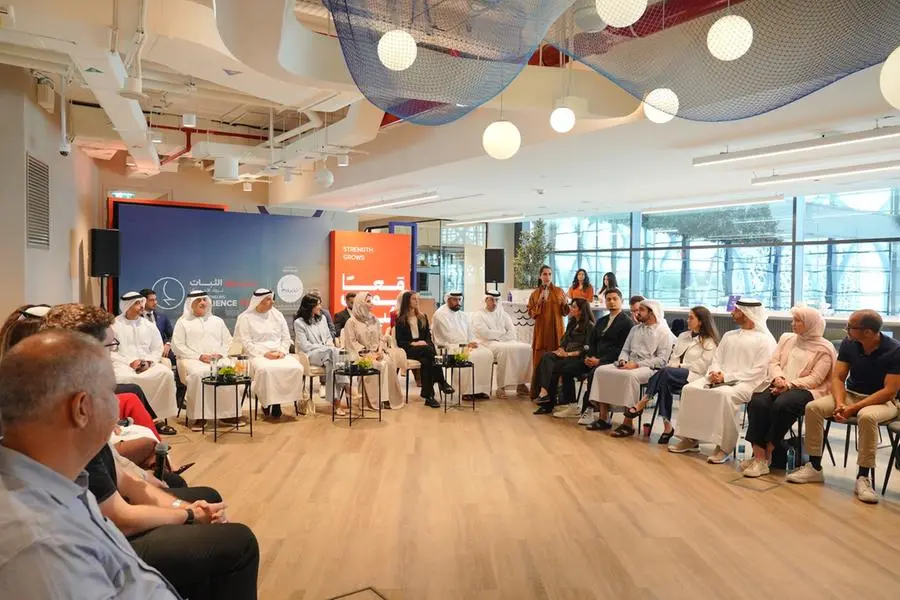
Sharjah, Building on the vision of Her Highness Sheikha Bodour bint Sultan Al Qasimi, Chairperson of the Sharjah Entrepreneurship Center (Sheraa), behind the launch of the “Entrepreneurs Resilience Fund”, a targeted fund designed to support startups and SMEs in sustaining their operations and strengthening long-term stability, Sheraa convened a Entrepreneurs Resilience Roundtable, bringing together 13 startup founders to exchange perspectives, insights, and experiences on building and sustaining businesses. The discussion also explored how companies continue to adapt, evolve, and grow amid shifting market conditions.
Participants highlighted that sustaining and stabilizing entrepreneurial ventures requires a set of deliberate actions and enabling factors, including maintaining close connections with customers and distribution channels, establishing clear foundations to guide decision-making, and accelerating innovation by involving users early to ensure practical, real-world application of technology. They also emphasized the importance of investing in emerging talent and leveraging supportive ecosystems that empower companies and strengthen their confidence as they continue to grow.
The Entrepreneurs Resilience Roundtable was attended by H.E. Abdulaziz Al Nuaimi, Assistant Undersecretary for the Entrepreneurship Sector and Regulation of Economic Affairs at the Ministry of Economy and Tourism; H.E. Khaled Al Huraimel, Group Chief Executive Officer of BEEAH Group; H.E. Ahmed Obaid Al Qaseer, Chief Executive Officer of the Sharjah Investment and Development Authority (Shurooq); and Majed Haremel Al Shamsi, Executive Director of Corporate Support at the Sharjah Electricity, Water and Gas Authority (SEWA).
An ecosystem that sustains continuity
H.E. Sara Abdelaziz Al Nuaimi, CEO of Sheraa, said: “Strong entrepreneurial ecosystems are defined by their ability to respond collectively and decisively. What we are seeing today is a continued evolution in how businesses operate and grow. The Entrepreneurs Resilience Fund reflects our commitment to enabling founders with the right support at the right time, ensuring they remain focused, stable, and well-positioned for long-term value creation.”
She added: “At Sheraa, we remain committed to enabling founders with the right support at the right time, while reinforcing an environment that allows businesses to adapt, grow, and continue contributing to Sharjah’s economic development and the UAE’s broader innovation landscape.”
A curated group of founders and entrepreneurs
The Entrepreneurs Resilience Roundtable brought together Anam Khalid and Wajdan Gul (Squatwolf), Nadine Mezhar (Sarwa), Faiza Bouguessa (Bouguessa), Ghizlan Guenez (F-Force), Walid Shihabi (Keyper), Sahar Karoubi (Bambuyu), Ali Al Bastaki (Racks), Harith Al Midfa (Recovery Island), Sanad Yaghi (DTEK.ai), William White (AiREV), Ruba Al Nashash (Pulse IoT), Ahmad Almannaee (CrystalClear WaterSports), creating a space for shared reflection across sectors and business models.
Business models, customer insight, and clear foundations
Wajdan Gul, Co-founder of Squatwolf, reflected on how business models continue to evolve over time: “We’ve seen how different moments shape how you operate. What matters is staying responsive and making the right decisions based on where your business is today.”
Building on this, Sahar Karoubi, Founder of Bambuyu, emphasized the importance of staying closely connected to customers and channels, noting that “it comes down to understanding your customer and making sure your approach continues to reflect how they engage with your product.”
From an operational perspective, founders highlighted the importance of having a clear foundation to guide decision-making. Ali Al Bastaki, Founder of Racks, said: “When you are clear on what you stand for, you are able to move forward with focus. Our values have shaped how we make decisions and how we continue to grow.”
This operational discipline was also reflected in how founders adapted their models in practice, with a clear focus on continuity and efficiency. Reflecting on this, Faiza Bouguessa, Founder of Bouguessa, noted: “During that period, we had to rethink how we operated. We paused new collections, narrowed our focus to our bestsellers, and shifted production to our local workshop to maintain continuity. At the same time, we worked with what we had, reintroducing existing pieces into a more timeless offering and activating archive sales to support revenue. Throughout it all, our priority was to protect the core of the business and ensure the team remained supported.”
Accelerating innovation and emerging talent
William White, Head of Developer Relations at AiREV highlighted how early-stage innovation can be accelerated through direct engagement with future users. He explained that the company’s AI operating system, On Demand, has been operational since June 2024, with its development significantly advanced through hackathons and targeted campaigns. Reflecting on how the team continued to test and pilot the platform during the COVID-19 period, he pointed to collaborations with universities across the region, where students actively built on the system.
Supportive ecosystems, dialogue, and collaboration
The conversation also underscored the role of strong ecosystems in shaping how founders respond to periods of uncertainty. Ghizlan Guenez, Founder of F-Force, noted that while resilience is often seen as a defining trait, it is not, on its own, what enables businesses to navigate challenging conditions. Drawing on her experience working closely with entrepreneurs, she highlighted that the real differentiator lies in the strength of the environment surrounding the founder, including access to a trusted community of peers, mentors who provide constructive feedback, and networks that offer both strategic direction and access to capital. She added: “What makes a real difference is the strength of the environment around the founder, the community, the exchange of perspectives, and access to the right networks.”
This perspective was further reflected by founders operating in sectors closely tied to broader economic development. Ruba Al Nashash, Co-founder of Pulse IoT, highlighted the importance of structured, sector-specific collaboration as a practical enabler of resilience, particularly within construction and infrastructure. She noted that creating dedicated platforms for industry stakeholders to address shared challenges and exchange practical insights enables companies to respond more effectively to evolving market conditions, especially in areas such as supply chain pressures and the rising cost of construction materials.
Across the discussion, a shared theme emerged: businesses continue to build with intention, strengthening their foundations while identifying new opportunities for growth. These insights highlight the importance of support models that are closely aligned with how businesses operate in practice.
Entrepreneurs Resilience Fund: A flagship initiative
In this context, the Sharjah Entrepreneurship Center announced the launch of the Entrepreneurs Resilience Fund, a targeted initiative designed to support startups and SMEs in sustaining operations and strengthening stability across sectors critical to national resilience.
Valued at AED 5 million, the Fund reflects a structured approach that supports both immediate business needs and long-term continuity. It focuses on businesses operating in manufacturing, food security, healthcare, and essential supply chains, offering financial and non-financial support, including operational guidance, marketing opportunities, access to market opportunities, and connections to Sheraa’s ecosystem of mentors, partners, and collaborators.
Through this initiative, Sheraa reinforces its role in supporting startups and SMEs, ensuring businesses remain well-positioned to sustain operations and contribute to Sharjah’s economic development and the UAE’s broader innovation landscape.