PHOTO
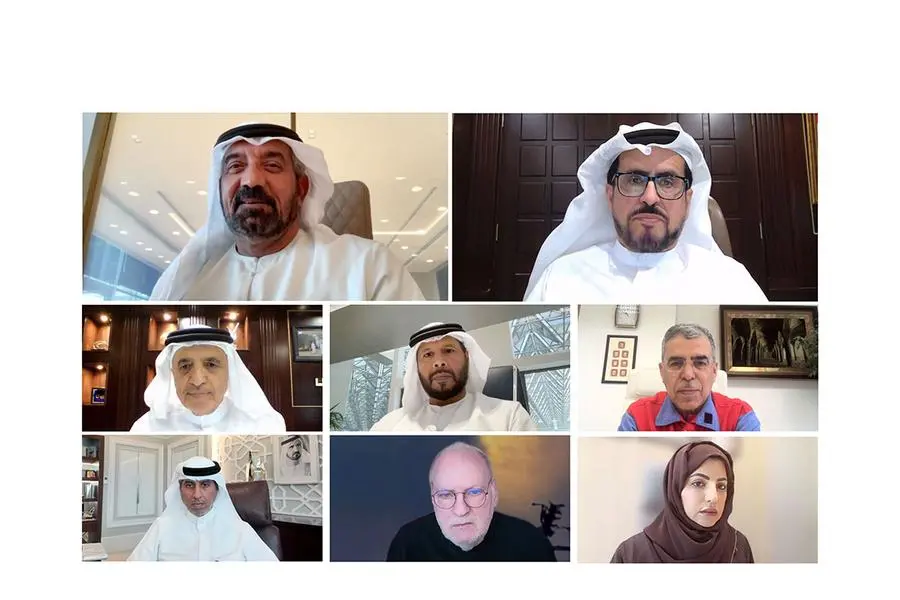
Dubai, UAE: HH Sheikh Ahmed bin Saeed Al Maktoum, Chairman of the Dubai Supreme Council of Energy, chaired the council’s 93rd meeting, which was held virtually in the presence of HE Saeed Mohammed Al Tayer, Vice Chairman of the council.
The meeting was also attended by HE Ahmed Buti Al Muhairbi, Secretary General of the council, and council members HE Marwan bin Ghalita, Director General of Dubai Municipality; HE Abdulla bin Kalban, Managing Director of Emirates Global Aluminium (EGA); HE Hussain Lootah, CEO of Emirates National Oil Company (ENOC); Juan-Pablo Freile, General Manager of Dubai Petroleum and Dubai Supply Authority (DUSUP); and Muna Alosaimi, CEO of the Strategy and Corporate Governance Sector at the Dubai Roads and Transport Authority (RTA).
The council reviewed Dubai’s strategy to expand retail fuel outlets and discussed several strategic initiatives aimed at improving fuel services and ensuring smooth traffic flow at filling stations.
The meeting also reviewed the growing adoption of artificial intelligence (AI) by Dubai Electricity and Water Authority (DEWA) across its operations. Key initiatives highlighted included the development of the world’s first AI-powered gas turbine intelligent controller at the Jebel Ali Power Generation and Water Desalination Complex, as well as the coming launch of DEWA’s Virtual Engineer in June 2026, which is expected to further enhance efficiency and performance.
“In line with the vision and directives of His Highness Sheikh Mohammed bin Rashid Al Maktoum, Vice President and Prime Minister of the UAE and Ruler of Dubai, we continue to implement AI solutions across our pioneering projects such as the Jebel Ali Power Generation and Water Desalination Complex and the Mohammed bin Rashid Al Maktoum Solar Park to enhance energy and clean energy efficiency. This has helped to reduce expenses and increase the productivity and efficiency of the solar park, whose current production capacity stands at 3,860 megawatts, representing 21.5% of Dubai’s energy mix. Clean energy capacity is expected to rise to more than 36% of the energy mix by 2030, supporting the Dubai Clean Energy Strategy 2050 and the Dubai Net Zero Carbon Emissions Strategy 2050 to provide 100% of the emirate’s energy production capacity from clean sources by 2050,” said Al Tayer.
Al Muhairbi said: “The Dubai Supreme Council of Energy and ENOC are keen to take several measures that ensure the safety of fuelling operations across all fuel stations and improve vehicle movement.”