PHOTO
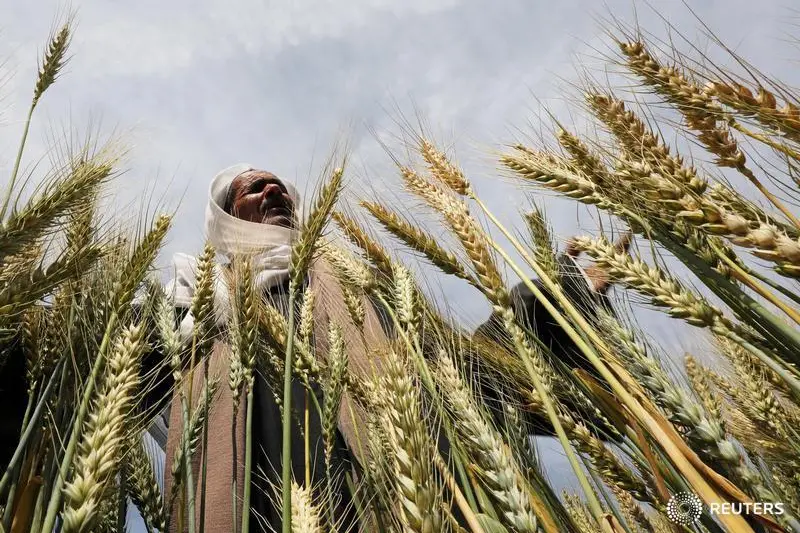
Chicago wheat rose on Wednesday, underpinned by bargain-buying after falling for the last three sessions to its lowest since late October on concerns over weak demand for U.S. supplies.
Soybean prices slid for a second session, although expectations of a trade deal between Washington and Beijing curbed losses.
The most-active Chicago Board of Trade wheat contract Wv1 had risen 0.4 percent to $4.91-3/4 a bushel by 0339 GMT, after dropping to its lowest since Oct. 26 at $4.88-1/2 a bushel in the last session.
The wheat market has lost more than 6 percent in the last three sessions of decline.
Soybeans Sv1 gave up 0.1 percent to $9.00 a bushel, while corn added 0.7 percent to $3.72-1/2 a bushel.
A lack of demand for U.S. wheat is pressuring prices. Instead of opting for U.S. wheat, Syria's General Establishment for Cereal Processing and Trade bought 200,000 tonnes of Black Sea-origin wheat in its latest international purchasing tender, a government source said.
Trading house Agrocorp secured a tender to supply 50,000 tonnes of wheat to Bangladesh, and is expected to draw grain from Russia to fulfil the deal, according to officials with the state grains buyer.
"The USDA published export inspections data that, no matter how forensically you cut it up, could only be described as weak in an absolute sense," said Tobin Gorey, director of agricultural strategy at Commonwealth Bank of Australia.
"Export inspections should be bouncing by now if the US is going to make inroads into its inventories."
The market is turning its attention on a tender issued by Egypt's General Authority for Supply Commodities, seeking an unspecified amount of wheat for shipment from April 5-15.
Hopes for a trade deal between Washington and Beijing are supporting U.S. soybean prices, although stiff competition from Brazil is limiting gains.
U.S. President Donald Trump said on Tuesday that trade talks with China were going well and suggested he was open to pushing off the deadline to complete negotiations, saying March 1 was not a "magical" date.
China is the world's biggest soybean importer while the United States is the second largest exporter.
The U.S. Department of Agriculture is expected to release its forecasts for U.S. 2019 corn, soybean and wheat plantings this week at its annual Outlook Forum.
© Reuters News 2019