PHOTO
It is being drawn up by the Supreme Council for Environment (SCE) in collaboration with the UK’s Centre for Environment Fisheries and Aquaculture Science (CEFAS).
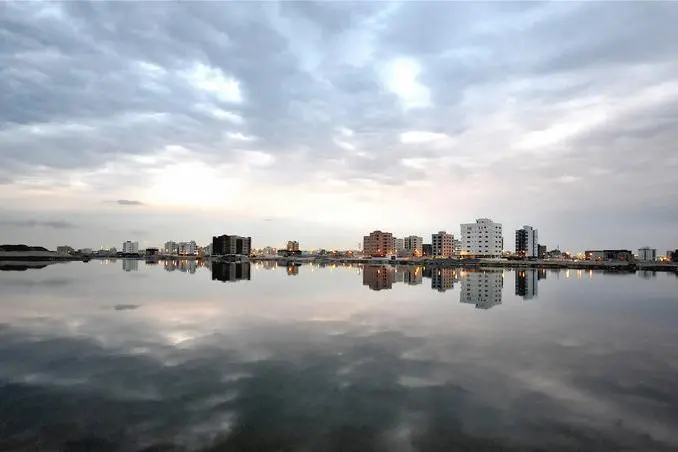
The aim is to control coastal development as part of a broader effort to improve the management of Bahrain’s marine environment.
Roadmap
CEFAS has been brought in to advise Bahraini environment officials on projects that promote sustainable practices.
“We want the marine space to be used economically and are developing a roadmap with the Supreme Council for Environment to develop its capacity and regulatory role,” said CEFAS Middle East science principal investigator Brett Lyons, who is based in Kuwait.
“This includes better managing the marine environment through zoning systems, developing regulations for environmental management and training programmes.”
The co-operation is linked to the UK-Gulf Marine Environment Partnership (UK-GMEP), which aims to help GCC countries address issues relating to climate change, as well as food and water security.
“We are working with the Supreme Council for Environment for the past three years and collaborating with them to share our expertise on food and water security,” said Mr Lyons
“The programme in Gulf states helps in the regulatory framework of the marine environment and addresses challenges specific to each country.”
In Bahrain the collaboration aims to establish environmental standards and revise a national marine environmental monitoring programme.
Mr Lyons explained that CEFAS aimed to help Bahrain draft regulations that promote biodiversity, while at the same time implementing spatial zoning policies on the coast.
Earmark
Such zoning would earmark certain areas for tourism projects, for example, while others might be set aside for industry.
“Bahrain and other Gulf countries have the potential to further develop their marine-based economies, but all face challenges maximising sustainable social and economic benefits,” said Mr Lyons.
“This is a key strategic goal as Bahrain relies heavily on the marine environment for food and water security.”
During a field survey in Bahrain, CEFAS focused on marine pollution and reviewed SCE monitoring data.
It stated that some areas have been impacted by pollution, but there also large areas of Bahrain’s marine environment that have not.
Meanwhile, Mr Lyons said a specific issue facing Bahrain was the drying up of freshwater reserves, adding that climate change was a challenge for the whole Gulf.
“We are seeing the environment is harsher and water temperature increasing,” he said.
“While we can do lots at a national level, there is also a need for trans-boundary co-operation between all countries that share the Gulf’s waters.”
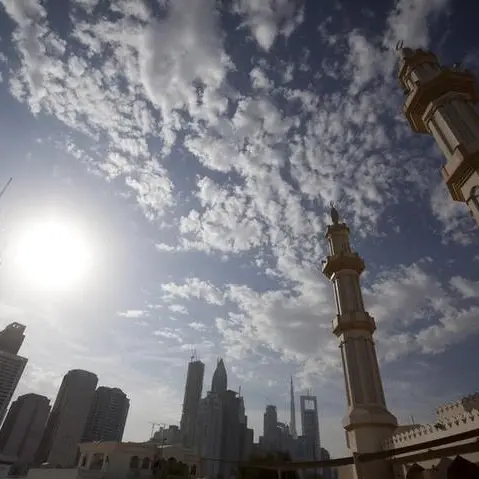
Rising temperatures are just one consequence of climate change, with Bahrain setting records for its hottest January, May, June, August, September and October during 2019.
This marks the continuation of a trend, which saw similar records previously broken in 2017 – for April, June, July, August, September, October and November – and last year for March and June.
Earlier this year, the International Labour Organisation (ILO) warned that Bahrain would be the Arab country second most affected by heat stress by 2030, resulting in a loss of working hours.
Stress
Working hours lost to heat stress in Bahrain’s agriculture and construction sectors are projected to be around 9.5pc by 2030, compared with 5.8pc in 1995.
Overall, Bahrain is predicted to lose 4.1pc of its working hours due to heat stress by 2030, which the report stated was equivalent to about 32,000 full-time jobs.
Meanwhile, the GDN reported in February that Bahrain was considering erecting coastal defences to prevent large-scale flooding.
The measure was being considered amid concerns about rising sea levels, which could leave around 10 per cent of Bahrain’s total land area submerged by 2050.
sandy@gdn.com.bh
© Copyright 2019 www.gdnonline.com
Copyright 2019 Al Hilal Publishing and Marketing Group Provided by SyndiGate Media Inc. (Syndigate.info).