PHOTO
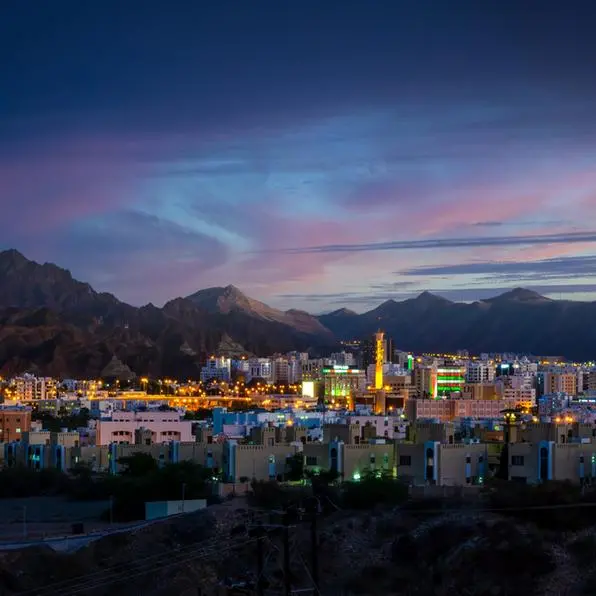
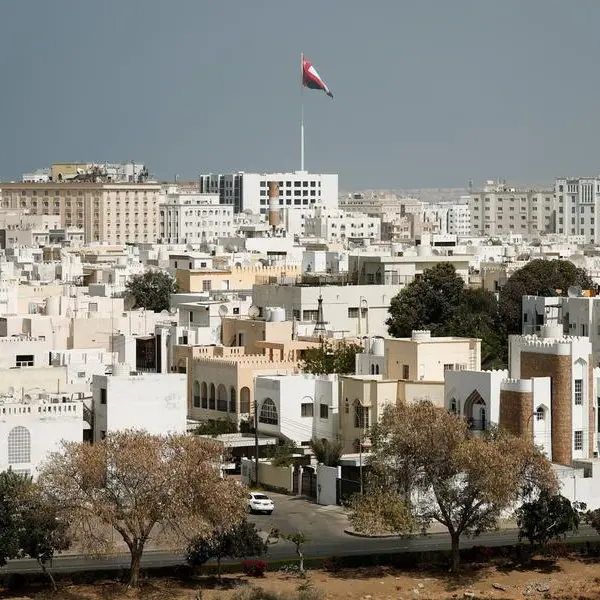
As Oman awaits the formal unveiling of the Muscat Metro within the coming months, following confirmation by Eng Said bin Hamoud al Maawali, Minister of Transport, Communications and Information Technology, under a new national transport tracking initiative, the country stands at a decisive moment. This is not merely the announcement of a transport project. It is a test of how Oman intends to deliver the ambitions of Oman Vision 2040 — through discipline, foresight and institutional maturity, or through costly trial and error.
The proposed network is ambitious and necessary: a 50-kilometre metro line with approximately 36 stations, linking Sultan Haitham City to Ruwi’s Central Business District, with critical interchanges at Muscat International Airport and the commercial hubs of Ghala and Al Khuwair. Yet ambition alone does not guarantee success. Around the world, mega rail projects have repeatedly demonstrated that failure is rarely caused by engineering limitations, but by governance failure.
Oman has a rare advantage: it can learn from the mistakes of others before breaking ground.
GOVERNANCE COMES FIRST: EXPERTISE MUST SIT WITH THE OWNER
Few infrastructure projects offer a clearer warning than the United Kingdom’s High Speed 2 (HS2). Initially conceived as a transformative national rail spine, HS2 is now on track to become the most expensive railway per kilometre ever built, with projected costs approaching £100 billion.
The primary driver of this escalation was not complexity, but institutional weakness. The British government lacked sufficient in-house technical capability and became heavily dependent on external consultants embedded within the project’s management structure. Many contractors operated under “cost-plus” contracts — arrangements that reward higher spending rather than efficiency.
As documented by the Financial Times, the incentive was simple: the more money spent, the more money earned.
The lesson for Muscat is clear. The Ministry of Transport, Communications and Information Technology must retain the intellectual ownership of the project. The “brain” of the metro cannot be outsourced.
Oman would be wise to study the Japanese model underpinning the Shinkansen network. In Japan, the Japan Railway Construction, Transport and Technology Agency (JRTT) operates as a technically competent public body responsible for route planning, cost estimation and rigorous design review. Contractors build — but they do not define scope, budgets, or strategy. This separation of authority is precisely what keeps costs under control.
For Muscat Metro to succeed, oversight bodies must have the technical strength to challenge contractors, not merely approve invoices.
PRAGMATISM OVER SYMBOLISM
HS2’s problems were compounded by a fixation on symbolic ambition. The project specified a design speed of 400 km/h — faster than any other European rail line — despite relatively short inter-city distances. This decision imposed extreme engineering requirements, forcing extensive tunnelling and long viaducts to maintain near-perfect alignment.
The result was spiralling cost with marginal public benefit.
The project also suffered from architectural excess. Structures such as the Colne Valley Viaduct were designed with thousands of unique, bespoke components — visually striking, but financially draining.
Muscat Metro must avoid this trap. It is not a cross-country bullet train. It is an urban mobility system whose primary objective is to prevent average traffic speeds in the capital from falling to a projected 27 km/h by 2030. Its success should be measured in reliability, capacity and affordability — not architectural spectacle.
A standardised, modular approach to station design would significantly reduce construction costs and timelines. Replicable engineering solutions are not a compromise; they are the hallmark of mature infrastructure systems.
Standardisation, however, need not mean uniformity. The Stockholm Metro offers a compelling example. Often described as the world’s longest art gallery, it uses consistent structural engineering while allowing artistic expression to define each station’s identity.
Muscat could adopt the same philosophy: standard structural shells enhanced by locally commissioned Omani art reflecting the identity of each wilayat — from the Al Hajar Mountains to the Frankincense Trail. This approach preserves cultural character while maintaining financial discipline.
DESIGN BEFORE CONSTRUCTION
Perhaps the most damaging decision in HS2 was political haste. Construction of the first phase was authorised when design maturity stood at just 4 per cent. The consequence was a cascade of design changes during construction — changes that become exponentially more expensive once concrete has been poured.
In this context, the deliberate pace taken so far with Muscat Metro may prove to be an asset rather than a liability. References by MoTCIT to feasibility studies initiated as early as 2024 suggest a recognition that early-stage planning is not delay, but risk management.
Time invested in design maturity is the highest-return investment in the lifecycle of any infrastructure project.
CONCLUSION
Muscat Metro is not simply a transport initiative; it is the backbone of a future-ready capital. Oman’s logistics sector has already attracted more than RO 3.4 billion in investment under the Tenth Five-Year Plan. The metro is poised to become the crown jewel of this transformation.
By rejecting the cost-plus culture that crippled HS2 and embracing the disciplined, technically led governance model exemplified by Japan, Oman can deliver a world-class metro that serves its people without burdening future generations. The United Kingdom has paid £100 billion to learn how not to build a railway. Muscat would be wise to learn the lesson — for free.
2026 © All right reserved for Oman Establishment for Press, Publication and Advertising (OEPPA) Provided by SyndiGate Media Inc. (Syndigate.info).