PHOTO
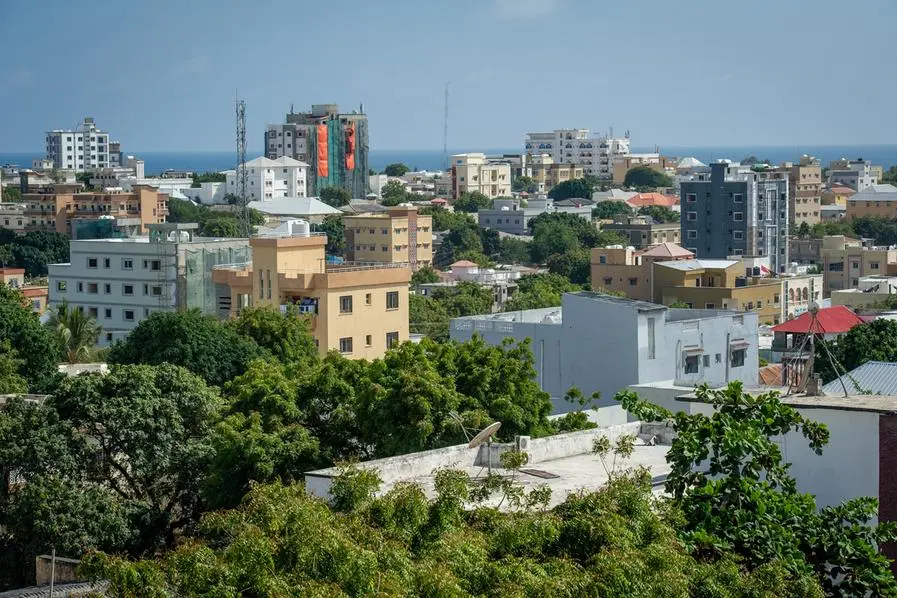
Turkish oil drilling ship Çağrı Bey was expected to dock at Mogadishu port this Friday as Somalia prepares to exploit and benefit from its oil and gas resources. Government officials are enthusiastic that the oil revenues will boost national coffers.
Petroleum and Mineral Resources Minister Dahir Shire Mohamed was upbeat this week, labelling the achievement historic.
Yet queries that have lingered over the exploitation deal have re-emerged, with commentators pointing out, once again, that it is lopsided, and the Turkish drillers could walk away with all the oil for a song.
Two years ago, Mogadishu signed an oil exploration deal with Ankara, seen in Somalia as a way to turn the oil and gas deposits into something viable by tapping Turkish expertise.
But the deal was controversial because it granted Türkiye extensive control over Somalia’s exploration. The TurkishPetroleum Corporation (TPAO) gained exclusive rights to explore and develop Somalia’s oil-rich territories. Somali officials have fought off criticism even as Ankara took steps to settle in the deal.
One commentator, Abdi Hassan, in an article titled “The New Scramble for the Horn: Is Turkey’s Partnership with Somalia a Strategic Alliance or Modern-Day Colonialism?” says by securing long-term control over Mogadishu’s seaport, international airport, maritime security and now the exploration of oil and gas, Türkiye “has effectively outsourced Somalia’s economic sovereignty to Ankara.”“The lack of transparency in these ‘closed-door’ deals suggests that Somalia’s natural wealth is being handed over in exchange for short-term political survival, trapping the nation in a cycle of debt and external dependency,” he writes.Çağrı Bey’s coming signals a major step, following the successful completion of seismic surveys last year by a Turkish research ship, Oruç Reis.
President Hassan Sheikh Mohamud is expected to launch the activities at the port of Mogadishu, and shed light on the beneficial aspects of Somalia maintaining an economic partnership with Türkiye. There are undertones that the whole project, as structured, is favouring the Turkish investors.
Which is why, earlier this week, Somalia’s State Minister for Foreign Affairs Ali Mohamed Omar alias Bal’ad stated that the oil drilling operation would strengthen Türkiye’s role as a “trusted long-term partner” in development.
He was responding to critics, such as Dr Abdillahi Hashi Abib, a member of Somalia’s House of the People (Lower House of the Parliament), who has bickered with government officials, labelling the venture an optimistic narrative that has not faced legal, economic, or factual scrutiny.“It (the deal) allows for extreme cost recovery (up to 90 percent) and minimal royalty returns (around 5 percent),” he said of the oil exploration partnership between the two countries.“Under such terms, Somalia does not meaningfully benefit in the early or even medium term,” he added.
When the deal was signed, some federal states, especially Puntland, publicly lampooned it.
”He accused the government of “stripping Somalia of its rights, its resources and its sovereignty.”“No sovereign country should ever agree to such terms,” he said.“The foreign partner takes the oil, sets the costs, runs operations and settles disputes on its soil (a court in Istanbul) and even demands compensation if national laws change. This is not just a poor deal; it is a historic failure of governance.”But Dr Hussein Ali Ahmed, director of regulatory department in the Ministry of Petroleum and Mineral Resources, rejected the allegation, pointing out that, according to Article 44 of the Somalia Constitution, Somali citizens have rights to benefit their resources in all conceivable ways.
He said Mogadishu was realistic, assessing that it lacked proper infrastructure and stable insurance and banking institutions, leading the administration to rely on Turkish agencies.
Relying on his economics background, the director stated that a number of deals were available to Somalia, including concessions, production sharing agreement, joint venture and service contract.
In this oil and gas venture, Somalia opted for production and resource sharing agreement between the FGS and Federal Member States prior to foreign agreements, he argued.“Under the situation, Somalia getting royalties at 5 percent, production profit shares at 5 percent and other dues will amount to well over 10 percent after cost recovery,” Mr Ahmed stated.
Somalia also argues it isn’t the only one starting from a low point. Mr Ahmed said that Saudi Arabian Oil Company (Saudi Aramco) started with deal offering it only 5 percent in 1940, and raised to 25 percent in 1973 as it improved capacity.“By 1980 Aramco was 100 percent state-owned, having overcome initial recovery costs,” he added, noting it as a good resource development-ownership model.
Economic and security ties between Somalia and Türkiye have grown over the past decade and half, involving investments in health, infrastructure and security including establishment of a military base in the outskirt of Mogadishu.
Mohamed Ad'ed Ali, executive director of Somali Civil Society, recommended that Somalia form a knowledgeable committee to oversee oil exploration initiatives.“We have completed seismic surveys in three blocks within Somalia’s offshore areas. Within the scope of this project, based on the interpretation and mapping of geological and seismic data, we plan to move to the drilling phase in 2026,” Bayraktar said.
This week, Shire took to social media stating that the arrival of the Turkish ship was a signal “toward the country’s first offshore drilling is a historic milestone in our offshore energy journey... It is a start of a fresh chapter.”During a send-off ceremony at Taşucu Port in Mersin, Türkiye’s Energy and Natural Resources Minister Bayraktar explained that the height of Çağrı Bey’s drilling tower prevents it from passing through Egypt’s Suez Canal.
© Copyright 2026 Nation Media Group. All Rights Reserved. Provided by SyndiGate Media Inc. (Syndigate.info).