PHOTO
By: Esther Ogundipe
Nigeria is a country that never ceases to amuse. It sometimes passes off like a theatre of absurdities. Senator Danjuma Goje caught the spotlight last week when he, during a Senate plenary session, argued that Nigeria needs to hand over its national electricity grid to the Chinese for full operations for twenty years.
It was a pitch meant to end the nation’s electricity woes once and for all. I guess the Senator’s desperate proposition was provoked by the embarrassingly intractable energy crisis that the country has faced for decades. Indeed, Nigeria’s power failure deserves a drastic and possibly unconventional approach.
It is a monumental tragedy, a national embarrassment, and a microscopic representation of the dysfunctionality that defines the national landscape. Nigeria’s energy infrastructure is not only moribund, it has become a monument of inefficiency, chronic instability and systemic failure that forces the backbone of the economy to run on the roar of private generators and increasing dependency on prohibitively costly solar energy.
Unequivocally, a country of 200 million people that survives on 5,000 megawatts of electricity is not only an embarrassment to itself, it is a poor representation of the black race and the African continent. Therefore, its case warrants the invocation of extraordinary measures. Accordingly, one appreciates the frustration of the distinguished Senator.
But understanding the enormity of a problem does not necessarily translate to rendering effective diagnosis or ability to proffer the right solution without requisite skill and strategic insight.
Nigeria’s electricity crisis is decades old. Since the establishment of the moribund NEPA in 1972 and the 25-year-old operations of its successor, the country has never enjoyed stable, efficient, reliable or near-adequate power supply. Despite privatisation of NEPA in 2005 and investment of over 16 billion US dollars in the sector, and other trillions of naira expended on other variables, the country has only been able to enjoy a maximum of 5,000 megawatts of electricity, less than a quarter of its minimum requirement at any time, over the past 50 years. Presently, it has an installed capacity of roughly 13,000 MW, but the grid rarely manages to distribute more than 4,000 MW to 5,000 MW for a population exceeding 200 million. In contrast, nations with similar populations often produce upwards of 100,000 MW.
Successive administrations have ‘tried’ to solve the problem without any tangible improvement. One may then infer that the Senator’s outburst and desperate offering were provoked by the seeming helplessness of successive governments in solving the problem. Though some have alleged that he is an agent of the Chinese and that the electricity stalemate is the handiwork of generator importers and their collaborators in government.
That aside, for a senator of Goje’s standing to canvass strongly for the handover – for 20 solid years – of a critical national asset, with its huge implications for national security, domestic policy and financial independence, raises serious ethical concerns.
It’s apt to explore the primary implications of this move. Energy infrastructure as it is today is no longer what it was in times past. Contemporary power infrastructure is driven by advanced technology that enhances operational efficiency but at the same time disposes it to myriad infractions and vulnerabilities. Moreover, energy constitutes one of the security and economic backbones of any nation, hence the tiptoe approach of many countries to addressing this issue of critical importance.
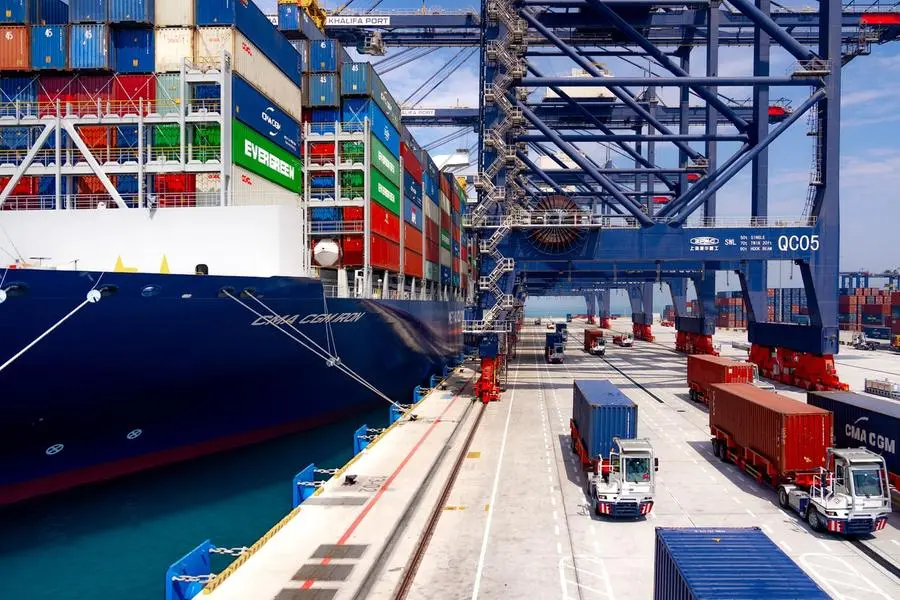
One of the risk factors is national security and cyber-risks. Handing over the off-switch of a nation’s power grid to a foreign interest creates significant strategic vulnerabilities. In modern warfare and diplomacy, energy infrastructure is often considered the “first front,” as disabling it can paralyse communication, healthcare, and defence systems without a single kinetic shot being fired. The ongoing war between Iran and the US exemplifies this risk. Iran’s blockade of the Strait of Hormuz demonstrates that wars could be fought using strategic control of a critical national or international asset. Another potential fallout is the strategic risk of dependency. If Nigeria lacks the digital keys to its own grid, it essentially grants a foreign power a permanent seat in its most sensitive national security discussions. Also, foreign-procured and managed hardware and software could be used to expose sensitive information about Nigeria’s industrial capacity and military readiness.
The BIG DATA question also comes into play. In a modern grid, electricity flow is mirrored by a flow of data. When a foreign entity manages this system, they could see beyond megawatts into the granular life of the nation, including its military secrets.
At the economic level, control over energy is control over the economy. The country risks falling into a debt trap, and long-term service payments in foreign currency. For example, if the agreement involves loans or resource-for-infrastructure swaps, Nigeria could face significant debt and complicate its heavy debt burden. In case the concession is made in yuan or US dollars, the cost of buying back power from the foreign operator could skyrocket anytime the naira fluctuates, leading to either massive government subsidies or unaffordable electricity bills for Nigerians. Moreover, the control of the national grid by the Chinese might mean the importation of equipment and technical manpower. This could stifle the growth of local expertise, industries, and resources.
•Ogundipe, a public affairs commentator, writes from Abuja. She can be reached through estherogundipe03@yahoo.com
One of the greatest downsides of the 20-year contract is that it might present successive administrations with a fait accompli and legally “tie their hands” from exploring other options. In a world that is experiencing a new wave of geopolitical dynamics, grid concessioning could expose the country to political blackmail through remotely controlled nationwide blackouts to destabilise the government or incite civil unrest. Unlike a technical fault that local engineers can fix, a software-driven shutdown by the provider could be difficult to reverse without their cooperation.
Faced with these grim possibilities, the government needs to explore more pragmatic and altruistic options to solve its electricity problem. Other third-world countries have done so – through different approaches – and are now enjoying the dividend of foresight and strategic policy-making. For example, Vietnam embraced state-led aggressive investment and grid expansion to support manufacturing. It achieved near-100% electrification with high reliability in under 30 years. Egypt transformed from chronic blackouts to an energy surplus and exporter status within 5 years through the Siemens Megaproject and diversified energy mix, without sacrificing its core national interest.
Nigeria can explore its own safe options, with the enormity of human and natural resources at its disposal. Essentially, the solution to the power crisis should be found within Nigeria’s borders, not imported through a 20-year dependency. Thankfully, development-savvy and patriotic Nigerians like Aliko Dangote and Dr Adewunmi Adesina have demonstrated that Nigeria no longer needs to survive on imported solutions. It has all it needs to self-develop. Nigeria must transition from the era of foreign dependency. It should leverage its own resources for its development.
Dangote has promised to bail us out. 20,000 megawatts of electricity by Dangote alone are a huge leap forward. Other local investors could be inspired to follow suit. Nigeria need not trade its future for short-term gains. It’s high time the leaders enroll in the league of strategic thinkers and deft statesmanship.
Copyright © 2026 Nigerian Tribune Provided by SyndiGate Media Inc. (Syndigate.info).