PHOTO
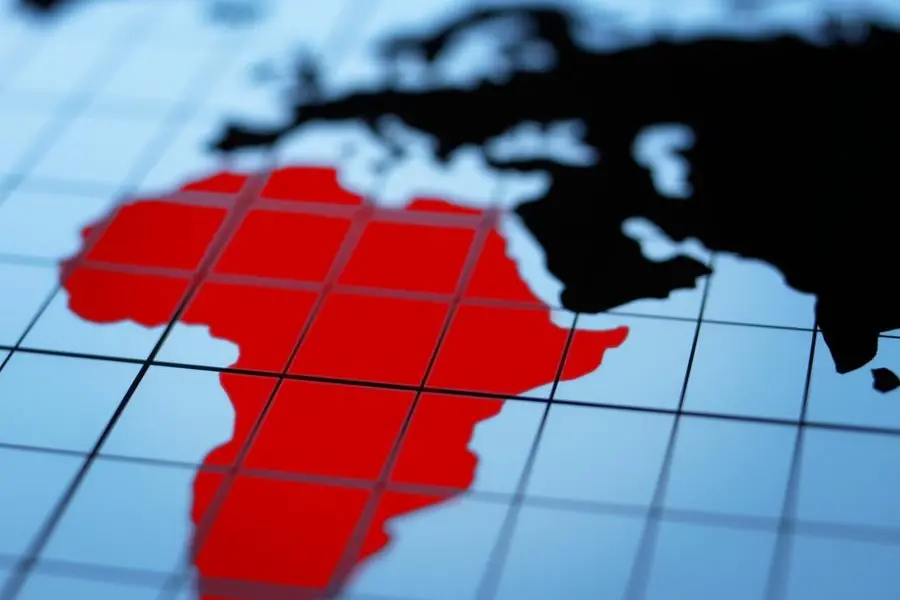
Business leaders across Africa now want the continent’s $4.4 trillion worth of institutional and high net worth individuals’ capital held by fund managers freed up to accelerate investment in the continent’s vast natural gas deposits to boost energy sovereignty and stave off future vulnerability to oil price shocks.
Significant natural gas reserves have been discovered in Africa over the past five years, including an estimated one trillion cubic feet in Angola (Gajgeria-1 well in July 2025) and an estimated 50 million cubic feet per day worth of reserves in the Nile Delta in Egypt in May 2026.
Despite these significant discoveries, inadequacy of capital has led to delays in exploration and commercialisation, thereby derailing the continent’s quest unlock the potential of natural gas in strengthening its energy sovereignty.
At the just concluded Africa CEO Forum in Kigali, business leaders called for urgent measures to help unlock local capital to invest in these projects and further diversify the continent’s energy mix to provide a cushion against shocks such as the one being experienced currently with the price of petroleum products.
“It is extremely important that we use strong guarantees to crowd in capital market financing because currently a lot of this money is being invested in triple A rated asset classes overseas. A good portion of our local institutional and high net worth individual capital should be invested in long-term assets like gas projects.”The business leaders challenged governments across the continent to undertake bold and sustainable reforms in the public utilities space to ensure that investors putting in their money into heavy capital expenditure gas investments are assured of reliable offtake and predictable returns.
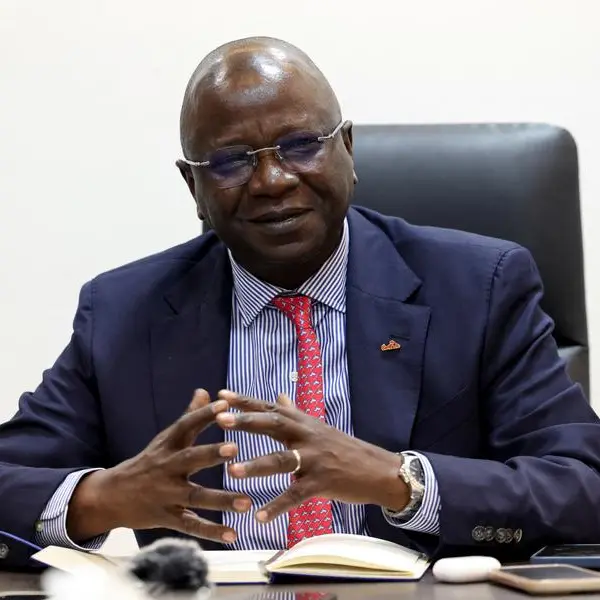
Poor revenue collection and cashflow challengesfaced by public utilities in the continent has been cited as one of the major drawbacks that pushes investors into risk aversion when considering investment in the natural gas sector as a viable alternative for their capital.“If we are to attract investment even from local capital, we must address the challenge of strong offtakers. If you are asking an investor to put money in a gas fired electricity generating plant, most situations in Africa are such that the offtaker is going to be a public utility and unfortunately many of Africa’s public utilities face structural and financial problems. So, the beginning of crowding in local capital to gas projects has to be the reform of public utilities,” said Rockefeller Foundation’s senior vice-president for Africa William Asiko.“We have in Africa 125 billion barrels of oil and 620 trillion cubic feet of natural gas in reserves all which mean nothing for continent if we cannot invest and commercialise for the betterment of the continent. No economy can take off using the balance sheet of other continents to finance its infrastructure projects. We can only finance ourselves when that $4.4 trillion is deployed locally for our own good and that demands strong offtake. It is only by solving the offtaker question that we will cease hearing about bankability of energy projects as a challenge,”added Tony Attah, CEO of Nigeria-based Renaissance Energy Company.
Africa currently holds 10 percent of the world’s total natural gas reserves with 90 percent of the continent’s holding concentrated in Nigeria, Algeria, Mozambique, Egypt, Mauritania, Libya and Senegal.
Currently, the global average cost of production of natural gas stands at $2.2 per thousand standard cubic feet while that of Africa trends 25 percent higher at $2.8 per thousand standard cubic feet.
Key drivers of the relatively high cost of production in Africa are limited infrastructure coupled with very remote field locations which impairs cross-border flow; small and fragmented demand across the continent; and finally high financing costs.“We need to take into account the fact that we are not the only producers of natural gas. US is a huge producer; you have Qatar and Russia as well as huge producers.“We do not want to be in a position where we are not competitive in the global market. At the end of the day, markets determine outcomes and we need to be realistic about this,” Hott, said.
© Copyright 2026 Nation Media Group. All Rights Reserved. Provided by SyndiGate Media Inc. (Syndigate.info).