PHOTO
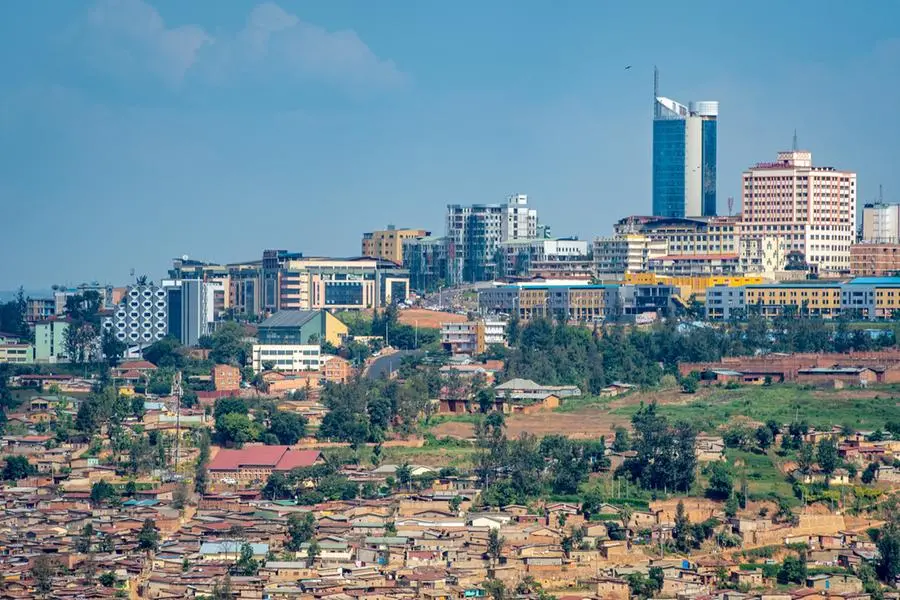
Rwandan President Paul Kagame says his country will have operational nuclear energy by the early 2030s.
He announced this on Tuesday in a keynote address at the Nuclear Energy Innovation Summit for Africa (Neisa) in Kigali, an occasion he also used to receive the International Atomic Energy Agency's Phase I Integrated Nuclear Infrastructure Review for Rwanda from IAEA director-general Rafael Grossi. He said the assessment shows that Kigali is on track with the programme. This review feeds into Rwanda's Integrated Work Plan toward an SMR (Small Modular Reactor).
An SMR is a nuclear reactor that typically produces 300MW per unit—about one-third of the generating capacity of traditional reactor.
Towards this goal, the Rwandan government signed a memorandum of understanding with the US on strategic civil nuclear cooperation.
The deal was signed by Rwanda’s Minister of State for Foreign Affairs Dr Usta Kayitesi and a secretary in the US Department of State Bureau of Arms Control and Non-proliferation Renee Sonderman in the presence of American embassy officials, Rwanda government officials and those of American energy firm Holtec International and Rwanda Atomic Energy Board (RAEB).
The two states also pledged to promote nuclear safety, security, and non-proliferation. Non-proliferation is a global effort to prevent the spread of weapons of mass destruction such as nuclear, chemical, and biological weapons, and their delivery systems.
Speaking at the signing of the MoU, Ms Sonderman said the deal “demonstrates our joint commitment on deepening bilateral cooperation between the United States and Rwanda, on the peaceful uses of nuclear energy and provides a key framework for enhancing cooperation between our governments and the strategically important area.”At the opening of the conference, President Kagame explained that the Neisa was designed to bring together leaders, experts, and partners to advance Africa's nuclear energy goals.“The strong participation here today reflects a growing consensus that the future of economies depends on how quickly we solve the energy challenge. Rwanda is pleased to have successfully completed the IAEA's Phase I Integrated Nuclear Infrastructure Review. We intend to have nuclear energy operational by the early 2030s, and this assessment confirms that we are on track. For Africa, energy is not simply a development issue. It is the foundation of industrial growth and competitiveness,” the Rwandan leader said.
He cited manufacturing, mineral processing, digital infrastructure and advanced healthcare as sectors that demand on reliable power supply and noted that the rapid expansion of artificial intelligence and the data-driven industries will also significantly increase energy demand.“Countries that cannot meet this demand will struggle. This is why one considers nuclear energy a critical component of Africa's long-term transformation. As more countries move in this direction, international reviews and regulatory processes should not become barriers, but instead offer the necessary support,” he said.
At the centre of this endeavour is the question of investment,” he added.“Too often, investors hesitate because they perceive many risks in Africa. We must work to strengthen regulation, ensure consistency and accountability, in order to build confidence and attract long-term capital. The international financing environment is also evolving. Nuclear energy is increasingly recognised as part of the clean energy transition, and that creates new opportunities.”
© Copyright 2026 Nation Media Group. All Rights Reserved. Provided by SyndiGate Media Inc. (Syndigate.info).