PHOTO
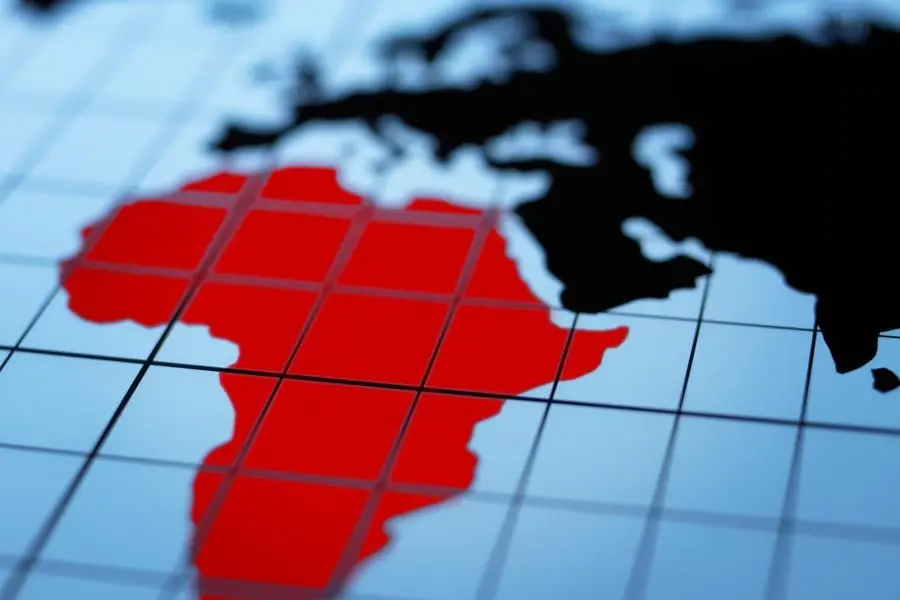
Africa may be lagging raising own funds to spend on infrastructure. But a new report says the problem isn’t lack of money, it is how to spend it.
The continent has some $4 trillion worth of money in banks, pension funds, insurance, and sovereign institutions, according to the Africa Finance Corporation’s (AFC). Yet it lacks capacity to shift those monies into investments that serve the continent’s infrastructure needs.
AFC, in a new document called State of Africa’s Infrastructure Report 2026, says continent’s limited ability to deploy money into productive investments has often discouraged holders of those funds from releasing them.
It shows that Africa’s institutional capital, including pension funds, banks, and sovereign-backed entities, has now exceeded $2 trillion, driven by stronger commodity revenues and expanding financial systems.
The report says Africa can turn around by improving project preparation, strengthening regulatory frameworks to attract private capital through public-private partnerships (PPPs), mobilising local pension funds, and enhancing regional collaboration.“Capital exists. Resources exist. Markets exist. But they are not connected in ways that create productive capacity, industrial depth, and sustained employment,” said Samaila Zubairu, AFC chief executive.“The question, therefore, is no longer whether Africa can finance its development. It is whether Africa can also organise its capital and put in place effective intermediation at the scale and speed required to build economies that generate jobs consistently.”While Africa possesses significant domestic capital such as in pension funds and insurance reserves, these are often managed by institutions with high risk aversion. Funds are frequently invested in low-yield sovereign bonds in London or New York rather than local infrastructure projects.
This paradox means Africa imports expensive foreign debt to build infrastructure while exporting its own capital.“At AFC, we believe it is time to change the narrative. Africa’s infrastructure challenge is not merely a gap to close—it is a generational opportunity to shape new markets, catalyse investment, and lay the foundations for broad-based, sovereign-led prosperity,” said Zubairu.“Infrastructure must be approached not as a series of discrete projects, but as integrated systems that link energy, transport, and industry to markets.”Zubairu cited evidence from Africa’s major transport corridors such as the Lobito Corridor, Abidjan–Lagos, Dakar–Bamako, and the North–South Corridor, where the constraint is not the absence of infrastructure assets but the fragmentation between them.“Ports, railways, and roads exist, yet inefficiencies in connectivity, border processes, and corridor governance prevent these assets from functioning as seamless supply chains,” he said.
Africa’s $4 trillion in domestic capital underscores the scale of untapped resources available to finance development—if effectively intermediated.
Despite holding approximately $2.5 trillion in assets, the African banking sector remains fragmented and lacks the size and depth to finance long-term development.“The solution lies in strengthening and scaling African banks, closing the savings–investment gap, and unlocking capital for large-scale infrastructure and industrial projects critical to structural transformation,” the report states.
Africa could also borrow lessons from Asia, where sustained development has been domestically driven. Global experience shows that structural transformation is built on high domestic savings, coordinated long-term planning, and strong financial institutions that channel national capital into infrastructure, industry, and productivity-enhancing investment.“These lessons are increasingly relevant for Africa’s journey towards industrialisation and infrastructure-led growth,” the report notes.
Institutional investors remain a major untapped source of development finance. With over $777 billion in assets under management, pension funds and insurance companies hold substantial potential to finance long-term development. Yet much of this remains allocated to short-term, low-risk instruments.
The report proposes reforms in pension fund deployment, noting that countries such as Nigeria, Namibia, and Kenya are now utilising pension funds for infrastructure projects.“Reform momentum is growing in countries such as Nigeria and Namibia, where regulatory changes are beginning to align savings with infrastructure and industrial investment. Similar efforts are underway in South Africa and Kenya.”Public development banks and sovereign wealth funds also have a bigger role to play. Collectively managing some $400 billion, these institutions are often underutilised due to fragmented mandates and weak alignment with national development plans.
Diaspora remittances could also be tapped to develop infrastructure.“Remittances are a resilient and underutilised source of investment capital. In 2024, they reached over $95 billion, highlighting their growing role as a stable and counter-cyclical source of external finance that remains largely untapped for development financing,” the AFC report states.
Capital markets across Africa remain shallow and fragmented, constraining their ability to pool and allocate domestic savings at scale. Deeper, more integrated capital markets are essential to mobilise long-term finance.
Strengthening regulatory harmonisation, enabling cross-border listings, and operationalising platforms such as the African Securities Exchanges Association (ASEA) and the African Exchanges Linkage Project (AELP) will be vital to creating a liquid and investable regional capital ecosystem.
The informal sector could also be a source of funding if tapped effectively. In many African economies, the informal sector accounts for up to 90 percent of employment and 40 percent of GDP—placing significant portions of income and activity beyond the reach of formal financial systems, taxation, and long-term savings mechanisms.
Tackling informality is critical to unlocking Africa’s domestic capital at scale. The solution lies in expanding financial inclusion and scaling digital public infrastructure to integrate informal actors into the formal economy, deepen the pool of investible capital, and lay the foundations for inclusive growth.“With Africa’s demographic window at its most favourable, the time to act is now. Mobilising domestic resources at scale is an urgent policy priority.”
© Copyright 2026 Nation Media Group. All Rights Reserved. Provided by SyndiGate Media Inc. (Syndigate.info).