PHOTO
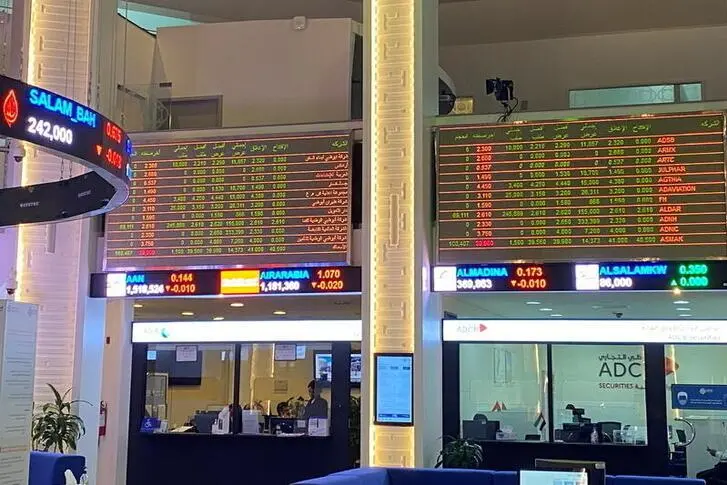
Gulf stock markets edged higher in early Thursday trade after the U.S. Federal Reserve's interest rate cut, but gains were capped by the central bank's cautious tone on the policy trajectory.
The Fed's latest projections, released after the two-day policy meeting, indicated that the median official still expects only one 25-basis-point rate cut in 2026, unchanged from the September forecast.
Policymakers continue to balance evidence of a softening labour market with persistent inflation concerns.
Adding to the uncertainty, the recent prolonged U.S. government shutdown has disrupted data releases, pushing the critical November jobs report to December 16 and the latest inflation numbers to December 18.
Monetary policy shifts in the U.S. have a significant impact on Gulf markets, where most currencies are pegged to the dollar.
Saudi Arabia's benchmark index rose 0.1% in a choppy trade, helped by a 0.3% increase in Al Rajhi Bank.
However, major oil producer Saudi Aramco shed 1.1%. Oil prices eased on Thursday as investors shifted focus back to Russia-Ukraine peace talks and monitored potential fallout from a U.S. seizure of a sanctioned tanker off the coast of Venezuela.
Crude prices are hovering near multi-month lows, putting pressure on the fiscal balances of oil-dependent Gulf nations through lower revenues.
Dubai's main share index gained 0.3%, helped by a 2.6% rise in top lender Emirates NBD.
In Abu Dhabi, the index was up 0.1%.
The Qatari benchmark climbed 0.6%, with petrochemical maker Industries Qatar rising 1.2%.
(Reporting by Ateeq Shariff in Bengaluru; Editing by Eileen Soreng)