PHOTO
Gulf markets opened weaker on Monday, as reciprocal strikes by the U.S. and Iran in recent days kept investors on edge despite an agreement between the two countries to stop further attacks.
A renewed push for diplomacy in the Middle East would come after several days of retaliatory strikes, triggered by an Iranian projectile that hit a cargo vessel in the Strait of Hormuz last week. Both sides have since accused each other of violating an interim ceasefire.
Uncertainty over the peace deal's durability pushed oil prices higher, although crude has since surrendered nearly all of its war-related gains as markets rapidly reassessed the likelihood of easing supply pressures.
The 14-point interim peace agreement, reached on June 17, was intended to stop the fighting that began after U.S. and Israeli action on February 28, reopen the strategically vital Strait of Hormuz, and allow negotiations to continue on issues including Iran's nuclear programme.
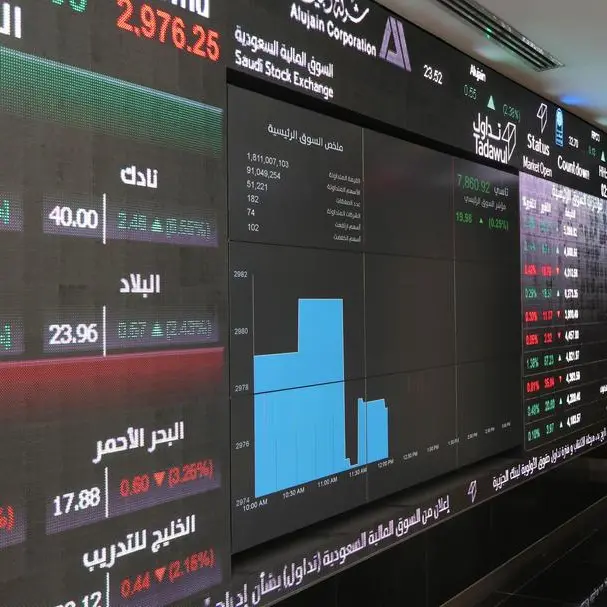
Saudi Arabia's benchmark index dropped 0.6%, hit by a 1.1% slide in oil giant Saudi Aramco, a day after it snapped an eight-session losing streak.
Meanwhile, Aramco resumed crude oil loadings on Friday at its Ras Tanura terminal, west of the Strait of Hormuz, after they were halted for nearly four months, as oil producers ramped up output and exports ahead of an interim deal.
Dubai's main share index eased 0.2%, with top lender Emirates NBD losing 0.8% and budget airline Air Arabia down 0.9%.
In Abu Dhabi, the index was down 0.2%.
The Qatari index fell 0.2%, dragged by a 0.7% drop in Qatar Islamic Bank.
(Reporting by Ateeq Shariff in Bengaluru, Editing by William Maclean)