PHOTO
The Middle East region is leading the charge in driving growth and adoption of the WELL Building Standard (WELL) globally with a 24-fold increase in WELL adoption over the last 19 months, a feat announced today (August 2) by the International WELL Building Institute (IWBI), the global authority for driving market transformation toward healthy buildings, organizations and communities, and the leading force behind the WELL movement.
According to IWBI, the world’s leading roadmap for creating and certifying spaces that advance health and well-being, WELL, has been adopted throughout the Middle East by projects in sectors ranging from regional public sector, educational and governmental entities to real estate developers, financial institutions and management companies.
To date, more than 500 million sq ft of real estate are enrolled in WELL programmes across 16 countries, including UAE, Afghanistan, Bahrain, Iran, Iraq, Israel, Jordan, Kuwait, Lebanon, Oman, Palestine, Qatar, Saudi Arabia, Syria, Turkey and Yemen - representing a doubling in the number of countries represented.
"Ever since the WELL Standard first took hold in the Middle East, we have seen incredible increases in demand year-over-year for WELL’s evidence-based strategies that support the physical and mental health of organizations’ most valuable asset – people," said IWBI Founder Paul Scialla.
"The commitments made by companies and public sector organizations across the region to prioritize the health, safety and well-being of their people is an inspiration to us all and demonstrates outstanding leadership, while proving that investments in health strategies can spark enhanced performance and increased financial returns," stated Scialla.
Recent uptake in the Middle East has contributed to overall WELL adoption, which now stands at more than 42,000 projects encompassing nearly 4.8 billion sq ft of real estate in 127 countries.
In particular, the WELL Health-Safety Rating, a framework for driving resilience into the center of business policies and operational plans through facility operations and management, has sparked considerable demand across the region that is being led by the UAE.
In a public sector-leading push, the UAE Prime Minister’s Office has achieved the WELL Health-Safety Rating for its Dubai office, according to IWBI.
This follows the office’s achievement of WELL Certification at the Platinum level, the first in the region to be certified through IWBI’s WELL v2 pilot and the first WELL Certified government ministry office in the world.
Dubai Police enrolled five buildings including its headquarters to pursue WELL Certification, and achieved the WELL Health-Safety Rating for these buildings. Its jails are also enrolled in the rating.
Expo City Dubai, an IWBI member and host of COP28, is the region’s first community enrolled to pursue certification through the WELL Community Standard pilot, a district scale program that sets a benchmark for healthy communities, it stated.
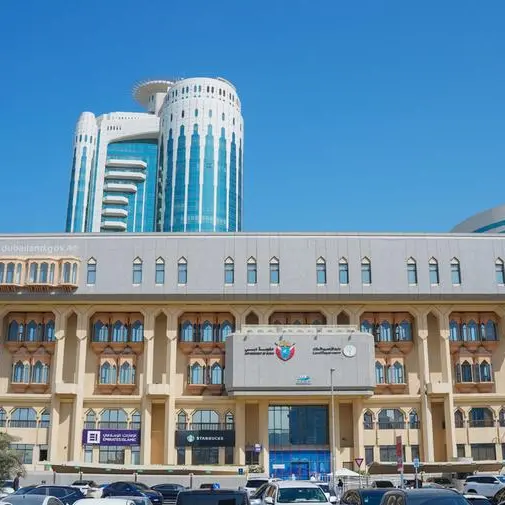
Expo City Dubai has also enrolled 23 buildings in the WELL Health-Safety Rating. The Dubai Land Department (DLD)’s Real Estate Regulatory Agency (RERA) also officially adopted the WELL Health-Safety Rating and continues to encourage organizations to align with the program in jointly owned properties (JOPs) and enhance investor confidence. DLD achieved the rating for its building to strengthen the health and safety of all employees, staff and guests.
DLD Director General Sultan Butti bin Mejren said it is constantly looking to implement and keep abreast of the latest global developments on the real estate and environmental levels. "Obtaining the WELL Health-Safety Rating enhances the advancement of our objectives and plans, helping us contribute to achieving a leadership approach in prioritizing the health and safety of humans and buildings as well as to paving the way for jointly owned property management companies to follow our example in obtaining this important classification."
According to IWBI, several private sector organizations are also leading the way in the region. These are:
•Abu Dhabi National Oil Company (Adnoc) achieved the WELL Health-Safety Rating for eight buildings, including its headquarters which stands at 1,915,975 sq ft.
•In 2023, Nakheel enrolled all 10 of their own offices in the rating. In late 2022, Nakheel Community Management was awarded the WELL Health-Safety Rating for 365 buildings, making it the first management company in the UAE to achieve the rating across its portfolio.
•Mubadala Investment Company, an IWBI member, is the first company in the UAE and the broader region to enroll in IWBI’s WELL at scale program, which enables organizations to measure and improve organizational health performance and its impact across all locations. Five UAE locations will deploy WELL strategies to advance health and well-being for employees, tenants and investors.
•Majid Al Futtaim (MAF) achieved the WELL Health-Safety Rating for all of its 11 offices in 2022, including Towers 1 and 2 and its 363,000-sq-ft Dubai-based headquarters. It also enrolled all 29 malls across the Middle East and North Africa in the WELL Health-Safety Rating, marking the region’s largest retail enrollment.
•Consistently valuing its tenants, the nearly 1.1 million sq-ft ICD Brookfield Place in Dubai has achieved and renewed the WELL Health-Safety Rating for three years.
•Merex Investment has achieved the WELL Health-Safety Rating for all its retail mall destinations, including JBR and City Walk.
•Emaar Community Management, the management company of Emaar, a global property developer and one of the world’s largest real estate companies, achieved the WELL Health-Safety Rating for 218 buildings across Dubai in 2022.
In addition to this, there are a few regional players who have got the WELL Health-Safety Rating. These include:
•Stantec, a global leader in sustainable design, which achieved the WELL Health-Safety Rating earlier this year for five of its offices in the Middle East - Dubai and Abu Dhabi (UAE); Doha (Qatar); Manama (Bahrain) and Riyadh (Kingdom of Saudi Arabia).
•Honeywell Emaar Business Park has achieved the WELL Health-Safety Rating.
•The 167-acre Imkan Misr community is the first in Egypt to enroll in the WELL Community Standard pilot, and has enrolled its signature building to pursue WELL Certification.
"The Middle East is delivering on WELL’s promise of improving human health and well-being in a way that helps individuals do their best work and be their best selves," remarked IWBI President and CEO Rachel Hodgdon.
"These organizations are using WELL’s research-backed strategies to support the health, safety, productivity and happiness of the people who use their buildings every day, driving organizational performance in the process," she stated.
Vice President and Head of Mena Region Tekha Selim said the UAE has defined itself as a true leader of the region in enhancing the health, safety and well-being of people across diverse industries and buildings that are adopting WELL.
We are incredibly proud of the progress driven by sectors including governments, educational institutions, developers, retail operators, management companies and more as they collectively lay a foundation for a healthy future," added Selim.
Copyright 2022 Al Hilal Publishing and Marketing Group Provided by SyndiGate Media Inc. (Syndigate.info).