PHOTO
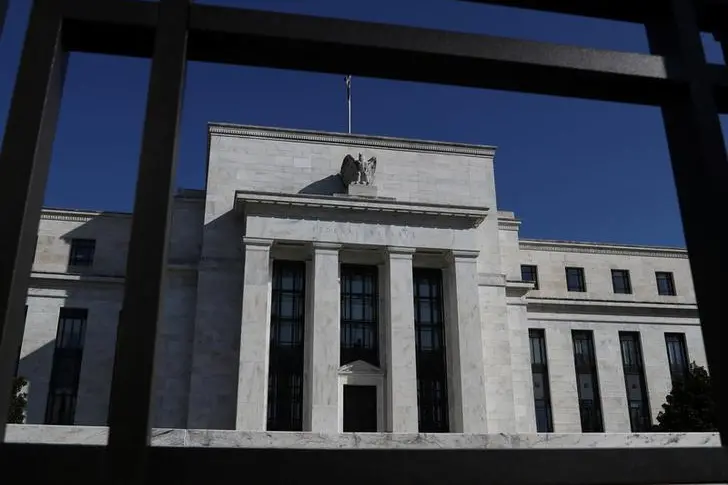
SINGAPORE - A U.S. Justice Department investigation at the Federal Reserve and a combative response by chair Jerome Powell have sharply raised the stakes in a long-running dispute that has put the independence of the world's most powerful central bank openly on the line, investors said.
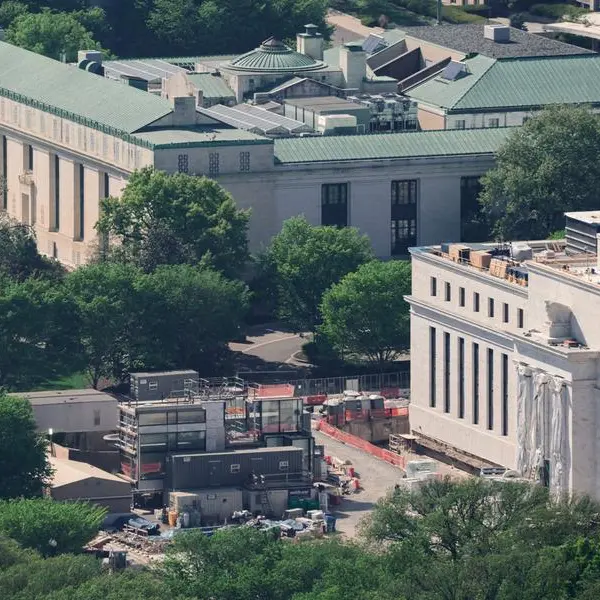
In a strongly-worded statement on Sunday, Powell disclosed a probe that threatened him with criminal indictment over a building renovation project, saying it was a "pretext" to gain political influence over the Fed to lower interest rates faster.
President Donald Trump told NBC that he had no knowledge of the Justice Department's actions, but renewed his attacks on Powell that have grown more frequent and pointed as the Fed has chosen to cut rates more slowly than he would have liked.
The investigation and Powell's pointed response sharply escalates a row that market observers fear risks upending the independence of the Fed, a bedrock of U.S. economic policy and a cornerstone of its financial system.
It also highlights how heavily the Trump administration's efforts to reshape institutions from the military to the judiciary are now coming to bear on a pillar of U.S. financial strength.
The U.S. dollar was down - albeit modestly - against every major currency during the Asia session on Monday. Gold shot to a record high, U.S. stock futures dropped and markets priced in a slightly higher chance of short-term interest rate cuts.
"Fed Chair Powell has deviated from his previous approach to Trump's threats, this time choosing to directly address the elephant in the room - that the Fed is not moving rates as the President would like," said Damien Boey, portfolio manager at Wilson Asset Management in Sydney.
"Gold has strengthened, equities have wobbled, and the yield curve has steepened a little. These moves have been broadly consistent with the playbook for an attack on the Fed's independence," he said.
The ability of central banks to move, at least in setting interest rates, without political interference is considered a key tenet of modern economics - insulating monetary policymakers so they can make decisions for long-run stability.
For investors, trust in U.S. institutions forms part of the so-called "exorbitant privilege" that the country enjoys in financial markets as the issuer of the world's reserve currency and recipient of billions of dollars in capital inflows.
Karl Schamotta, chief market strategist at Corpay in Toronto pointed to "unintended consequences" of leaning on the Fed.
"By trying to influence the central bank through aggressive legal threats against individual officials, the administration could drive inflation expectations higher, erode the dollar's safe-haven role, and trigger a sharp rise in long-term bond yields that raises borrowing costs across the American economy.
"Pouring gasoline everywhere and then playing with matches tends not to work out well," he said.
'TECHNOCRATIC FED IS FADING FROM VIEW'
Powell's pushback is in some sense a parting shot, since his term as chair is due to end in May and Trump has already promised his nominee as successor will be "someone who believes in lower interest rates, by a lot".
But his stand will be a frame for any replacement and serve as a yardstick for shifts in the Fed's approach.
Richard Yetsenga, ANZ's group chief economist, said that for the U.S. financial markets in their entirety, the operation of all three of the Fed's policy arms is likely to be in flux - rates, the balance sheet and banking sector regulation.
"It's definitely too early (to tell), but the trends seem quite clear ... the technocratic Fed, as we have understood it over the past few decades, is fading from view," he said.
Meanwhile, investors, already starting to wonder whether their portfolios are over-allocated to the U.S., are on notice about the new kinds of risks the Trump administration is ushering in.
"The market has shaken off so much noise around the Fed and Fed independence and I think is probably likely to do it again, but at some point things will break," said Christopher Hodge, chief U.S. economist for French investment bank Natixis.
To be sure, the market moves were small on Monday and some saw little clear consequence for interest rates and even as a sign that Trump actually lacked influence over the Fed.
"Investors won't be happy about it, but it shows actually Trump has no other levers to pull," said Andrew Lilley, chief rates strategist at Australian investment bank Barrenjoey.
"The cash rate will stay what the majority of the FOMC wants it to be," he said, referring to the Federal Open Market Committee, which sets interest rates.
Still, nagging doubts about the freedom of the Fed to move as it sees fit in the future are now planted in investors' minds.
"I think I'm still not sure how sustained and adversarial the attack on the Fed might be," said Vishnu Varathan, head of macro research for Asia ex-Japan at Mizuho in Singapore.
"(But) the Fed independence question is now well and alive and maybe subject to re-evaluation every few meetings."
(Additional reporting by Stella Qiu in Sydney and Tom Westbrook in Singapore. Writing by Tom Westbrook. Editing by Shri Navaratnam)