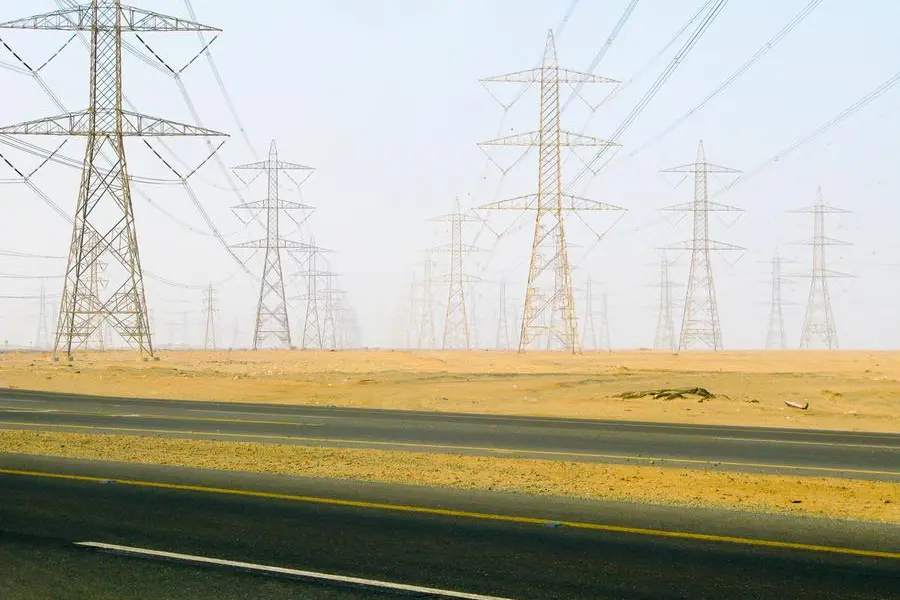
Installed power capacity in North African countries is expected to nearly double in by 2020, as governments look to pump massive investments in the sector, according to industry estimates.
Total power installed capacity in the region amounted to 61,623.3 megawatts (MW) in 2012 and that number could reach at least 120,000MW in 2020, according to Frost & Sullivan, a management consultancy.
Much will depend, however, on political stability in the region that has wreaked havoc across the area. Egypt, Libya and Tunisia have seen massive upheavals over the past three years, while the Moroccan and Algerian governments have also faced dissent and some political tensions.
"Each of the five Northern African countries has outlined a strong pipeline of power generation capacity expansion projects, including ambitious renewable energy projects," notes Frost & Sullivan industry analyst for energy and environment Celine Paton.
"However, the pace of implementation of these projects will depend on the ability of each government to stabilize security and implement the required political and economic structural reforms."
MOROCCO
Energy consumption has been soaring in Morocco at an average annual rate of 5.7% for much of the past decade, fueled by rising population and a number of sectors such as chemicals and construction that heavily rely on power. As much as 70% of energy needs are sourced from crude oil, coal and natural gas, while renewable energy such as wind, solar and hydropower made up the rest.
With almost no fossil fuel production, Morocco relies heavily on oil imports, leaving it vulnerable to oil price fluctuations. The government is betting heavily on developing a renewable energy sector especially due to its favorable climate for solar and wind power projects.
Indeed, Morocco has the most ambitious renewable energy program in the MENA region, and expects 42% (around 6,000MW) of its total energy consumption to be sourced from solar, wind and hydroelectric sources by 2020. There are more wind and solar projects under way in Morocco than anywhere else in the region.
In 2009, the country launched a USD 9 billion Morocco Solar Plan to develop a renewable energy sector and build 2,000MW of solar capacity by 2020. Major projects include DESERTEC, a transnational super grid, Ouarzazate, a massive 500MW solar plant. Other key projects are Ain Beni Mathar, a 470-MW hybrid solar-gas plant near the capital city of Rabat, and a USD 3.7 billion Moroccan Integrated Wind Energy Project to raise capacity to 2,000MW from its current level of 200MW.
Analysts say while Morocco has a track record of implementing renewable energy schemes, inadequacy of regulatory framework, lack of financing, and a piecemeal approach to renewables have often hindered the sector's development.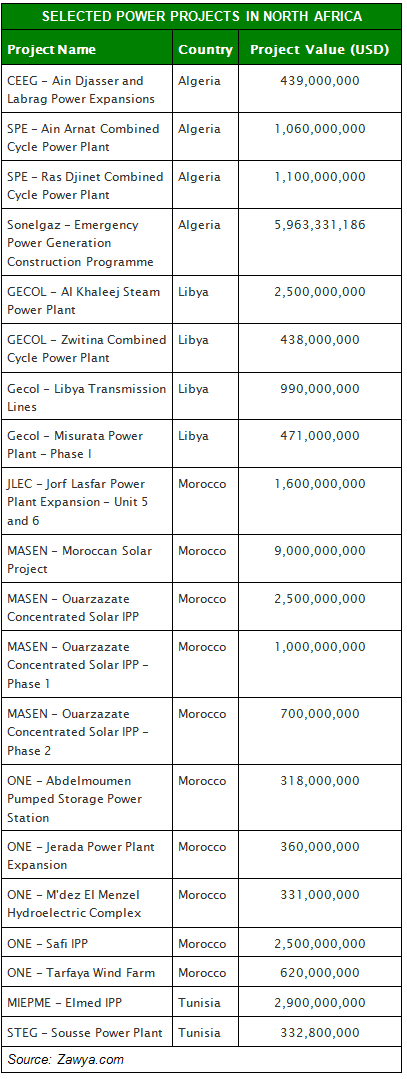
TUNISIA
In Tunisia, natural gas accounted for 46.1% of the energy supply and crude oil represents 40%. Biofuels and waste were a distant third as an energy source, accounting for 14.1% of the total.
Installed capacity stands at around 4,024MW and is expected to grow at 5% per year, or even 7% if major projects in the country get under way, according to Gestore dei Servizi Energetici, a renewable energy consultancy based out of Italy.
The country is also looking to alternative energy to reduce its dependence on fossil fuels. For example, a Tunisian Solar Plan includes 40 different projects that are expected to be financed by public and private sources.
"When the totality of the projects will be implemented, the main result of the plan should be a reduction of fossil fuel consumption of 660 ktoe per annum, which is equivalent to 22% of the national energy consumption in 2016," the Italian consultancy noted.
The country has the right climate to develop solar power with more than 3,200 hours of sunshine per year, "exploitation of solar energy is still not considered cost competitive enough, and is largely limited to use in domestic water heating systems and in certain community projects," Energetici notes. "It is only now that the private sector is beginning to explore the commercial applications for solar power in Tunisia, which, until recently, were not sufficiently cost-effective for power production."
Given the country's uncertain future in renewable, the country continues to invest in hydrocarbons.
In June, the African Development Bank (AfDB) Group approved a seven-year, non-sovereign guarantee, USD 75 million corporate loan to the Entreprise Tunisienne d'Activités Pétrolières (ETAP), the Tunisian state-owned oil and gas exploration and production company, to finance part of the South Tunisian Gas Project (STGP)/ Nawara project.
According to the bank, the STGP project involves the construction of gas transportation and treatment facilities to bring stranded and associated gas from the south of Tunisia to the market. It includes a central processing facility, a gas treatment plant (GTP) located on the coast in the Ghannouch industrial area near Gabès that will produce marketable products (natural gas, propane and butane).
The project is a joint venture by ETAP and OMV Tunisia GmbH, the Tunisian subsidiary of the OMV Austria.
"Today in Tunisia, more than 90% of power capacity is provided through gas-fired power generation. Almost half of the gas needed to generate electricity is imported via gas pipeline," said AfDB, noting that the project would save the country USD 3 billion on energy imports and generate revenues of USD 1.1 billion.
"In addition, the current existing pipeline linking the Sahara region, where most of hydrocarbon resources are located, to the industrial zone of Gabès has reached its capacity limits. Thus, the country's energy deficit will exacerbate if no additional investment is made in infrastructure."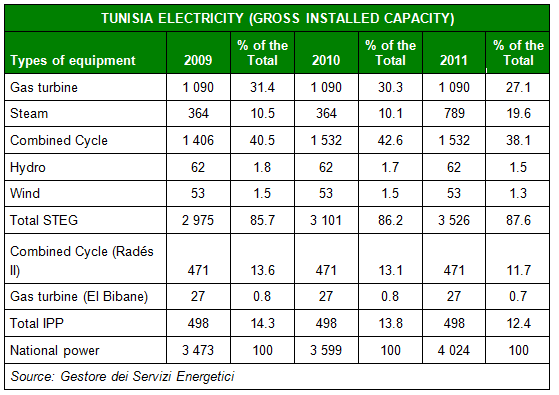
The enhanced gas transport infrastructure is also expected to encourage further foreign direct investment in the exploration and development of oil and gas fields in the southern region. Tunisia has 23 trillion cubic feet (tcf) of technically recoverable shale gas resource and 1.5 billion barrels of technically recoverable shale oil resource, and the government is seeking ways to exploit these reserves.
LIBYA
Libya's power sector also needs a boost especially as electricity consumption is growing at 8%, with total installed capacity of 6,300MW through 14 main power plants. The energy is sourced predominantly from fossil fuels.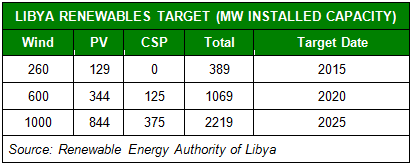
The General Electricity Company of Libya (GECL) estimates that electricity demand will reach around 13,000MW by 2020, more than double its current capacity.
Like its North African neighbors, the country has strong renewable energy potential.
High average wind speed at several on and off-shore locations (several locations have an average wind speed higher than six meters/second), and attractive global location for wind farms, could transform the oil-producing country into a renewable energy destination.
A wind energy project with a capacity of 60MW and a 14MW solar energy power plant is expected to be commissioned this year, although political turmoil may delay their implementation.
Two wind farm projects with a capacity of 120 megawatt are also in the pipeline, according to GECL.
North African states especially Morocco and Tunisia are investing heavily in renewable energy to cut their energy import bills and secure foreign direct investments.
The feature was produced by alifarabia.com exclusively for zawya.com.
© Zawya 2014