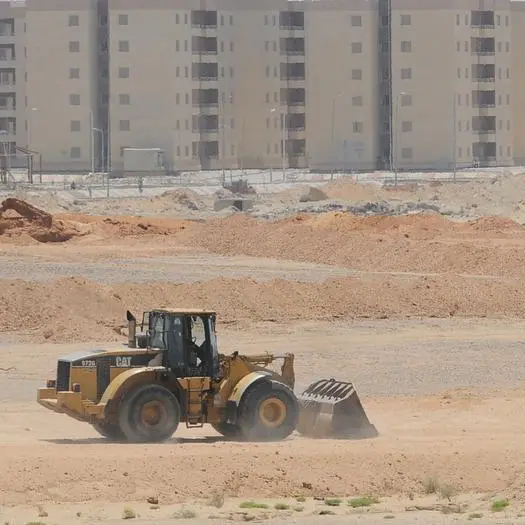
The preparatory construction work of the Jubail Industrial City 2, which is expected to attract over SR 200 billion investment, is currently in full swing.
The project is now on its site preparation stage under Phase 1. The site preparation stage has progressed well and will be completed as planned in July 2005.
The development of Jubail Industrial City 2, the most ambitious industrial development project of the Kingdom during the next two decades, is divided into four phases, which is to be undertaken for a period of 22 years.
The Phase I, which has already taken off the ground, will be completed by 2007. Phase II is targeted to kick off during 2008-2012, Phase III during 2013 to 2018, and finally Phase IV during 2019 to 2022. When fully operational, it is hoped that Saudi Arabia will become a notable global industrial power.
The Royal Commission for Jubail and Yanbu is undertaking the project under the supervision of Bechtel, which has played a key role in the development of Jubail during the last 30 years. The total cost of development of Jubail Industrial City 2 is about SR 14 billion, broken down as follows: Phase I - SR 4.7 to SR 5 billion, Phase II - SR 2.5 to SR 3 billion, Phase III-SR 1.8 to SR 2 billion, and Phase IV - SR 2.5 to SR 3 billion.The site preparation has been a mammoth task and involved mostly cut and fill operations because the site used to be rolling hills. Four stages have been applied in the site preparation phase - clearing the sites, compacting of the land, putting the first layer, and finally the subsequent layers.
To prepare the site, which is over 20 kilometers square, over 35 million cubic meters of earth will have to be moved. In any single day, some 300 trucks (excluding the excavation and digging equipment) are seen moving the earth.
Utilities
The site preparation is being undertaken parallel with the establishment and relocation of utilities and infrastructure. Among the major utilities to be built are the extensions of the seawater cooling system, provision of potable water, the setting up of Saudi Electricity Company (SEC) substations of 34.5 KV to 230 KV, and telecommunication systems with fiber optics facility.Highways and roads and their arteries connecting the City 2 with the adjoining areas in Jubail and the rest of the region are also being undertaken under Phase 1 of the project.
Four Contracts
Four local companies have been contracted to undertake the site preparation and utility and infrastructure development projects of Phase I of the Jubail Industrial City 2. The Saudi Binladen Group has been awarded four contracts that included site development and pipe laying.
These contracts have total cost of SR 256 million, including two contracts of site preparation of about SR 35 million each and two pipe contracts amounting to SR 154 million and SR 32 million.The construction and building of new highway extensions and roads, including separate roads for truck transport will be undertaken by the Al Dossary Group for a packaged contract of SR 76 million.
Included in the road construction contract is the 400 meters wide and 3.8 kilometer highway from the old Jubail Industry City to the proposed City 2. This particular road traverses the gas and oil pipelines of Saudi Aramco. It will also pass through the five-meter deep landfill of the Royal Commission that required five months to clear the waste materials.
Tunnels for Trains
The construction of this highway will also provide facilities for the proposed rail route by the Saudi Railway Organization (SRO). A tunnel will be constructed for cargo trains for a series of loops within the City, the seaports and the airport.
Seawater Cooling System
The contract to provide reinforcement and protection to the 400 meters portion of the gas and oil pipelines of Saudi Aramco that will be traversed by the 3.8 kilometer special highway has been awarded to Al-Qarni Company. The total cost of this contract is SR 30 million. The contract for the laying of the four-meter diameter pipes for the seawater cooling system has been awarded to the Al Harbi Group. Total cost of this particularly project is about SR 143 million. This is the first time that huge pipes of four-meter diameter, which were manufactured by Amiantit, is being laid for a seawater cooling system in the Kingdom. It is estimated that each industry to be located in Jubail Industrial City 2 will need about 6,000 cubic meters of seawater for cooling daily.
Power Supply
Another utility contract, which is still to be awarded, is the relocation of SEC electric lines that run within the boundary of new site.
Other projects that are associated with the new site plan are the development of housing facilities for about 50,000 people and the construction of a petrochemical quay of about 800,000 square meters at the Jubail Port.
The housing sites will be located at the Jalmudah District and will occupy four areas of over 1,000 hectares.
Eight Industrial Blocs
As planned, Phase 1 will host eight blocs of industries with each bloc having several industrial plants. As stated, Phase 1 includes the site preparation and the setting up and building of utilities and infrastructures outside and inside of the City 2.
Phase II will have four blocks of petrochemical industries plus secondary and support industries. Phase III will group three blocs of petrochemical industries with secondary and support industries. Phase IV will have four blocs for smelting plants, including an aluminum smelter, with secondary industries.
All the petrochemical industries in the City 2 will take their feedstock of natural gas from Saudi Aramco's Uthmaniyah.
The City 2 is expected to attract SR 210 billion worth of investment. Return of investment is SR 15 per SR1 invested. In terms of employment generation, when fully operational, some 55,000 direct jobs will be created. In addition, 330,000 indirect jobs will also be generated.
When Crown Prince Abdullah laid the cornerstone of the City 2 during his visit to the Eastern Province third week of December last year, he directed government ministries, particularly the Ministry of Finance and the Ministry of Industry, and other agencies to work together toward the success of the project. With work in full swing at Jubail City Industry 2, the vision of a new industrial hub in the region is seeing fruition.
Major primary industries in Jubai
Leading SABIC Joint Ventures in Jubail Industrial City - 1
? Saudi Petrochemical Company (Kemya), 50/50 joint venture between SABIC and Exxon Mobil of USA, with total capital investment of SR.4.5 billion. Kemya started commercial operation in 1984 and produces ethylene, propylene, LLDPE and LDPE.
? Saudi Petrochemical Company (Sadaf), 50/50 joint venture between SABIC and Pacten Arabia Co, a subsidiary of Royal Dutch Shell, with total capital investment of SR.14.2 billion. Sadaf produces ethylene, crude industrial methanol, ethylene dichloride, caustic soda, styrene and MTBE/ETBE. Started commercial operation in 1986.
? National Methanol Company (Ibn Sina) is a joint venture among SABIC (50%), Celanese Ltd of USA (25%), and Luke Energy International of USA (25%). Capitalized at SR.4.2 billion, it produces methanol and MTBE, which are sold in the domestic, GCC and world markets. Commercial operation started in 1984 (methanol plant) and 1994 (MTBE).
? Eastern Petrochemical Company (Sharq), 50/50 joint venture between SABIC and a consortium of Japanese companies headed by Mitsubishi, with capital investment of SR.7.6 billion. Products include ethylene glycol (EG) and polyethylene (LLDP). Products are mainly sold to world market. Commercial production started in 1987.
? Saudi Methanol Company (Ar-Razi) is a 50/50 joint venture between SABIC and Japan Saudi Arabia Methanol Company with total capital investment of SR.3.58 billion. Products are chemical grade AA methanol that is mainly sold in the world market (80%). Commercial operation started in 1983.
? Arabian Petrochemical Company (Petrokemya) is a wholly owned SABIC company with capital investment of SR.9.3 billion. It produces a variety of petrochemical products, such as ethylene, propylene, butadiene, benzene, butane-1, polystyrene and polyethylene using mainly USA technology. Went on commercial production in 1985 with feedstocks supplied by Saudi Aramco.
? Saudi European Petrochemical Company (Ibn Zahr) is a joint venture between SABIC (70%) and the following companies sharing 10% each - Fortum of Finland, Ecofuel of Italy, and the Al- Khobar based APICORP. Capital investment amounts to SR.5.2 billion. The products are MTBE and polypropylene, which are sold in Kingdom, USA, Asian, European and African markets.
? National Plastic Company (Ibn Hayyan) is a joint venture between SABIC (86.5%) and three local companies (13.5%). The company produces vinyl chloride monomer and polyvinyl chloride, which are mostly sold in the Saudi market. Capital investment is SR.1.63 billion. Commercial production started in 1986 for vinyl chloride monomer and 1995 for polyvinyl chloride.
? Saudi Iron and Steel Company (Hadeed), a 100% SABIC-owned, produces a vari ety of iron and steel products, which are mainly marketed in local market. Started commercial production started in 1982. Total capital has reached SR.11.9 billion including expansion projects.
? Saudi Arabian Fertilizer Company (Safco) is a partnership between SABIC (43%) and private shareholders (57%). Products include ammonia and granular urea, which are sold in the world market. Capital investment totals SR.4.29 billion. Commercial operations started in 1993.
? Al-Jubail Fertilizer Company (Samad) is a 50/50 venture between SABIC and Taiwan Fertilizer Company with total capital of SR.2.45 billion. Commercial production started in 1984. Products include urea and ammonia, which are sold mainly in the world market (85%).
? National Chemical Fertilizer Company (Ibn Al-Baytar) is a 50/50 partnership between SABIC and Saudi Arabian Fertilizer Company (Safco) with total capital investment of SR 1.26 billion. Products are wide range of fertilizers, including ammonia, granular urea, NPK, and phosphate. Commercial operation started in 1987 (ammonia) and 1991 (urea and phosphates).
? National Industrial Gases (GAS) is a partnership between SABIC (70%) and private sector (30%). Total capital is SR.1.8 billion. Commercial operation kicked off in 1985. Products include oxygen, nitrogen, argon, hydrogen and small quantity of krypton/xenon crude mixture. All products sold to local buyers, except the crude mixtures that are 100% exported.
ARAMCO Joint Ventures
? Saudi Aramco Shell Refinery Company (Sasref) is joint venture between Saudi Aramco and Shell Saudi Arabia (Refining) Limited (Royal Dutch/ Shell). Started commercial operation in 1985 with total capital of SR.6 billion. Products include fuel oil, naptha, kerosene, gas oil, diesel, LPG, sulphur and benzene, which are 90% marketed in GCC and world market.
? Saudi Arabian Lubricating Oil Company (Petrolube) is a joint venture between Saudi Aramco (71%) and Mobil (29%). Product is grease, which is 60% sold in Kingdom and 40% exported to Gulf and world markets. Started commercial operation in 1987 with capital investment of SR.100 million.
? Sulfur Pilling & Export Plant, wholly owned by Saudi Aramco, produces sulfur prills sold to the Kingdom (30%) and world market (70%). Commercial operation started in 1984.
Private Sector Foreign Companies
? Saudi Chevron Phillips Company, a joint venture between Saudi Industrial Investment Group (SIIG) and Chevron Phillips Chemical, with capital investment of SR.2.4 billion. Chevron produces benzene, cyclohexane, and motor gasoline, which are 45% marketed in the Kingdom and 55% to world market. The company went on commercial production in January 2000.
Saudi Commerce and Economic Review 2005