Saturday, Sep 26, 2009
Gulf News
Dubai: UAE exchanges are not likely to adopt the controversial practice of flash trading, a financial expert told Gulf News.
Flash trading is a computerised technique used by stock traders to detect orders milliseconds after they are placed but before other market participants are able to react. It is subject to a ban at least in the United States, the head of the Securities and Exchange Commission (SEC), Mary Schapiro, announced recently.
With a very slight advance notice of market sentiment, usually 30 milliseconds, traders who operate extremely powerful computers can conduct an ultra-quick statistical analysis of the market movement and trade ahead of others.
By using elaborate algorithmics, a flash trading system is able to place orders with pinpoint accuracy, albeit with only a small profit. However, with appropriate computer systems running around the clock, those small singular profits can accumulate to significant gains.
Flash trading is currently offered by US stock broker company Direct Edge which conducts trades for customers "at a high execution speed" for a fee.
The US cash equities volume routinely exceeds 1.5 billion shares per day, according to a statement issued by Direct Edge chief executive William O'Brien on the company's website.
The practice was almost unknown by the general public until recently.
The SEC now aims to ban the practice as part of its regulatory reforms in the wake of the financial crisis and the subsequent loss of confidence in stock markets.
The SEC says the practice awards an unfair advantage to certain investors and increases market volatility.
Gerhard Hametner, director of business development at Dubai-based Mac Capital Advisors, said the practice was unlikely in the UAE.
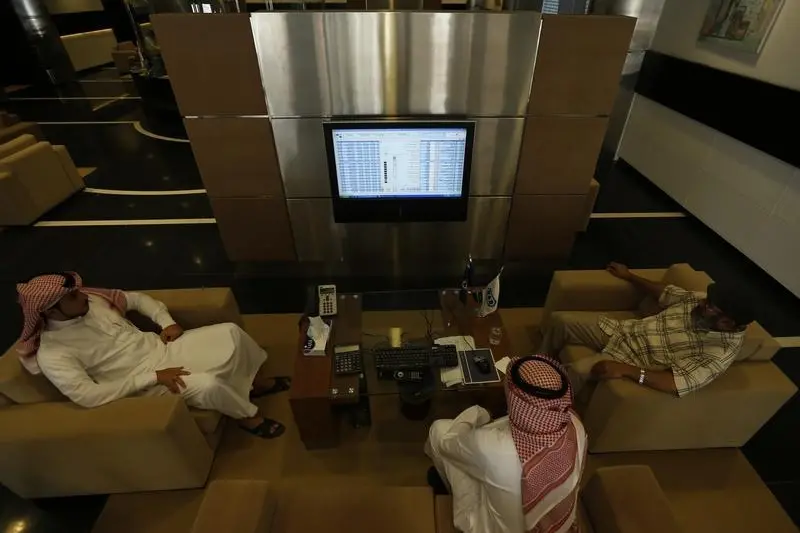
"There are no Direct Market Access systems permitted in the UAE markets at the moment. Regulations require that a licensed broker enters all orders directly. As a consequence, there is a large amount of manual intervention and a healthy latency in the time to place an order. Programmed systems do not have an advantage in this type of environment," he said.
Furthermore, UAE markets "do not have enough breadth or depth to be appealing. Any rapid investment action would have a considerable effect on the price of shares," he adds. Short-selling is also not permitted by UAE exchanges.
Hametner, however, believes that "any actions and strategies that bring liquidity are good for the market in the long term."
Short term effects aside, they may bring price continuity and balance to the markets, he said.
"Not enough speculators or not enough foreign players are just as bad for the market as too many long term players or too many local investors," he says.
Commenting on the SEC's scrutiny of flash trading, Hametner said that "this type of trading should be monitored in terms of normal price manipulation, but should not have an outright restriction or ban."
Criticism: Practice results in an unfair advantageFlash trading or high frequency trading is a practice witnessed on some smaller and unregulated financial exchanges whereby customers, for a fee, can see incoming orders a few moments earlier than the other market participants.
Supported by a powerful computer systems and elaborated mathematical methods, this advance information can be turned into a profitable trading pattern, entirely conducted by computers.
Critics say the practice is unfair against others, while supporters argue that flash trading can add more liquidity to the markets and hence improve the overall trading momentum.
By Arno Maierbrugger, Deputy Business Editor
Gulf News 2009. All rights reserved.