PHOTO
(The opinions expressed here are those of the author, a columnist for Reuters)
LONDON - Cheap, mass-produced drones have transformed modern warfare, exposing critical energy infrastructure as an Achilles' heel for modern economies. Lessons from the battlefields of Ukraine, Russia and the Middle East have shown how unmanned aircraft can evade traditional air defences, turning oil refineries, power stations, export terminals and pipelines into prime targets. The implications for the energy industry are profound. Facilities that took decades and billions of dollars to build can now be threatened by swarms of drones costing a few hundred to a few thousand dollars apiece, dramatically shifting the balance between attacker and defender.
Iran has provided one of the clearest demonstrations of this new reality. Since its conflict with the U.S. and Israel began February 28, Tehran has repeatedly used drones to disrupt shipping through the Strait of Hormuz. The narrow waterway carried around a fifth of global oil and gas supplies before the war, and the attacks have upended a decades-old assumption that it could not be blocked without a heavy naval presence. The threat has forced Gulf producers to revive long-standing plans to reduce their dependence on Hormuz. Across the Gulf, governments are scrambling to build thousands of kilometres of pipelines to allow crude oil and gas exports to bypass the strait.
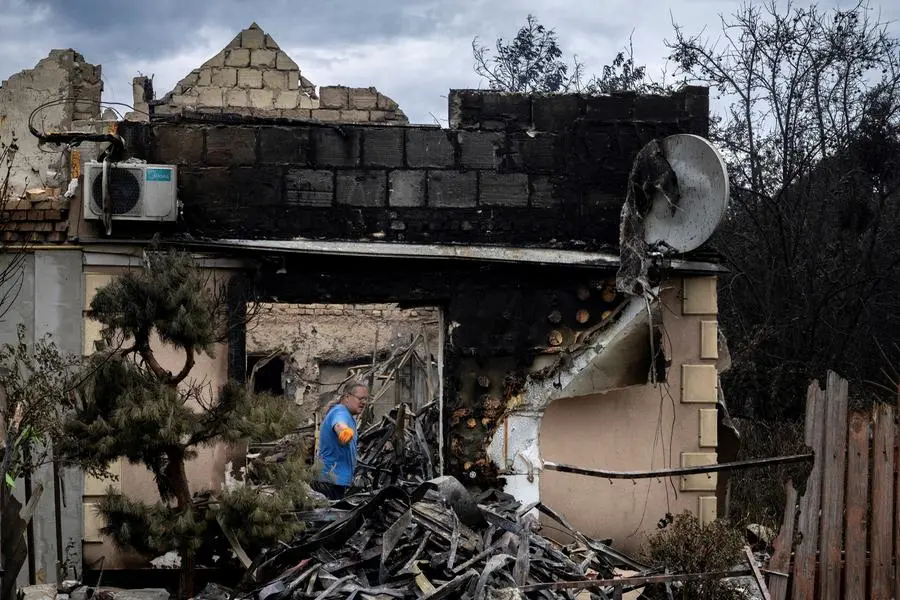
Yet every kilometre of new pipeline, pumping station or power substation creates another potential target for increasingly sophisticated drone attacks. Indeed, Iran has already struck dozens of refineries, liquefied natural gas (LNG) plants and power stations across the region, while also showing that it can rapidly manufacture new drones, even under wartime conditions.
Ironically, measures designed to improve energy security could also create fresh vulnerabilities – and the risk extends beyond the Middle East.
UKRAINIAN SWARMS
Nowhere has the destructive potential of drones been demonstrated more dramatically than in Ukraine. In recent months, Kyiv has launched swarms of long-range drones against refineries, fuel depots and energy facilities deep inside Russia, disrupting fuel supplies and showing that strategic infrastructure can be hit far from the front line.
At the same time, Ukraine has built a large-scale domestic drone manufacturing industry. Ukraine reportedly produces hundreds of thousands of low-cost drones every month, highlighting how rapidly the technology is becoming commoditised and available at scale.
The rise of cheap drones is forcing governments into a costly rethink of national defence. Recognising the challenge, NATO members last week announced plans to invest $40 billion in counter-drone capabilities over the next five years and to train five times as many drone operators by the end of 2027. The technologies being developed include advanced radars, communications-jamming systems, interceptor drones, directed-energy weapons such as lasers, and specialised missile systems designed to destroy unmanned aircraft before they reach their targets.
"Drones have fundamentally altered the character of modern warfare and become a decisive factor on the battlefield," NATO said. "Effective defence relies on the ability to rapidly detect, identify, and neutralise drones."
EXPAND AT YOUR OWN RISK
The wars in Ukraine and Iran have exposed the vulnerability of critical infrastructure around the world, from energy facilities and telecommunications networks to transport systems and power grids.
Across Europe, authorities have reported a sharp increase in suspected Russian sabotage and hybrid attacks targeting offshore energy installations, rail networks, power cables and communications infrastructure in recent years. The urgency to develop effective countermeasures is particularly acute in the Middle East because Gulf producers now face a future in which Iran can threaten to disrupt their revenues by closing the Strait of Hormuz. To counter this, establishing or enlarging alternative routes is necessary. Saudi Arabia is considering expanding the capacity of its crude oil pipeline linking the kingdom's eastern oilfields with the Red Sea coast, bypassing the strait altogether. The East-West pipeline proved invaluable during the Iran war, allowing Saudi Arabia to continue exporting more than 4 million barrels per day despite the disruption, more than half of its pre-war export levels. The United Arab Emirates is also expanding the pipeline connecting its oilfields to the port of Fujairah outside the strait, while Iraq and Kuwait are exploring similar projects.
While such infrastructure may reduce exposure to a single strategic chokepoint, it also creates a sprawling network of assets that are far harder to defend. As a result, energy companies are increasingly factoring in the risk of drone attacks and other forms of unconventional warfare when deciding where to build and how to operate and protect their assets. Some may even seek to acquire their own drone defence systems now that the conflict has shown that all their assets are potential targets.
ECHOES OF WORLD WAR ONE Drone technology has fundamentally shifted the balance on the battleground because traditional air-defence systems are often ill-suited to counter small, low-flying aircraft and, crucially, are exponentially more expensive than the drones they are trying to stop.
This dynamic carries echoes of World War One, when machine guns, barbed wire and artillery upended centuries of military doctrine based on mass infantry assaults. Suddenly, a handful of soldiers armed with machine guns could mow down hundreds of attackers crossing open ground. The result was trench warfare and years of bloody stalemate across the Western Front.
It was only after armies developed new technologies — most notably tanks and combat aircraft — that they were eventually able to break the deadlock. The current drone threat will likely play out similarly, as governments and militaries eventually develop effective countermeasures. But for now, the tactical and economic equation strongly favours the attacker.
That leaves one of the world's most critical industries facing an uncomfortable reality: relatively cheap technology can threaten energy installations worth billions of dollars. Until that imbalance is addressed, drones will continue to expose a vulnerable underbelly of the global economy.
(The opinions expressed here are those of Ron Bousso, a columnist for Reuters.)
Enjoying this column? Check out Reuters Open Interest (ROI), your essential new source for global financial commentary. Follow ROI on LinkedIn, and X. And listen to the Morning Bid daily podcast on Apple, Spotify, or the Reuters app. Subscribe to hear Reuters journalists discuss the biggest news in markets and finance seven days a week.
(Ron Bousso; Editing by Marguerita Choy)