Fight For Abu Dhabi Oil And Gas Field Concessions Heats Up
Japan’s trade minister visited Abu Dhabi to bolster Japanese firms’ concession renewal claims, as they prepare to find partners to bid for fields in the event of consortia break-ups and undeveloped fields going to tender. Aggressive, government-backed middle-sized international oil firms and state-owned Abu Dhabi’s IPIC are eyeing concessions. At stake are the fee paid per barrel produced, Portugal’s Partex share stakes, and the possible splitting of major field concessions. ExxonMobil is in CCS talks.
Japan received “positive responses” from Abu Dhabi about the renewal of oil concessions Japan’s Minister of Energy, Trade and Industry Yukio Edano said on 9 October during a trip to the UAE. “We discussed concession extensions and new investments, including oil fields which have not been developed and onshore blocks,” he said. “I talked specifically about Japanese requests in terms of concession renewals and the financial terms Japanese companies were given, and the UAE responded in a positive manner.”
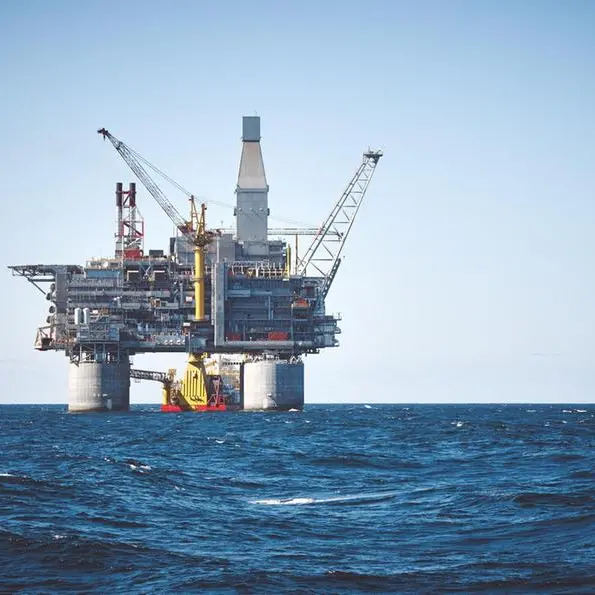
Japan Oil Development Company (JODCO), a unit of Tokyo-based Inpex, owns 12% of Abu Dhabi Marine Operating Company (ADMA-OPCO), which operates offshore fields Umm Shaif, Lower Zakum, Umm al-Lulu and Nasr – whose production capacity is expected to total 840,000 b/d by 2019. In September the consortium – which also includes state-owned ADNOC (60%), BP (14.67%), Total (13.33%) – awarded Consolidated Contractors Company a contract to boost Lower Zakum’s Reservoir 4 output to 110,000 b/d and Nasr field to 65,000 b/d.
“We would like to continue these concessions,” the minister said – they expire in 2018. The following year ADNOC’s Abu Dhabi Liquefaction Gas Company (ADGAS) offshore gas subsidiary’s term contract to supply Tokyo Electric Power (TEPCO) with LNG ends. Tokyo wants the contract to be extended and Chiyoda to build a new LNG plant to replace the oldest two of ADGAS’s three trains. (MEES, 10 October). But Abu Dhabi is desperately short of gas for its domestic market.
Tokyo is concerned that Japanese firms, lacking the experience and technology of the majors, will be muscled out of concessions. MEES learns that the firms are hedging by preparing to form partnerships with well-positioned firms – “someone’s favorite child” as an Abu Dhabi source put it – to help them bid for individual fields. An Abu Dhabi-based official of an independent, however, tells MEES that “the newcomers are not going aggressively after the Japanese – they are asking for 1% or 2% of the big ones.”
Partex Stakes Targeted
Portugal’s Partex is in the sights of some firms, with its 2% stake in the Abu Dhabi Company for Onshore Oil Operations (ADCO) consortium’s onshore oil fields concessions, which in another region would be seen as a historical quirk. In 1938, legendary businessman Calouste Gulbenkian – known as ‘Mr Five Percent’ for his cut after negotiating the equity division of what became Iraq Petroleum Company between ExxonMobil, Shell, BP and Total – founded Partex. He signed two 75-year concessions, one each with Oman and Abu Dhabi, where it still has upstream stakes. Mr Gulbenkian’s grandchildren rely heavily on the Abu Dhabi ruler’s sense of honor to continue the holding, in a region where family ties are strong.
The Supreme Petroleum Council (SPC) will decide by the year end, according to an official in one of the majors (MEES, 10 October), if it will extend the ADCO consortium’s onshore oil fields concession, which expires in January 2014. The emirate may break up the consortium’s – ADNOC (60%), Shell, Total, BP and ExxonMobil (9.5% each) and Portugal’s Partex (2%) – concession, which includes most of the emirate’s major onshore fields, and allow individual firms to operate separate fields. An advantage to Abu Dhabi in this is that the majors are more reluctant to deploy enhanced oil recovery (EOR) technology in shared fields. It would also mean faster decision making on field developments.
Abu Dhabi Gas Industries Limited (Gasco) – ADNOC (68%), Shell (15%), Total (15%) and Partex (2%) – had its concession renewal held up for six months after it expired, while Abu Dhabi dithered over breaking it up into individual fields. Finally, in March 2009 it renewed the joint venture for a further 20 years, post-dating the deal from October 2008.
Former ADNOC chief Yusuf bin 'Umair bin Yusuf told ADCO concession partners for three straight years that this issue was going to be settled that year. “The shareholders have realized that this was not just typical Abu Dhabi bureaucracy , but there was something behind it, such as making them bid for individual major fields or ‘forced marriages’,” said one independent official.
Medium-sized firms including Statoil, OMV, Wintershall, the Japanese, Koreans and Maersk are very active, but it is very difficult for them to get the SPC’s attention, Abu Dhabi sources tell MEES. The rulers are focused on making sure an ‘Arab Winter’ does not happen. International oil companies (IOCs) say they expect Abu Dhabi to award more technically challenging fields to the smaller firms.
Role Of Politics
Politics is starting to play a much larger role. “Everyone’s getting their governments to advocate for them. It goes on everywhere, of course, but I’m shocked at how overtly it’s being done,” an industry insider tells MEES. Further complicating the issue for existing concession shareholders is the growing ambitions of Abu Dhabi’s state-owned firms, which are influenced by rival members of the royal family. “There’s a massive focus on EOR and a feeling that Abu Dhabi firms can do it themselves,” the insider said. Three state-owned
firms – TAQA, Mubadala Development and International Petroleum Investment Company (IPIC) – all buy overseas upstream assets. IPIC and Mubadala’s mandates are for overseas investments, yet in recent years both have invested inside Abu Dhabi.
IPIC is believed by some industry insiders to be interested in concessions. IPIC’s consortium with Austria’s Österreichische Industrieholding – an industrial holding firm – has a majority stake in Austria’s OMV. And OMV is qualified with ADNOC to operate fields. IPIC started as an overseas energy investment vehicle, but has morphed into a conglomerate with operations inside Abu Dhabi and industrial manufacturing holdings. Influential members of the royal family sit on its board.
It is also gaining upstream experience through subsidiaries. In August IPIC became 100% owner of Spain’s CEPSA, which has upstream operations in Algeria, Egypt, Peru and Colombia, although it is not qualified yet with ADNOC to work in its fields. CEPSA has a reputation as a good, basic operator but doesn't bring a particular technology suite to the table. However, if partnered with the right company IPIC’s influence could play a role. IPIC is already involved in Abu Dhabi’s petrochemical industry and its Habshan to Fujairah crude pipeline.
The Mubadala conglomerate is also considered by some to be a ‘dark horse’ in the race – although the timing of the decision about ADCO would rule out Mubadala bidding, as it still lacks a subsidiary qualified by ADNOC to operate fields.It could, however, be an equity partner in future operations. Occidental and Petrofac have built relationships with it. It is led by powerful royal family figure Khaldoon Mubarak, who the Japanese minister met on his visit. Mr Edano also met 'Abd Allah Nasir al-Suwaidi, head of ADNOC, and Salim al-Dhahiri, director general of the SPC. Mubadala is gaining EOR experience through stakes in several MENA fields, including two joint ventures with Occidental – 100,000 b/d Mukhaizna oil field in Oman, and Bahrain’s 40,000 b/d Awali oil field. Mubadala and Oxy are also partners in Dolphin Energy, which pipes Qatari gas to Abu Dhabi. Furthermore, Mubadala owns the emirate’s clean energy initiative, Masdar, which plans what it calls the world’s largest carbon capture and storage (CCS) program, which will inject CO2 into Abu Dhabi’s oil fields. Depending on how the program develops, field operators may end up following Mubadala’s instructions about CCS. MEES learns that Masdar is working closely with ExxonMobil on CCS – offering technology, but only in exchange for operating either exclusively, or at least a partnership with a non-major, in key fields.
UK oil field management and services contractor firm Petrofac, which replaced ConocoPhilips in 2007 to manage Dubai’s offshore oil and gas production, has also teamed up with Mubadala, bringing its upstream experience. They formed Petrofac Emirates, an onshore oil and gas refining and petrochemical engineering firm, which is developing Asab oil field on behalf of ADCO and building an NGL train at ADNOC’s Ruwais refinery. But it is only qualified by ADNOC as a service company and so cannot compete for concessions.
Occidental’s strong position was built by chairman Ray Irani, a relationship builder who persuaded the board to give him a mandate to take risk and quick decisions, making it a nimble firm. However, in January Occidentaltook a 40% stake in Abu Dhabi’s $10bn Shah ultra-sour gas field development, which will produce about 500mn cfd of sales gas. Occidental is understood to be struggling to develop the technically challenging project, which may harm the firm’s reputation.
Occidental’s website says the project will “provide net to Oxy in the range of 200mn cfd. In addition, the project is expected to produce approximately 50,000 b/d of condensate and natural gas liquids – expected to yield in the range of 20,000 b/d net to Oxy.” The terms might indicate Abu Dhabi’s thinking on what rewards it is prepared to give new concession holders. Current partners get $1/B produced. “Everyone wants to increase it, but Abu Dhabi thinks that going on today’s production volumes it is a good return.” ExxonMobil is the lead operator in offshore Upper Zakum field, where it aims to boost production capacity to 750,000 b/d. But more favorable terms might be needed to attract bidders for remote, small or difficult fields.
An area where Japan has an advantage over Korean and Chinese challengers (MEES, 26 September) is its firms experience in CO2 injection. Masdar may result in Japanese firms having to inject CO2 into the oil and gas fields they operate. Abu Dhabi’s initial pre-Masdar work was started by Jodco, injecting CO2 into offshore fields early in the last decade. Mitsubishi, which makes CO2 compressors, has actively been working with Masdar since its beginning. Tokyo is more sophisticated at packaging deals and getting its diverse firms – engineering, finance, utilities and oil – to work together than the Chinese state-owned firms. In January a Japanese bank loan to ADNOC helped win the extension of its Cosmo Oil Abu Dhabi concession, which was due to expire in 2012. Cosmo, through its local subsidiary Abu Dhabi Oil, has rights to the Mubarras, Umm al-Anbar and Neewat al-Ghalan small oil fields.
Relations between the two countries are warm – Abu Dhabi increased the amount of LNG it sends Japan by 840,000 tons, after the 11 March disaster at TEPCO’s plant in Fukushima, and offered to help in reconstruction, Mr Edano said.
Copyright MEES 2011.