AMMAN: Arab bourses tailed global markets in their drastic plunge as of the fourth quarter of 2008 due to the international meltdown, but failed to regain a major part of their losses as global markets did in 2009.
Renowned financial analysts attributed the sluggish performance of Arab stock exchanges to a number of factors, including the failure of respective governments to adopt effective measures to spur stocks, the advent of certain regional crises, foremost the Dubai World debt ordeal, and the occasional psychological pressure emanating from adverse developments on world bourses.
International and regional institutions estimated the losses incurred by Arab stock markets at between $500 billion and $600 billion at the end of 2008.
According to Abdullah Tarifi, secretary general of the Federation of Arab Securities Commissions, there are 20 Arab stock markets with 1,500 listed firms and total capitalization of about $1 trillion.
Thanks to the intervention of Western governments, global shares managed to recover more than 60 percent of their losses, but Arab stocks remained captive of a number of factors including lack of confidence, weak foreign demand, fluctuating oil prices and conflicting indicators about world recovery.
Despite measures taken by central banks and other monetary and financial authorities in Arab countries, regional bourses managed to recover only a fraction of their losses that ranged from 9 percent in Qatar and 30 percent in Saudi Arabia at the end of November 2009.
"I believe Arab stock markets suffered mainly due to the sharp retreat in oil prices," former Governor of the Central Bank of Jordan Mohammad Nabulsi told Arab News.
The global meltdown pushed crude prices drastically down from $144 per barrel in July 2008 to less than $40 per barrel at the end of last year.
The collapse of oil prices sharply curtailed surplus petrodollars seeking investment in Arab stock markets, Nabulsi said.
He attributed the rebound of global stocks mainly to the "direct intervention" by monetary and financial authorities in the United States and other major economies to "pump funds" into the banking system.
"The government aid to Middle East bourses seemed to be inadequate, given the extensive losses they suffered as a result of the global financial crisis," Nabulsi said. Shortly after the eruption of the global crisis, the state-owned Kuwait Investment Authority set up a $5 billion fund to help shore up the faltering Kuwaiti stock exchange.
But the facility was considered insufficient particularly by executives of Kuwaiti investment firms, six of them reported losses in the vicinity of $20 billion following the world financial collapse.
The Qatari Prime Minister Hamad Bin Jassem Al-Thani disclosed recently that the government so far spent $5 billion buying stocks and financial tools to help boost the country's bourse and banking system.
Fahd Fanek, a prominent Jordanian economist, believed that the inertia of the Arab stock markets this year was mainly due "to lack of confidence on the part of investors that the rally of global markets was sustainable".
"Many investors in our area have concerns that the recovery could turn out to be artificial and may abort later," Fanek said.
Arab stock markets appeared to be picking up from their ordeal in the first half of the year, but their vulnerability seemed to have gathered momentum with the announcement that two Saudi key big business groups -- Ahmad Hamad Algosaibi & Bros. (AHAB) and Saad Group -- were facing financial difficulties.
Fanek also blamed the sharp retreat in the regional real estate sector as one of the reasons behind the poor performance of Arab stock markets.
His analysis appeared to have found expression in the Dubai World debt crisis at the end of November, which played havoc for several days not only with Middle East bourses but with global markets as well.
The problem erupted when Dubai World revealed it was seeking at least a six-month delay on repaying its $60 billion debt. Credit agencies responded by slashing debt ratings on Dubai's state companies, saying they may consider the plan a default.
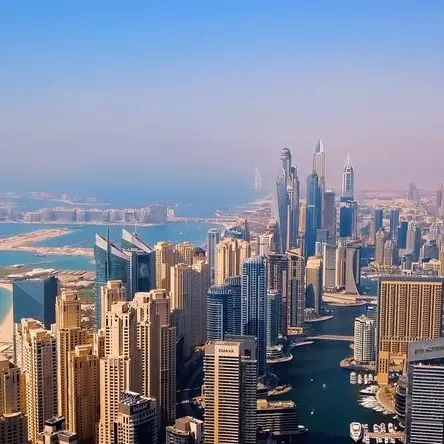
Over the past decade, Dubai has expanded with ambitious, eye-catching real estate projects like the Gulf's palm-shaped islands (Nakheel) and the world's tallest skyscraper in hopes of becoming a tourist-friendly Middle Eastern metropolis.
International and Middle East markets calmed down at the start of December after monetary and financial authorities in the United Arab Emirates and elsewhere in the region hurried to assure markets over the potential solvency of the emirate and that there was nothing to worry about from the Dubai World move.
The turmoil was dubbed by regional analysts as exaggerated and they attributed the plummeting of stock markets to the ambiguous atmosphere and lack of information that accompanied the Dubai conglomerate's step.
By Abdul Jalil Mustafa
© Arab News 2009