The Algerian economy is cruising along in low gear, but investors are hoping that presidential elections in April 2014 will speed up economic and social reforms.
The North African country's economy is expected to expand 3.1% in 2013 and 3.7% next year, compared to the 3.3% growth achieved last year.
"Algeria has enormous possibilities to boost its economic growth, including huge foreign-exchange reserves derived from oil and gas," said the African Development Bank.
"A development strategy targeting stronger, sustained growth would create more jobs, especially for young people, and alleviate the housing shortage the country is facing. The national strategic option is therefore to revitalize the process intended to diversify the economy starting with the non-oil sector while deepening the reforms needed for the structural transformation of the economy."
Algeria escaped the worst impact of the Arab Spring revolution that swept across North Africa, as the government raised public sector wages and government spending to stave off a political crisis, which was beginning to flare up
With the help of steady hydrocarbon revenues flowing into the economy, Algeria has been able to navigate through a tough external environment.
And efforts are under way to diversify the economy away from oil and gas revenues. The authorities funded 90 non-oil and gas development projects at a cost of USD 9.64 billion in the first half of the year - 55.2% higher than the corresponding period last year.
Authorities are also reportedly looking to raise government spending by 11.3% in 2014 in the hope of stimulating the economy further.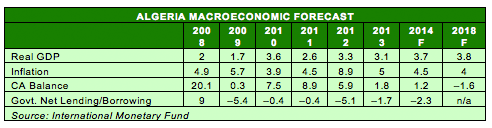
OIL & GAS
Despite major efforts to encourage the private sector, the state-led oil and natural gas sector dominates the economy. The country produced 1.25 million barrels of crude oil per day, and another 620,000 barrels per day of condensate and natural gas liquids last year.
Algeria has 12.2 billion barrels of proven oil reserves, found primarily onshore, as the offshore riches remain largely under-explored.
"The government recently approved amendments to Algeria's hydrocarbon law that included fiscal incentives for foreign companies to invest in untapped exploration areas, particularly offshore and in areas believed to contain unconventional resources," said the US Department of Energy.
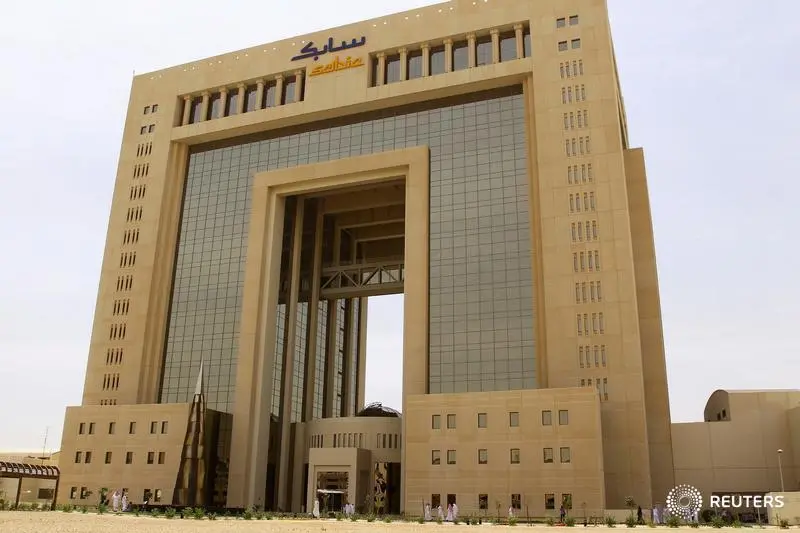
The new law could help attract more investments into the industry, which is currently dominated by state-owned Sonatrach - making up 80% of the country's oil and gas assets.
Major international players present in the country include Spanish oil and gas company CEPSA, United Kingdom's BP, Italian giant Eni, Spain's Repsol and France's Total SA.
But big oil remains wary.
"Despite the implementation of a new hydrocarbon law in March 2013, Algeria's oil and gas sector has failed to attract significant foreign investor interest over the past several months," said Maplecroft, a global risk and strategic consulting firm.
Terrorists attack on BP and Statoil-owned Amenas gas plant in January also did not bolster investor confidence.
"Corruption scandals involving state-owned oil and gas companies Sonatrach and Sonelgaz, and increased security risks following the Amenas terrorist attack have dampened foreign investor interest, Maplecroft said. "Maturing oil fields have in turn counteracted the production from new fields coming on stream."
OFFSHORE POTENTIALS
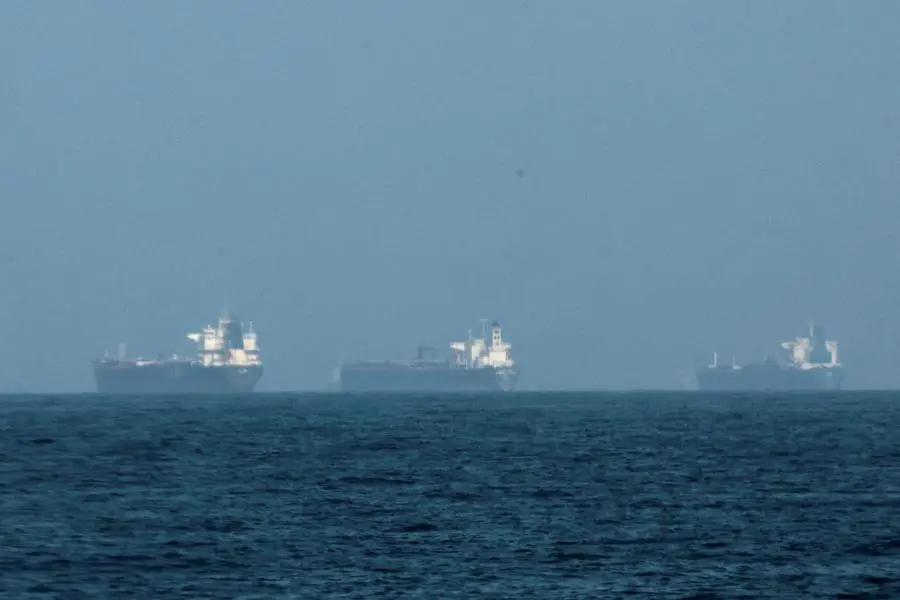
Despite Algeria's poor business framework, oil companies are eyeing the country's offshore opportunity.
Sonatrach says around 66% of the country's territory remains unexplored or under-explored, mainly in the north and offshore.
New discoveries are crucial for the country as its largest fields Hassi Messaoud, Ourhoud and Hassi Berkine are maturing, and most analysts believe growth from these fields will eventually decline.
New projects being developed by US company Anadarko and Sonatrach are expected to generate 100,000 barrels per day (bpd) to 150,000 bpd, and at least four other projects will produce 200,000 bpd in the next couple of years, it may not be enough to offset the decline.
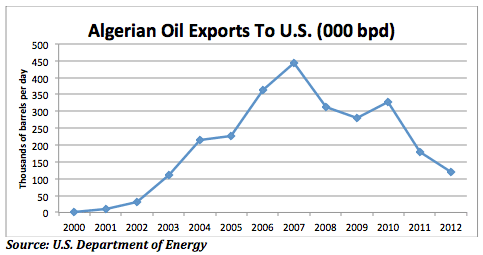
Algerian sweet light Sahara blend also needs to find new export markets, as it has been displaced by the United States' shale oil revolution.
Algerian exports to the US have fallen from 443,000 bpd in 2007 to 120,000 bpd in 2012. By July 2013 of this year, Algerian exports had shrunk to 20,000 bpd.
While Algeria has been negatively impacted by unconventional oil and gas production elsewhere, it has its own untapped reserves of 707 trillion cubic feet of shale gas - the third largest in the world, according to the US Department of Energy.
Royal Dutch Shell and Exxon Mobil Corp. are reportedly in talks with the Algerian government. In addition, Sonatrach is in the midst of a comprehensive effort to define the size and quality of its shale gas and oil resources.
International energy companies, Statoil and Repsol, have also undertaken geological and reservoir characterization studies of Algeria's shale, the US Department of Energy said.
The new discoveries will help solidify Algeria's position as the fourth largest natural gas supplier to Europe.
"Algeria exported 1.2 trillion cubic feet of natural gas via pipelines in 2011, accounting for almost 70% of total natural gas exports. Italy was the single largest recipient of Algerian pipeline exports (625), with the remainder of exports to Europe going to Spain (27%), Portugal (6%), and Slovenia (1%). Outside of Europe, Algeria sent small amounts to its neighbors, Tunisia (4%) and Morocco (less than 1%)."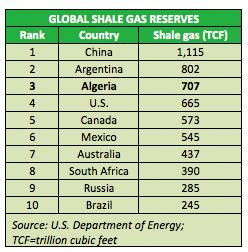
POLITICAL ISSUES COME TO THE FORE
At the moment, the bigger focus is on political machinations as president Abdel Aziz Bouteflika gears up for another election in April 2014.
The 76-year-old president had been suffering from poor health earlier in the year and has generally kept a low profile, fuelling rumors of a new president in the next elections.
But Bouteflika stunned critics by shuffling his cabinet in September to strengthen his hand ahead of the polls. The president placed allies in key positions and also appointed a close confidante to the Department of Intelligence and Security (DRS) - the agency charged with investigation major corruption charges within the government.
"Under the aegis of rooting out state corruption, the judicial police force ousted high ranking Sonatrach and Sonelgaz officials for illicit payments in the awarding of contracts," Maplecroft noted. "The arrest warrants issued in August enveloped allies of the president including former energy and mining minister Chakib Khelil and presidential advisor Mohamed Reda Hemche."
It is unclear whether the president will run for an unprecedented fourth-term, or the political establishment will select a new candidate, but with strategic changes so close to the elections, Bouteflika has strengthened his allies and weakened rivals.
But as tensions flare up in the run up to the polls, the Algerian authorities will be well-advised to keep the foot on the economic accelerator. Massive youth unemployment and underemployment remains a key issue for the population of 38.5 million.
While oil and gas account for around 40% of Algeria's total GDP, 98% of its exports, and about two-thirds of budget revenues - the sector provide jobs for only about 2% of the population. That equation cannot be a recipe for a long-term economic success story.
© alifarabia.com 2013