The Gulf Organization for Industrial Consulting (GOIC) has released the latest issue of the "Industrial Cooperation in the Arabian Gulf" journal. This new issue featured a dossier about food security in GCC countries since "achieving food security in the region and the entire world has become one of the most crucial and pressing economic challenges. Countries around the world are striving to face this challenge in order to guarantee food security and financial and economic sufficiency for people all over the globe." This dossier shed light upon the situation in different GCC countries and their efforts aiming at achieving food security. Its conclusion stressed the importance of elaborating various joint strategies and solutions through development programs and plans. These plans would benefit from pioneer attempts in a number of Gulf States. Such successful approaches are to be spread in order to help other countries limit negative repercussions.
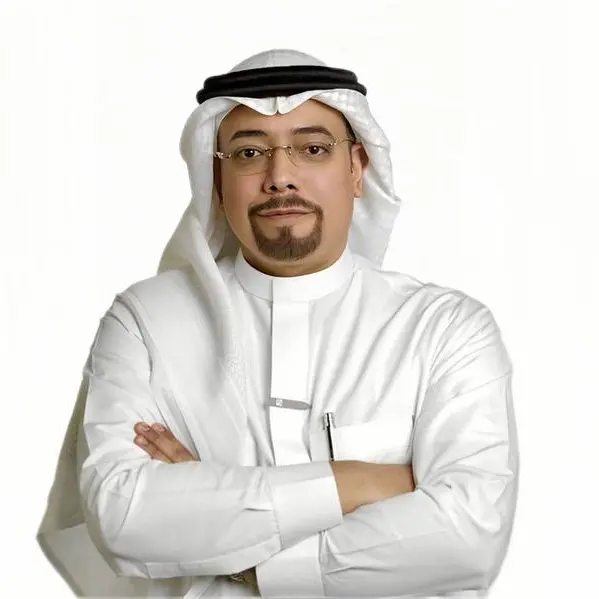
In his memo that was published in this issue of the Journal under the title of "GOIC programs support industrial projects through promising opportunities and statistics, and help qualifying their cadres", GOIC Secretary General Mr. Abdulaziz Bin Hamad Al-Ageel opined: "GOIC follows up on investment opportunities since their very birth as achievable ideas. In fact, statistical data allow forecasting the future of these industries, from their very foundation as promising projects to the qualification and training of their human cadres, in order for these projects to accomplish their objectives with our full support." He added: "All these efforts help boosting Gulf manufacturing sector and promoting economic development in regional countries. These have been the objectives of GOIC all the way."
On the other hand, Journalist Jamal Banoun wrote an article entitled "Our industrial cities...Dwarfs in the deep bottom of the world". In this article, Mr. Banoun tackled the difficulties faced by GCC industrial cities. He said: "Gulf States were interested in urbanization more than economy and manufacturing. This particular attention to urbanization did not correspond with economic and industrial diversification and professional labour qualification". Mr. Banoun further added: "Development plans did not aim at supporting diverse industries or building smart industrial cities capable of becoming an added value to countries' economies. We have no need for industrial cities; what we need is having diverse, different and numerous industries and encouraging new different, distinctive and competitive industries. Gulf countries might enjoy the strongest economies in the world because of their oil resources, but in the area of manufacturing, they are dwarfs in the deep bottom of this world."
Furthermore, in his article entitled "Added value programs...A motivation to develop Gulf industries", Editor-in-chief Engineer Hazem Al-Anqar depicted the features of an economic environment that stimulates added value industries. "Several advanced and modern industries can be established in the Gulf. The private sector should take the initiative of kick-starting such industries and drawing investments. One of the most important measures to be taken is establishing high-technology industries that encompass information and communication technology, bio-engineering techniques and industries, renewable energy, environmental and pharmaceutical industries and chemical industries", said Mr. Al-Anqar. He also emphasized the numerous motivations that are being offered to industrial activities in GCC countries.
Managing Editor of the Journal Mrs. Abir Jaber wrote an article entitled: "Training...Of utmost importance for Small and Medium Enterprises." In this article, Mrs. Jaber tackled the effect of training programs on the success of projects. "These programs represent a significant factor contributing in advancing the job and creating a new culture capable of setting the foundations for the establishment of SMEs according to correct procedures. In a nutshell, it is the identification of a suitable idea, its development and execution, the elaboration of new concepts and the production and competitiveness. This entire process is based on administrative, technical, information and financial skills and expertise. It also relies on the use of correct methods to elaborate strategies for carrying out and managing the task, controlling its assets and troubleshooting with viable solutions", opined Mrs. Jaber.
In addition to that, the new issue highlighted the Organization's achievements in terms of rationalizing energy consumption and reducing carbon dioxide emissions through the Industrial Technical Assistance Program (ITA). In this context, GOIC had recently published "The energy guide for industries in GCC countries at the service of industrial facilities". In this guide, the Organization illustrated its accomplishments throughout the last five years; it contributed in reducing carbon dioxide emissions in the metals sector by an average of 744 tons and in the packaging and labelling sector by about 709 tons.
The new issue also included a report about the food industry which is considered among the important transformational (processing) industries. According to the report, investments in this area reached nearly 17 billion USD in 2012.
Moreover, the Journal featured several economic articles such as: "The role of SMEs in a changing global economy", "GCC countries industrial competitiveness", "Worldwide loss of faith in credit rating agencies" and "Analysis of Gulf economy's features".
The new issue also presented a report about the programs of training courses and workshops delivered by GOIC under the Training and Capacity Development Program (TCD) during the first quarter of 2013. Besides, the issue included a summary about an industrial investment opportunity under the title of "Aluminium and plastic pipelines project". The Journal's usual sections like "GOIC News", "Upcoming Industrial Events", "Industrial Sector News" and "Recent News" in addition to many other topics were there as well.
You can read the full version of this Journal by visiting the Organization's website www.goic.org.qa.
Gulf Organization for Industrial Consulting (GOIC) overview:
GOIC is a regional organization that brings together the United Arab Emirates, the Kingdom of Bahrain, the Kingdom of Saudi Arabia, the Sultanate of Oman, the State of Qatar, the State of Kuwait and the Republic of Yemen. It is based in Doha, Capital City of Qatar. It is an advisory knowledge-based institution aiming at developing regional industries by providing data, information, specialized researches, consultations and technical services for the public and private sectors in GCC countries. This organization is the top industrial consultations expertise hub boosting industrial development in GCC countries and Yemen. It seeks industrial integration and coordination between Member States and endeavours to shape a regional industrial policy.
For more information please contact:
Gulf Organization for Industrial Consulting
Abir Jaber
Business Development Specialist & Managing Editor of "Industrial Cooperation in the Arabian Gulf" magazine
Training and Capacity Development Program (TCD)
Business Development and marketing Department
Gulf Organization for Industrial Consulting (GOIC)
Main: +974 44858888
Direct: +9744 4858717
Fax: +974 4413 8327
Mobile: +97466702942
Email: aajaber@goic.org.qa
P.O. Box 5114, Doha, State of Qatar
www.goic.org.qa
© Press Release 2013