PHOTO
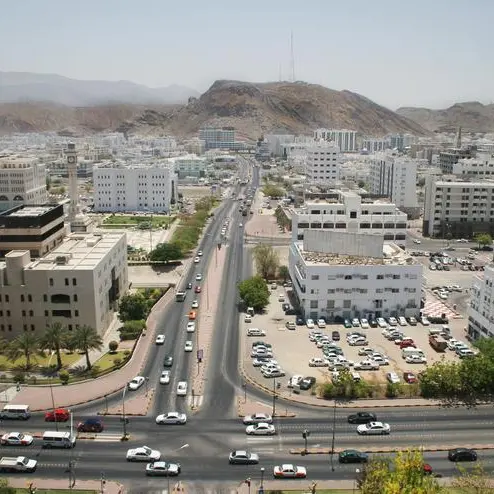
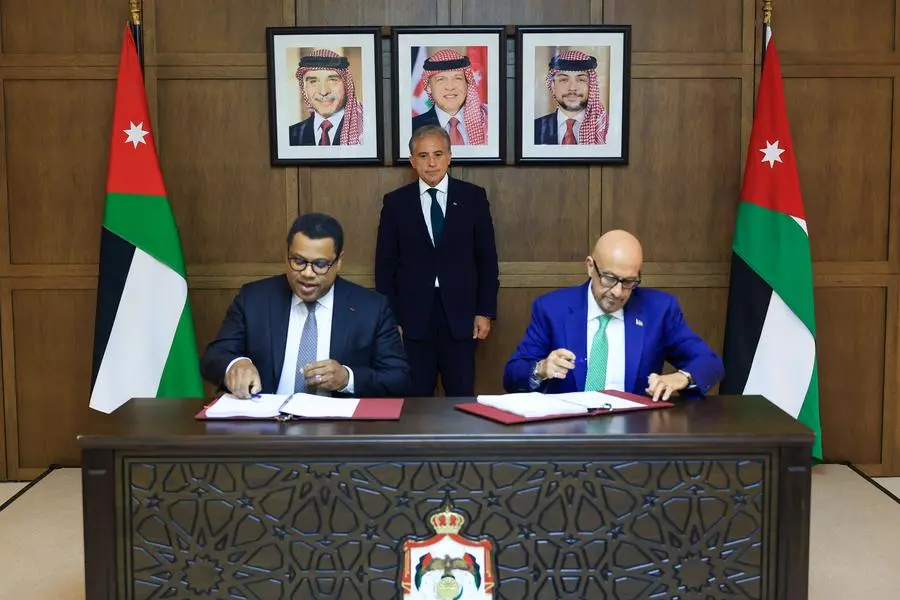
Jordan announced on Tuesday that the final technical and legal agreement for its National Water Carrier project, also known as the Aqaba-Amman Water Desalination and Conveyance (AAWDC), was signed in Capital Amman, marking a key milestone toward financial close expected in July.
The Prime Minister’s office said the project’s capital cost is estimated at around $4.3 billion, while total project cost including financing expenses is expected to reach approximately $5.8 billion.
Construction and excavation works are scheduled to begin in summer following financial close.
The agreement was signed by Water and Irrigation Minister Raed Abu Al Saud and Thierry Déau, chief executive of Meridiam in the presence of Jordan’s Prime Minister Jaafar Hassan.
Tariff reduced
The government said negotiations over the past 16 months helped lower the indicative water tariff of the project, from around $3 per cubic metre in 2024 to about $2.7 per cubic metre. Final talks are continuing on the inflation adjustment formula.
BOT structure
The Project is a Public Private Partnership (PPP) between the Ministry of Water and Irrigation and National Carrier Project Company (NCPC), a special purpose vehicle owned 90 percent by Meridiam and 10 percent by Suez.
The scheme will be delivered under a Build-Operate-Transfer (BOT) model, with full ownership transferring to the Jordanian government 26 years after operations.
The project is being financed through a combination of grants and loans.
Grants/concessional financing worth $663 million was received from the United States; European Union; Germany (KfW); Netherlands; United Kingdom; France (AFD); Italy; Japan (JICA).
Loans worth $2.9 billion were provided by World Bank Group, European Investment Bank (EIB), The Arab Fund, Green Climate Fund (GCF), Islamic Development Bank (IsDB), International Financial Corporation (IFC), European Bank for Reconstruction and Development (EBRD), Asian Infrastructure Investment Bank (AIIB), Proparco, Japan International Cooperation Agency (JICA) and OPEC Fund for International Development.
The Jordanian government is contributing $722 million, while a consortium of local banks led by Housing Bank for Trade and Finance will provide up to $1.1 billion. Additionally, Social Security Investment Fund (SSIF) will also participate through debt and equity.
Technical scope
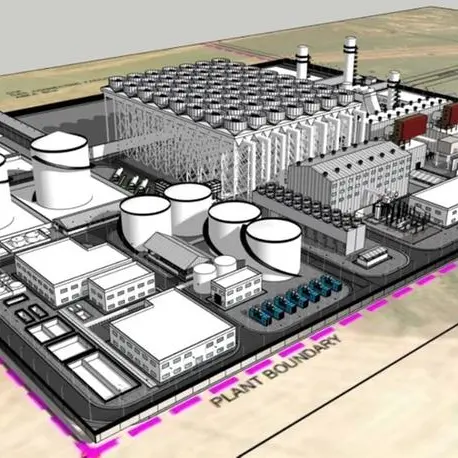
The National Water Carrier involves:
- Desalination of 300 million cubic metres per year (m3/year) of seawater, close to the capacity of all the Kingdom’s dams, and nearly three times what the Disi water conveyance project produces.
- Around 450km of pipelines to transport water, pumping stations up to 1,100 metres above sea level
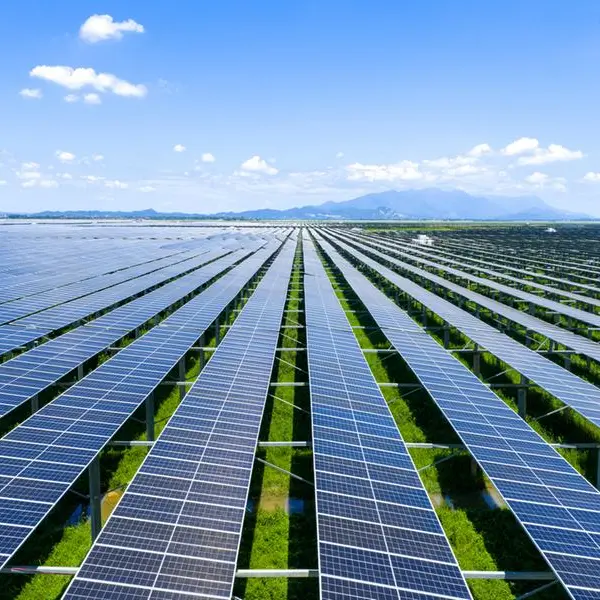
- Solar power plants totalling 300 megawatts (MW) to meet 30 percent of the project’s energy consumption
The project is expected to start operations in 2030.
Water security impact
The project is expected to supply around 40 percent of Jordan’s drinking water needs, according to the statement by the Prime Minister’s Office. It would raise annual per capita water availability from 60 cubic metres to 110 cubic metres and increase water supply frequency from one day to three days per week across all governorates.
The statement said government will continue to bear the cost of subsidising water tariffs, noting that the Water Authority’s debt currently accounts for around 12 percent of total public debt and is expected to rise in absolute terms due to the high cost of water supply and related essential infrastructure projects.
At the same time, the government aims to reduce the debt burden by expanding high-efficiency water projects, increasing wastewater treatment capacity, and improving overall resource management.
Strategic significance
The project is one of the flagship schemes under Jordan’s Economic Modernisation Vision. It is expected to ease pressure on traditional water sources, improve supply reliability for industrial, agricultural and other economic sectors, and help meet water demand until 2040.
(Writing by Majda Muhsen; Editing by Anoop Menon)
Subscribe to our Projects' PULSE newsletter that brings you trustworthy news, updates and insights on project activities, developments, and partnerships across sectors in the Middle East and Africa.