PHOTO
Gulf investors are still backing Egypt’s property market despite prevailing regional tensions and economic volatility, as demand for housing in new urban centres continues to support large-scale projects, said Saudi-backed developer Paragon-Adeer.
In an interview with Zawya Projects after officially launching the 70 billion Egyptian pound ($1.4 billion) Sumou Boulevard project in Mostakbal City, company executives said investors have become more cautious, but cross-border investments into Egypt remain strong.
“The current Middle East geopolitical environment has made investors more cautious, increasing risk perception and slowing decision-making, but it has not led to a withdrawal from Egypt’s real estate market,” Bassel ElSerafy, global CEO of Adeer International told Zawya Projects.
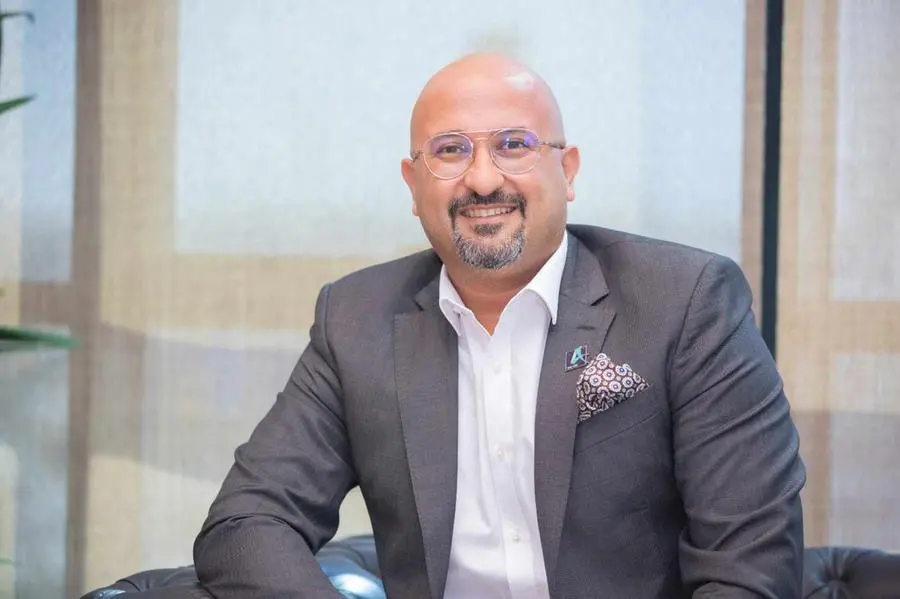
Adeer International is the global investment arm of Saudi Arabia’s Sumou Investment.
The comments come as developers in Egypt face higher construction costs, supply-chain disruptions and financing pressures following regional instability linked to the Iran conflict.
Still, Egypt’s real estate sector continues to attract Gulf capital, supported by population growth, rapid urbanisation and strong demand for housing in newer districts such as Mostakbal City and the New Administrative Capital.
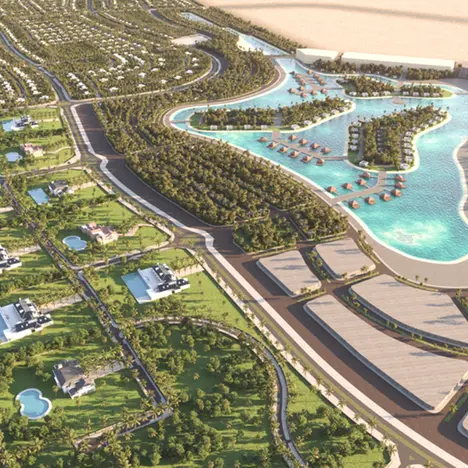
The project marks the first major investment in Egypt by Sumou Investment through Adeer International, as part of partnership with Egypt’s Paragon Developments.
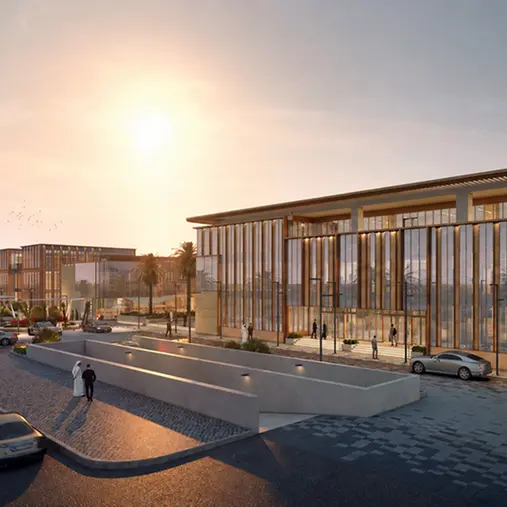
Paragon-Adeer expects its 500,000-square-metre (sqm) mixed-use development in New Cairo to generate revenues exceeding 100 billion Egyptian pounds.
Strong fundamentals
Egypt’s property market has remained one of the country’s strongest-performing sectors through repeated economic shocks, with many buyers turning to real estate as a hedge against inflation and currency depreciation.
Developers have increasingly shifted toward phased launches and long-term installment plans to maintain sales momentum amid higher borrowing costs.
ElSerafy said Egypt remains an attractive market for long-term real estate investments despite macroeconomic pressures.
“Egypt offers a compelling combination of scale, strong demand fundamentals, and attractive upside potential within the MENA region,” he said.
The company selected Mostakbal City for its first Egyptian investment because of its strategic location between New Cairo and the New Administrative Capital, as well as the district’s growth prospects.
According to ElSerafy, demand in the district continues to be supported by “strong developer activity, flexible payment plans, and a growing preference for modern gated communities.”
Cost pressures
Adeer International, which operates across more than six markets, sees “inflation, currency volatility, and financing costs as key forces fundamentally reshaping investor behaviour and project viability in Egypt,” noted ElSerafy.
“These factors are creating a complex push–pull dynamic. Inflation supports demand as investors turn to real estate as a hedge, but it also increases construction costs and compresses real returns. Currency depreciation further drives demand as a store of value, while introducing pricing uncertainty and execution risk.”
He added that high interest rates have made the market more dependent on developer-led payment plans.
“At the same time, high interest rates are limiting access to mortgage financing, making the market heavily reliant on developer-led installment structures,” ElSerafy said.
He said investor appetite remains strong, although buyers have become more selective in choosing projects and developers, with a clear preference for early-phase, well-structured, and credible developments.
AI-led strategy
Bedeir Rizk, CEO of Paragon-Adeer, said the company wanted the project to stand apart from traditional mixed-use developments in east Cairo.
“Sumou Boulevard is positioned as a flagship Saudi-Egyptian development, and that institutional foundation is what gives us the freedom to build to a different standard,” Rizk told Zawya Projects.
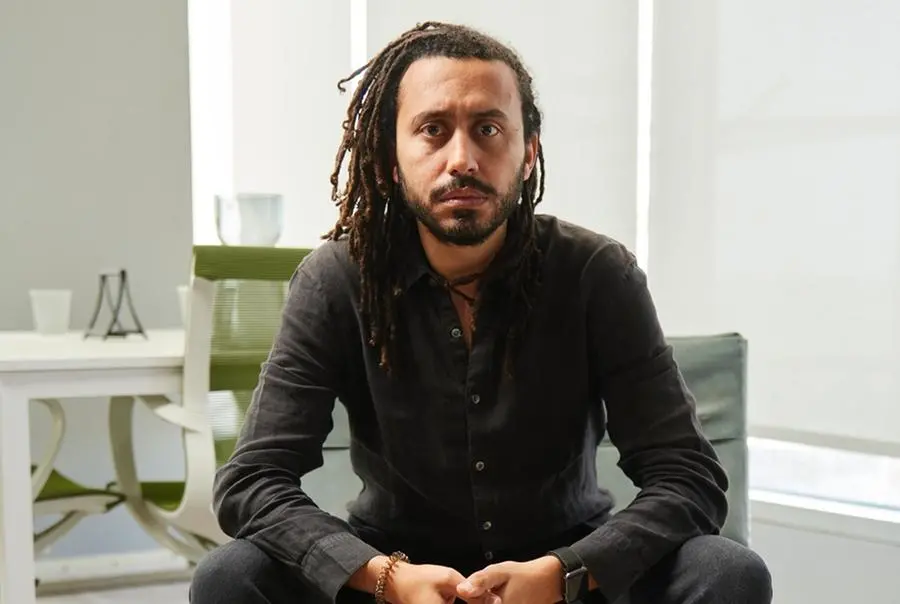
He said the project was built around three main pillars: innovation, wellbeing and culture.
“What actually differentiates the project, though, is how the master plan has been organised,” Rizk said.
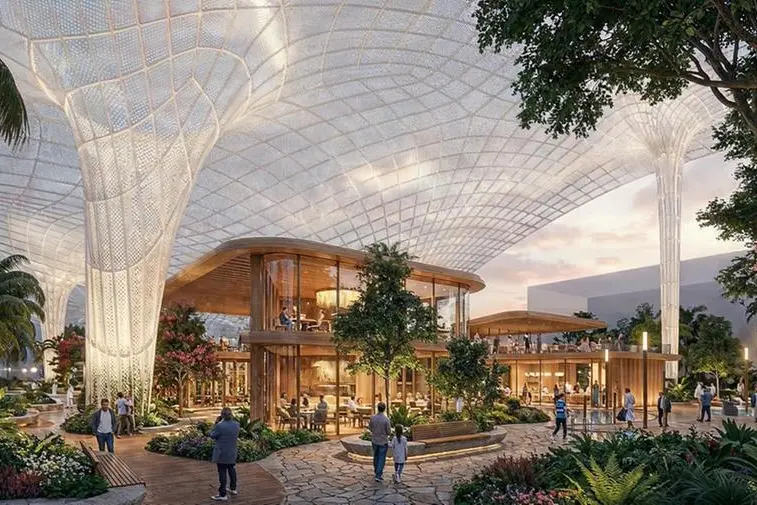
The project will have Egypt’s first AI Campus, which he said sits at the heart of the innovation district as a structural pillar of the master plan, not an amenity.
“The cumulative effect is that the AI Campus not only generates value within its own footprint; it also lifts the asset value of every plot across the master plan,” Rizk said.
According to him, investors are not buying into another mixed-use scheme, “they are buying into a district with a defensible economic engine.”
“It is what converts Sumou Boulevard from a real estate asset into an economic platform that brings corporates, the innovation arms of established companies, and high-growth startups into a single connected ecosystem.”
Rizk said the district is being designed to create long-term office, residential and retail demand.
He said the project would include serviced residential units targeted at younger professionals, alongside hospitality and lifestyle-driven retail offerings.
Expansion plans
The company said development will take place in phases, beginning with residential units, office space and core infrastructure.
“At 500,000 sqm and EGP 70 billion of total investment, Sumou Boulevard has been structured as a phased delivery rather than a single-cycle release,” Rizk said.
“Hospitality and the AI Campus are sequenced into the mid-cycle phases, where they unlock significant uplift across the surrounding plots once the anchors are operational,” he added.
ElSerafy said regional tensions have changed investor sentiment across the Middle East, particularly after the Iran conflict increased concerns around supply chains, inflation and execution risks.
“While short-term capital flows, especially portfolio investments, have become more volatile, long-term Gulf-backed investments remain largely intact due to Egypt’s scale, pricing advantage, and strategic importance,” ElSerafy said.
Rizk said the company sees the project as part of a broader long-term strategy in Egypt rather than a standalone development.
“Sumou Boulevard is our flagship, but it is not our endpoint,” he said. “Paragon-Adeer has been built as a long-term platform; we are establishing a development institution in Egypt, not delivering a single project and exiting.”
He said the company plans to announce additional projects in the coming years as it expands its regional presence.
“The role we want to play in the region is a fairly specific one: institutional-grade, master-planned development with international partner pedigree, executed at Egyptian price points and Egyptian delivery timelines,” Rizk said.
“There is a clear gap in that segment of the market today, between speculative local plays on one side, and developments that price themselves out of the addressable demand on the other. That is the gap we are building toward, and that is the position we intend to hold,” he concluded.
(Reporting by SA Kader; Editing by Anoop Menon)
(anoop.menon@lseg.com)
Subscribe to our Projects' PULSE newsletter that brings you trustworthy news, updates and insights on project activities, developments, and partnerships across sectors in the Middle East and Africa.