PHOTO
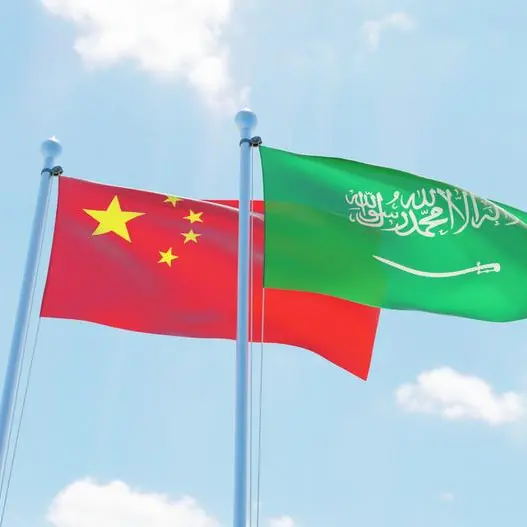
Gulf sovereign wealth funds and Asian technology companies are deepening partnerships in artificial intelligence, digital infrastructure and manufacturing, strengthening a fast-growing investment corridor between the Middle East and East Asia.
The momentum is expected to be on display at LEAP East, the Asian edition of Saudi Arabia’s flagship technology event, which will debut in Hong Kong next month, industry experts said ahead of the inaugural conference.
The event, scheduled for July 8-10, comes as Gulf countries accelerate economic diversification plans and Asian companies increasingly view the Middle East as a strategic base for global expansion rather than merely a regional sales market.
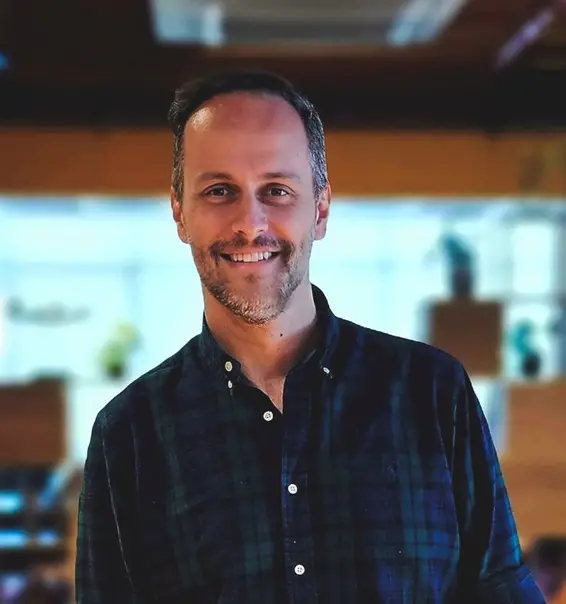
“The GCC and East Asia are becoming increasingly important because both regions bring something highly complementary to the table,” said Mike Champion, chief executive officer of Tahaluf, the Saudi-based events company behind LEAP Riyadh and organiser of the inaugural LEAP East conference in Hong Kong.
He added: “The Gulf is investing heavily in AI, digital infrastructure, advanced industries and economic diversification. They bring long-term capital, national transformation agendas and the ability to deploy technology at scale. At the same time, Asia remains one of the world’s strongest hubs for technology, manufacturing and entrepreneurial growth.”
The strengthening relationship reflects a broader structural shift in how Gulf economies engage with Asia, extending beyond trade and infrastructure into artificial intelligence, venture capital, advanced manufacturing and digital infrastructure.
Champion said LEAP East was designed to help accelerate those relationships by connecting investors, founders, governments and technology companies across Asia and the Middle East.
“The Gulf and Asia are becoming increasingly important to each other technologically, not just economically,” he said.
Hong Kong advantage
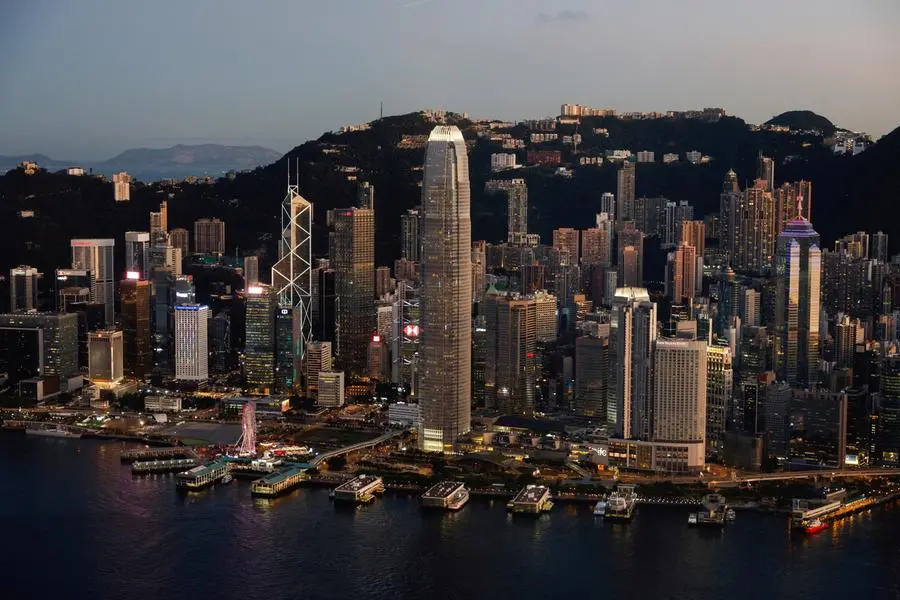
The event’s launch in Hong Kong reflects the city’s growing role as a bridge between Gulf capital and Asian innovation ecosystems.
Champion said Hong Kong was selected because it combines “capital, connectivity and readiness,” offering access to mainland China, the Greater Bay Area, Southeast Asia and wider Asia-Pacific markets while maintaining deep international investor networks.
The move also extends the influence of Saudi Arabia’s flagship LEAP technology conference, which has emerged as one of the world’s largest technology events.
Since its launch in 2022, LEAP Riyadh has facilitated more than $44 billion in investment announcements, including $14.9 billion during its 2025 edition, attracting more than 201,000 participants.
“LEAP East complements Riyadh by extending that platform into Asia,” Champion said. “Hong Kong extends that same platform into Asia’s innovation, capital and enterprise ecosystem — creating stronger pathways between Asian technology ecosystems and Gulf investment and transformation agendas.”
Resilient investor interest
Investor appetite remains strong despite heightened geopolitical tensions in the Middle East. While some major events have been postponed or rescheduled due to regional uncertainty stemming from the US-Iran conflict, industry executives say long-term interest in the GCC-Asia investment corridor remains resilient.
According to Tahaluf, more than 200 investors managing nearly $2 trillion in assets have already confirmed participation, including firms from mainland China, Hong Kong and the Middle East.
The sectors generating the strongest interest include artificial intelligence, deep technology, fintech, digital infrastructure, smart cities, mobility and healthcare technology.
“What is particularly exciting and encouraging is that the interest goes far beyond capital deployment,” Champion said. “Investors are showing real interest in building long-term partnerships, exploring localisation opportunities and ways to scale innovation across both regions.”
The growing importance of the corridor is also being driven by a strategic rethink among Gulf sovereign wealth funds and Asian institutional investors.
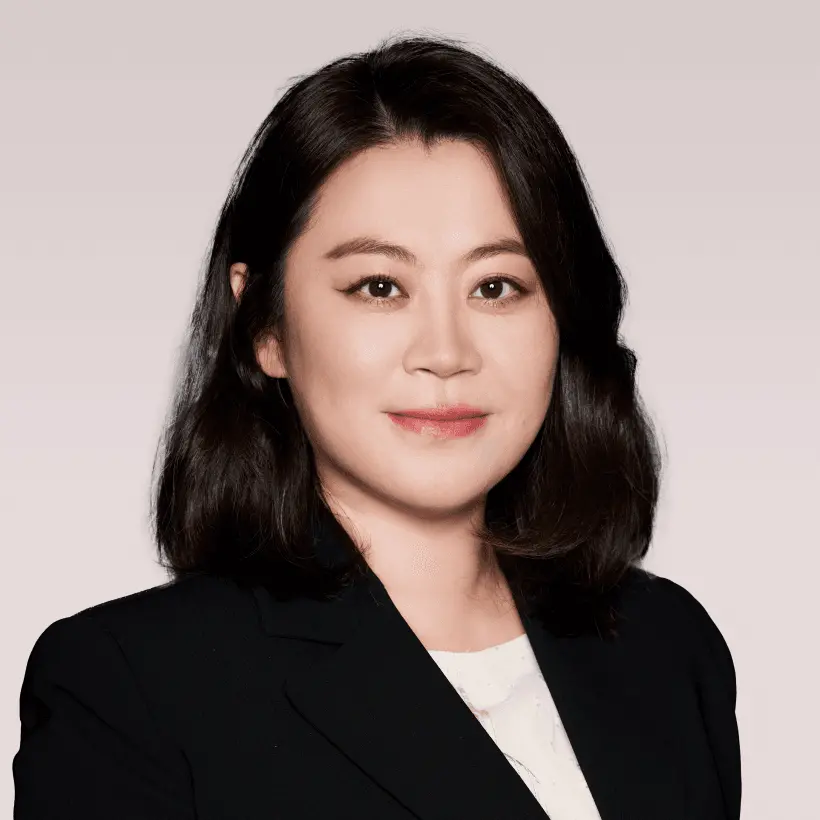
Jessica Wong, founder and managing partner of ewpartners, a cross-border investment firm focused on linking Gulf and Asian markets, said the relationship between the two regions has evolved significantly over recent years.
“The story of GCC-Asia used to be about capital flows. Gulf sovereign wealth funds deploying globally, Asian markets offering growth. That logic hasn’t disappeared — but it’s evolving fast,” she said.
GCC sovereign wealth funds now manage roughly $5 trillion in assets and deployed $136 billion globally in 2024, accounting for more than half of all sovereign wealth fund transactions worldwide, according to Deloitte data cited by Wong.
She said the shift is increasingly focused on building domestic industrial ecosystems rather than simply allocating capital abroad.
“PIF’s newly approved 2026–2030 strategy makes this explicit: a deliberate shift from global asset allocation toward building domestic industrial ecosystems — with logistics infrastructure, supply chain development, and digital infrastructure as core pillars,” Wong said.
She added that sovereign funds are increasingly acting simultaneously as investors, customers and policy enablers.
“Leading Gulf funds — PIF in Saudi Arabia, OIA in Oman — now operate simultaneously as co-investor, anchor customer, and policy enabler for companies entering the region. That combination exists nowhere else in the world.”
The changing dynamic is reshaping how Asian companies approach the Middle East.
“Five to eight years ago, most Asian companies came to us wanting to ‘enter the Middle East’ - sell products in, open a regional office in Dubai,” Wong said.
“Today, the questions have fundamentally shifted: How do we build manufacturing capability in the Gulf? How do we use Gulf logistics networks to serve global market? How do we co-invest with sovereign capital?”
The trend is already visible in several high-profile transactions.
Saudi-backed Alat invested $2 billion in Lenovo through a convertible bond agreement tied to the establishment of a manufacturing facility in Riyadh, while Chinese logistics company J& T Express has built what Wong described as its largest technology-enabled sorting centre in Saudi Arabia.
“Both reflect the same underlying shift: Asian companies are repositioning the Gulf as a strategic node in their global footprint, not a peripheral sales market,” she said.
Industry executives believe artificial intelligence will remain at the centre of future Gulf-Asia collaboration, but several adjacent sectors are also expected to attract substantial investment.
Champion pointed to fintech, biotechnology, healthcare technology, clean energy, mobility, advanced manufacturing and digital infrastructure as areas where Asian technological expertise aligns with Gulf demand and capital availability.
Wong similarly highlighted digital infrastructure, logistics, energy transition and healthcare as the most resilient long-term opportunities.
“Our view is that the most durable opportunities concentrate in areas that share a defining characteristic: they are enablers of the Gulf’s industrial transformation, not merely beneficiaries of it,” she said.
LEAP East
The inaugural LEAP East is expected to bring together more than 200 speakers, over 400 exhibitors, startups, investors, policymakers and corporate executives.
According to Annabelle Mander, executive vice president of Tahaluf, close to 120 technology companies from mainland China and Hong Kong have already confirmed participation.

These include robotics companies Unitree Robotics, DEEP Robotics, Keenon Robotics and HAI Robotics, alongside artificial intelligence firm Zhipu AI, biotechnology company Insilico Medicine, and fintech players XTransfer, Airwallex and WeLab.
More than 200 investors representing nearly $2 trillion in assets under management are also expected to attend, including Saudi Arabia’s Public Investment Fund, Macquarie Capital, Alibaba Entrepreneurs Fund, Sinovation Ventures, Gobi Partners, White Star Capital and ewpartners.
Mander said the conference was designed to create lasting commercial outcomes rather than simply showcase technology.
“LEAP East is designed as a platform for long-term relationship-building,” she said. “The event creates the moment, but the real value comes from the partnerships, investments, market-entry discussions and ecosystem connections that continue afterwards.”
As Saudi Arabia’s Vision 2030 and broader Gulf transformation programmes continue to drive demand for advanced technologies, executives say interest from Asia is becoming increasingly strategic and long term.
“The response has been very strong because the scale of opportunity is increasingly well understood across Asia,” Mander said.
“What we are seeing is a shift from general interest to more serious market engagement. Companies are actively asking how to localise, how to build partnerships, how to work with government and enterprise customers, and how to scale in a way that aligns with national priorities,” she said.
For investors and companies on both sides of the corridor, the message is increasingly clear.
“The question for Asian companies is no longer whether to engage the Middle East,” Wong said. “It’s how to use it to compete globally.”
(Reporting by SA Kader; Editing by Anoop Menon)
(anoop.menon@lseg.com)
Subscribe to our Projects' PULSE newsletter that brings you trustworthy news, updates and insights on project activities, developments, and partnerships across sectors in the Middle East and Africa.