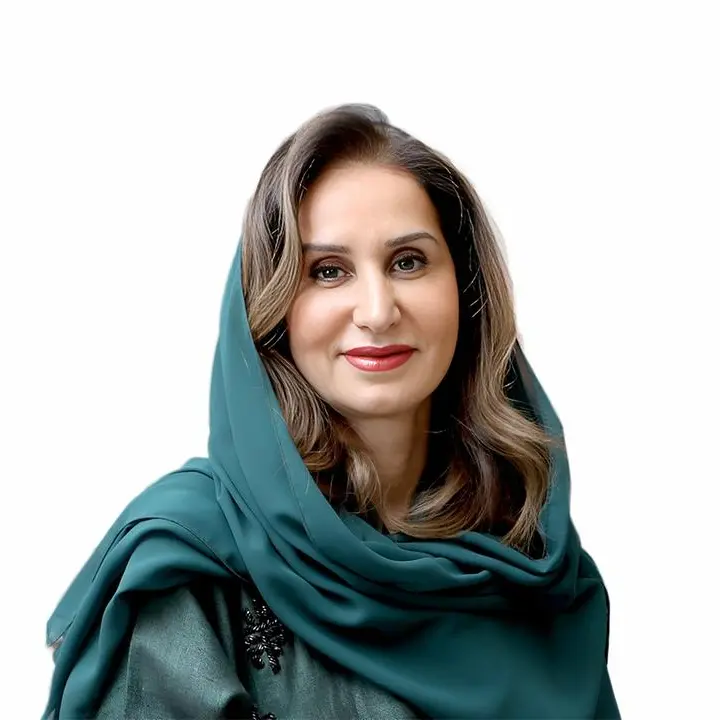
King Hussein Cancer Center celebrates World No Tobacco Day in collaboration with the World Health Organization and The Ministry of Health
King Hussein Cancer Center, in collaboration with the World Health Organization (WHO) and the Ministry of Health, will be hosting a celebration of World No Tobacco Day. King Hussein Cancer Center and its partners will be joining the global community in this celebration, which will be held under the theme "The WHO Framework Convention on Tobacco Control (FCTC)". The theme this year centers around how countries that have ratified the FCTC can achieve complete implementation of the FCTC articles in order to protect today's and the future's generations from the harmful health, social environmental and economic effects of tobacco use.
WHO global statistics indicate that 5.4 million deaths occur annually as a result of diseases associated with use of tobacco, which kills 50% of its users. In Jordan, scientific studies have also revealed the following tobacco-related statistics: the prevalence of cigarette smoking among adults 18 years or older reached 29% in general, and 49.6% among males and 5.7% among females specifically. Waterpipe use prevalence was estimated at 9.3% in the country. Among Jordanian youth aged 13 to 15 years, 11.5% report smoking cigarettes and 21.4% report smoking the waterpipe. The proportion of smokers in Jordan that initiated smoking before the age of ten was approximately 20.1%. In the medical community, the proportion of physicians (aged 25 or older) who smoked was approximately 34%.
Studies in Jordan have also indicated that exposure to secondhand smoke in homes and public places exceeds 50%. Furthermore, Jordan's National Cancer Registry reveals that more than 23% of male cancers are cancers directly associated with smoking, including lung, oral, laryngeal, bladder and colon cancers.
King Hussein Cancer Center has played an important role in Jordan's national efforts to control smoking and assist smokers in quitting, through the establishment of a Cancer Control Office the Center which aims to control the incidence of cancer in the country through evidence-based implementation of programs and activities, intensified promotion of healthy lifestyle practices as exemplified through avoiding smoking or secondhand smoke, physical activity, and healthy nutrition. The Cancer Control Office also conducts scientific research to provide healthcare practitioners, decision-makers and the community at large, with the scientific evidence that will help inform tobacco control efforts nationally, regionally, and globally.
Dr. Feras Hawari, Director of the Cancer Control Office and Chief of the Pulmonary and Critical Care section at King Hussein Cancer Center, stated that King Hussein Cancer Center works in cooperation with community-based organizations and the Ministry of Health to perform several activities such as spread awareness regarding the harms of smoking and their prevention, as well as how to quit; and enforcement of regulations that are related to tobacco control and consumption.
The Cancer Control Office is now working to conduct studies regarding tobacco consumption among adults in Jordan, and is studying the negative health effects associated with waterpipe use. Dr. Hawari added that a study had been conducted to evaluate the impact of health warnings to be printed on cigarette boxes beginning 2012. The Cancer Control Office also has organized various lectures and awareness sessions in governmental, academic, private and community-based institutions.
Dr. Hawari also pointed to King Hussein Cancer Center's smoking cessation services that are provided to cancer patients as well as subjects from the community, through the Center's smoking cessation clinic, which was established in 2008 to provide all therapeutic options to treat nicotine dependence. Dr. Hawari reiterated that the selection of King Hussein Cancer Center as a regional partner in the Global Bridges Healthcare Alliance to treat tobacco dependence in the Middle East has come as a result of the great efforts made on part of King Hussein Cancer Center and King Hussein Cancer Foundation to combat tobacco and to raise awareness in local and regional communities regarding the dangers of smoking on our children should they continue using tobacco in its various forms, and the health and economic consequences of such use.
Dr. Hawari explained that the Global Bridges Alliance is interested in implementing article 14 of the FCTC which covers tobacco dependence and its treatment. This alliance seeks to enhance the capacity and qualifications of the healthcare sector in order for the latter to be able to provide smoking cessation services, and seeks as well to enhance the knowledge of those working in the sector regarding tobacco control policies. The Cancer Control Office has provided smoking cessation training for several healthcare practitioners as part of a series of workshops being conducted on national and regional levels.
Dr. Hashim El-Zein El-Mousaad, the WHO Representative and Chief of Mission in Jordan, stated that "WHO estimates that the tobacco epidemic kills nearly 6 million people every year, with one death every six seconds due to use and exposure to tobacco smoke". Dr. El-Mousaad added that "this year, WHO selected the WHO Framework Convention on Tobacco Control as the theme for World No Tobacco Day taking place on Tuesday, 31 May 2011. The framework and its guidelines provide the foundation for countries to implement and manage tobacco control. Without urgent action, the death toll could rise to more than eight million by 2030."
Dr. Malek Habashneh, Director of Health Awareness and Promotion Directorate in the Ministry of Health, said that The Public Health Law was modified and announced in 2008, in order to comply with the obligations of the Framework Convention for Tobacco Control that Jordan ratified in 2004. A section about protection of public health from tobacco harms was added to the law, which prohibits smoking in public places, and includes specific articles that protect children in kindergarten and nurseries from exposure to tobacco smoke. The law also focuses on prohibiting sales of tobacco products to minors, in addition to banning of advertisement and promotion of tobacco products and set penalties to those who breach the law. The Ministry of Health has assigned approximately 150 liaisons officers who work on the implementation and enforcement of the tobacco control legislation throughout the Kingdom in addition to their educational role.
Dr. Habashneh also clarified that the Ministry of Health has conducted many studies and has established a database providing information on tobacco consumption among different groups in the community. The Ministry of Health in collaboration with Jordan Institution for Standards and Metrology, has developed a new technical regulation for cigarettes. It includes a pictorial health warning of 50% surface area on both sides, one side for a warning sentence and the other for a picture. These health warnings will be rotating and will be introduced to the market in January 2012. The Ministry of Health has also established the first smoking cessation clinic in the country, in 2003. The clinic provides free-of-charge counseling and medications to those who desire to quit. The Ministry of Health is now aiming to establish new clinics throughout the Kingdom.
In addition, Dr Habashneh pointed out that the Ministry of Health in collaboration with WHO will be holding the WNTD 2011 celebration in Regency Palace Hotel on Monday 30/05/2011. They are organizing an exhibition as well, where the Jordanian Anti-Smoking Society, the Royal Health Awareness Society, and King Hussein Cancer Center will be participating.
King Hussein Cancer Center will organize awareness activities, to be held at Mecca Mall, on Saturday the 4th of June, 2011. The activities will start at 2:00 p.m. and continue until 8:00 p.m. Activities will consist of an educational exhibition and the distribution of educational brochures on the harmful effects of smoking and ways to quit. In addition, educational models will be displayed for children and adults to give a full idea about the harms of smoking on health for those who smoke as well as the harms of exposure to secondhand smoke
-Ends-
For more information, please call: 0777652229
Hanan Mohidin - Public Relations & Media Officer- Media and Public Relations office - King Hussein Cancer Center Email: hmohidin@khcc.jo
© Press Release 2011