Credit FAQ Provides Update On Development Of S&P's Risk-Adjusted Capital Framework
LONDON, June 11 2007--The implementation of Basel II in the Gulf Cooperation Council (GCC) countries is not expected to have a dramatic impact on the credit ratings of Gulf banks and will improve transparency, according to Standard & Poor's Ratings Services. It will help regional banks improve their risk management systems and focus more on quantitative information and analysis, however many will be challenged to find reliable regional data on corporate defaults.
Emmanuel Volland, credit analyst at Standard & Poor's Ratings Services, said all GCC regulators have so far decided that banks must first implement the simplest approach to capital management under Basel II, the so-called "standardized approach," and some countries have already implemented this new regulation on minimum capital ratios. Kuwait was the first country in the world to introduce the Basel II regulation, as early as December 31, 2005, Mr Volland noted.
In the short to medium term, Standard & Poor's Ratings Services expects the most sophisticated Gulf banks to move to the "Internal Ratings Based" approach. "This would require deeper and more complex work, and banks will be challenged to find reliable regional data on Probability of Default and Loss Given Default," Mr Volland said. "Although Basel II is not expected to have a dramatic impact on GCC banks, it will help them to improve their risk management systems and focus more on quantitative information/analysis."
Standard & Poor's Ratings Services plans to begin implementing its risk-adjusted capital framework (RACF) from the first quarter of 2008. In a new report titled "Credit FAQ: Building Standard & Poor's Risk-Adjusted Capital Framework" Standard & Poor's Ratings Services answer questions raised in response to our request for comment published on November 8, 2006 ("Request For Comment: Risk-Based Framework For Assessing The Capital Adequacy Of Financial Institutions", updated January 12, 2007.)
Standard & Poor's welcomes the expected increase in transparency that will be driven by extensive Pillar 3 requirements under Basel II. This will allow us to develop a much more robust global risk-adjusted capital measure. In the more than 100 countries where Basel II will be implemented, Pillar 3 will be the starting point for our measure.
We believe adjustments can be made to make Basel II measures more comparable. We will take full advantage of the estimates and disclosures made for capital requirements under Basel II but will adjust these requirements to enhance comparability.
We will factor in our differences in opinion and will seek to provide a consistent and transparent quantification of Pillar 2 risk factors such as single-name concentration, industry and/or geographic concentration, asset class diversification, and interest rate risk in the banking book.
The new report addresses the following questions, among others:
Will the RACF only cover unexpected losses?
What is the time horizon for Standard & Poor's RACF?
What is the relation between the Basel II approach and Standard & Poor's RACF?
What is the geographical coverage of the RACF?
What will be the extent of public disclosure of Standard & Poor's RACF?
How will the RACF treat securitized assets?
How will Standard & Poor's RACF treat diversification?
What is Standard & Poor's global implementation schedule for the BCA, SCA, and ECA?
-Ends-
About Standard & Poor's in the Middle East
Standard & Poor's is the leading provider of financial market intelligence to customers in the Middle East's credit risk management, wealth management, and data and information markets. Since entering the region in the early 1990's, Standard & Poor's has become the largest provider of credit ratings in the G.C.C, rating more than 90 issuers. In equity markets, Shariah-compliant versions of Standard & Poor's global and regional equity market indices - S&P 500, S&P Europe 350, S&P Japan 500 and S&P/IFCI GCC - have created new opportunities for Islamic investors to benchmark their international investments and for asset managers to create new investment products serving the Islamic community. For further details on Standard & Poor's Middle East capabilities please visit www.middleeast.standardandpoors.com
Standard & Poor's, a division of The McGraw-Hill Companies (NYSE:MHP), is the world's foremost provider of financial market intelligence, including independent credit ratings, indices, risk evaluation, investment research and data. With approximately 8,500 employees, including wholly owned affiliates, located in 21 countries. Standard & Poor's is an essential part of the world's financial infrastructure and has played a leading role for more than 140 years in providing investors with the independent benchmarks they need to feel more confident about their investment and financial decisions. For more information, visit http://www.standardandpoors.com.
Analyst Contacts:
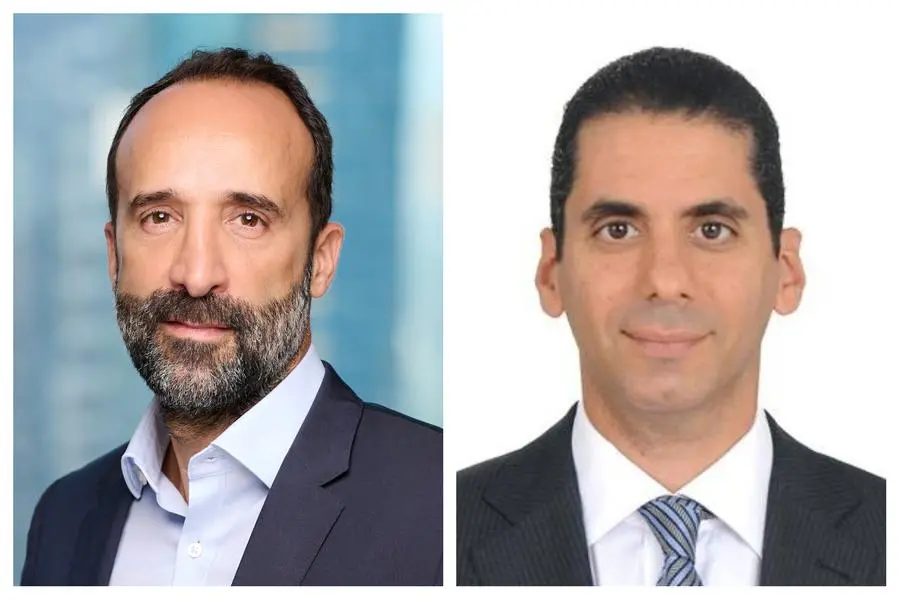
Emmanuel Volland, Paris,
Bernard de Longevialle, Paris
Prodyot Samanta, New York
Elie Heriard Dubreuil, Paris
Media Contact:
Matthew McAdam, Communications
Tel: (44) 20-7176-3541
Matthew_mcadam@standardandpoors.com
Standard & Poor's European Media Hotline
London +44 (0) 20 7176 3605
Paris: +33 1 44 20 6740
Frankfurt: +49 69 33999 225
Milan: +39 02 72 111 245
Madrid: +34 91 389 6944
Moscow: +7 495 783 4017
Stockholm: +46 8 440 5914
Media_Europe@standardandpoors.com
© Press Release 2007