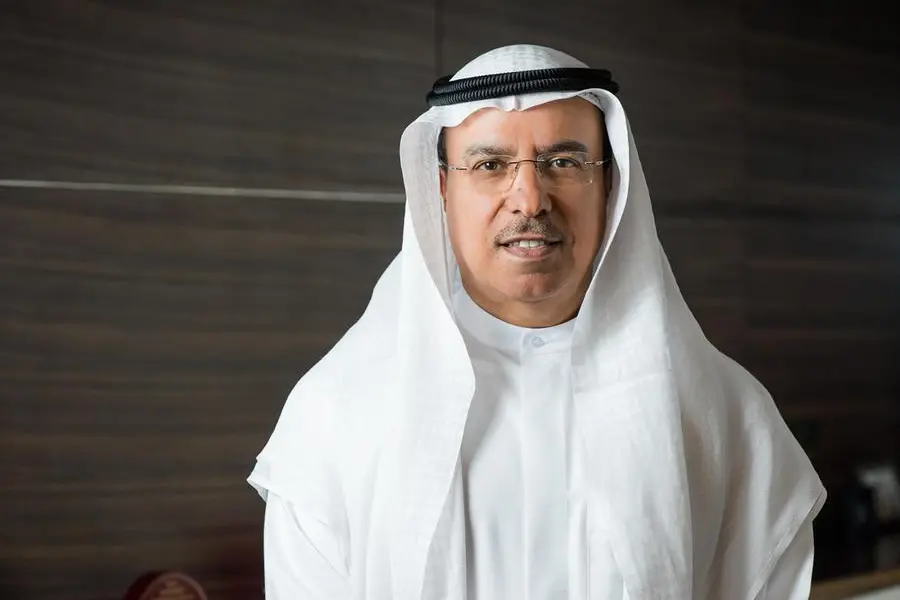
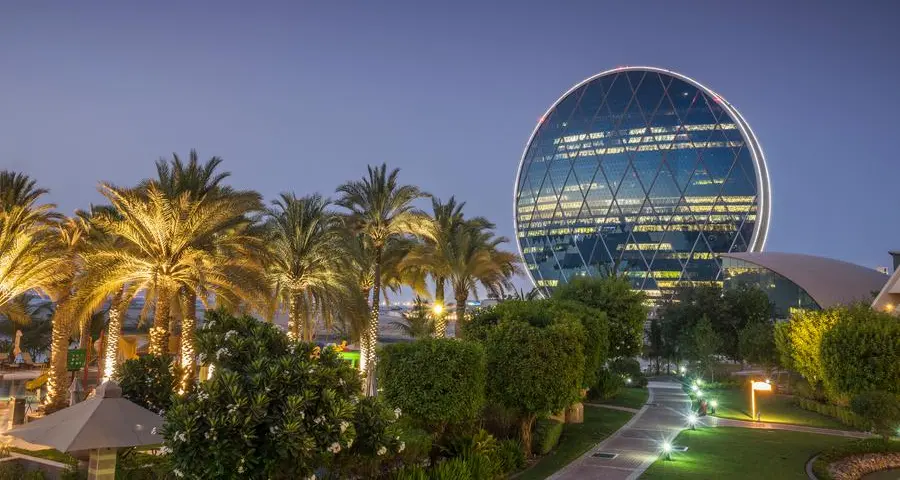
HE Hani Al Hamli, Secretary-general of Dubai Economic Council (DEC), stated that the activities of Dubai Economic Forum 2009 are coming soon. The title of the forum is "Global financial Crisis: impacts, policy Responses and Future prospects" October 27-28, 2009, at The Address Downtown Burj Dubai hotel.
The forum is considered as the annual event that gathers the decision makers of federal and local entities in the UAE, representatives of local business community and of international financial and strategic consultancy entities, local and international research institutions, and regional and international development organizations. The aim of the forum is to address the global crisis issues and find policy responses.
"The idea of the forum emerges in terms of Dubai Economic Council keen in organizing the activities that monitor the economic development incurring in international, regional and local levels, and to discuss the alternative policies to cope with these developments, to participate in enhancing the economic development process". Hani Al Hamli, DEC Secretary-general
One of the forum advantages is to gather the UAE economic decision makers in both federal and local levels, business community, and international experts in order to raise debates and discuss the best practices worldwide in crafting the economic policies aiming at confronting the global financial crisis to sustain the economic and social welfare" Al Hamli said.
DEC has taken an exceptional interest on the global crisis issues since the subprime crisis in 2007 and the stems of current global financial crisis on September 2008. In this context, the Council has conducted many studies and organized consultations with government officials and representatives of the business community to arrive to a unified vision towards policy responses and to restore the great economic achievements the UAE and Dubai realized in all fields. This event, the Dubai Economic Forum 2009, is the culmination of these efforts. He also emphasized that despite its impacts its implications, the global crisis is an opportunity to review the economic development march on the national and regional levels.
Many crisis issues will be addressed
Al Hamli shed lights on the main issues of the Forum. Those include the economic dimension; which includes a trace of the crisis starting from its first spark in the UAE, then moved to many countries worldwide, its impacts on macroeconomic and sectoral levels, and then the policies advocated by countries to mitigate these impacts and to avoid its repetition in the future.
The second dimension is the legal and regulatory. This includes analysis of legal framework adopted in different economies, developed and emerging, the crisis implications for these frameworks, and the reforms requirement to enhance the business environment.
The third dimension is the crisis implication for competitiveness advantage of Dubai. This includes reviewing the productivity and innovation facts in Dubai, clusters, and the strategies that enhance the competitiveness of home-made products in the global market.
Al Hamli stated that the current global financial and economic crisis is almost unanimously considered as the most serious shock to the global economy since the 1930s Great Depression. Though this crisis emanated from advanced economies, its consequences are global, especially for emerging economies that are highly integrated into the global economy like those of the GCC, most notably Dubai/UAE.
Moreover, even less developed and poorer countries that are relatively isolated from global markets are also vulnerable, some quite severely, because the crisis might also lead to lower official development assistance or collapse of commodity exports. For example, the World Bank projects high income economies to shrink by 0.1 percent in 2008, compared to a pre-crisis projected growth of 2.5 percent for the same year; and for 2009 these economies are forecasted to experience even deeper recessions, ranging from a negative real growth of -4.2 percent for the Euro area to -5.4 percent for Japan. Also, for the first time since 1982, global trade volumes are expected to actually contract in 2009.
The policy responses discussed in policy and academic circles, and implemented by some countries, are centered on fiscal stimulus packages and liquidity provisions, asset purchases, recapitalization, and guarantees.
In his analysis about the therapies undertaken by developed world to confront the crisis so far, Al Hamli mentioned that the Group of Twenty (G-20) economic summit in April pledged to do whatever is necessary to "restore confidence, growth and jobs; repair the financial system to restore lending; strengthen financial regulation to build trust; fund and reform the international financial institutions to overcome the crisis and prevent future ones; promote global trade and investment and reject protectionism; and build an inclusive, green, and sustainable recovery". The G-20 at their summit in Pittsburg in September 2009 pledged to sustain the strong policy response to counter the global economic crisis and provided political support for a shift in country representation at the IMF towards dynamic emerging market and developing countries. Moreover, the G-20 was designated as the "premier forum for our international economic cooperation".
The UAE government and that of Dubai succeeded in stabilizing the banking sector and restored depositors' confidence in the system by adopting fiscal and monetary policies and measures that counteracted and contained the impact of the global crisis on the domestic economy. Liquidity was provided to the banking sector; the governments guaranteed all deposits at all banks in the UAE as well as inter- bank deposits. In particular, Dubai's bonds have contributed immensely in this regard.
In this context, Al Hamli pointed out that many regional and global reports unveiled the recovery of the UAE economy from the crisis impacts. Al Hamli underlined the main indicators of that recovery, e.g., an increase in employment in last two months compared with the Q4 2008, fall in interest rate in the banking system and, hence, a commencement in lending, a rise in properties prices in many areas in Dubai in addition to construction movement, an improvement in financial markets indicators and its positive impacts on the whole local markets especially enhance investor's confidence.
"No doubt the gradual improvement in global markets, especially in oil prices and financial markets has positive impacts on many economies including UAE and Dubai" Al Hamli stressed.
In the light of the above, this forum will analyze and draw the lessons from four interrelated issues regarding the crisis:
· Why and how it happened and its consequences for the economies of the region;
· The sectoral impacts on key sectors and markets: real estate, stock markets and oil;
· The emerging global regulatory framework and the new financial architecture;
· The long term development strategy for the UAE/ Dubai in the post crisis global economy.
-Ends-
© Press Release 2009