PHOTO
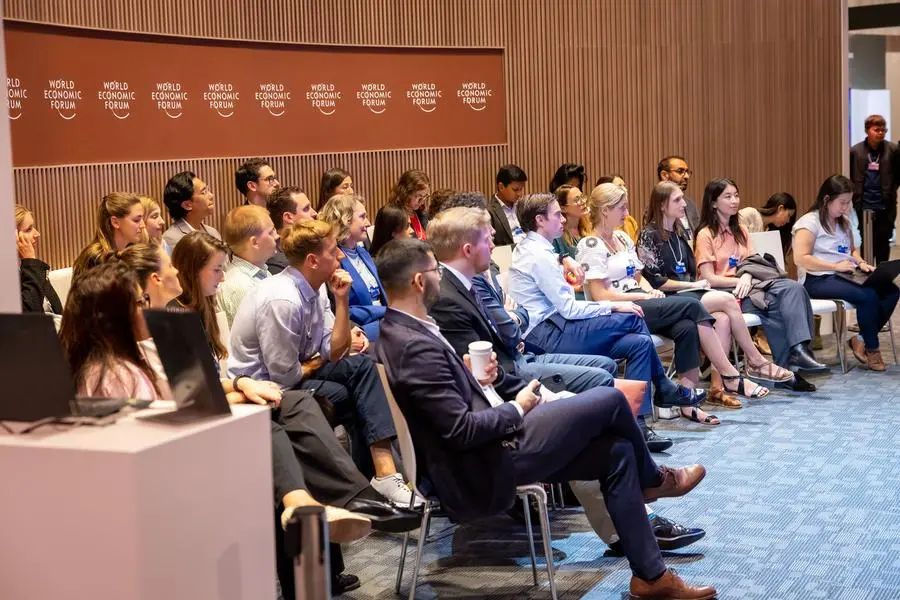
Dubai, UAE - Expert panellists tackled the theme of escalating cyber risks amid geopolitical tensions and rapid AI deployment in a session titled ‘Riding out Cyber Storms’ during the Annual Meetings of the Global Future Councils and Cybersecurity 2025, held from 14-16 October in Dubai.
The session featured Dario Leandro Genua, Secretary of Innovation, Science, and Technology of Argentina, and Joe Levy, Chief Executive Officer of Sophos, United Kingdom, who noted that adversaries gain an edge by deploying AI and advanced technologies rapidly, while defenders must balance speed with risk management across data, infrastructure, and governance. The panellists emphasised that system-wide vigilance, public-private cooperation, and regional security operations are essential, and that training human resources and strengthening critical infrastructure are key to ensuring resilience.
Kemba Eneas Walden, President of the Paladin Global Institute, Paladin Capital Group, USA, highlighted how quantum computing is supercharging AI, amplifying both capabilities and threats. She cited Estonia as a model, demonstrating how a small nation can build a strong cybersecurity and cyber defence system despite historical challenges. Walden stressed that effective cyber defence requires an understanding of AI as encompassing data, infrastructure, applications, and governance, with risk assessment, prioritisation, and mitigation imperative in a complex, rapidly evolving landscape.
Panellists also addressed the geopolitical dimension of cybersecurity, noting that international tensions, cross-border technology use, and decentralised adversaries complicate traditional containment and attribution. AI has expanded both attack surfaces and defensive capacities, creating a dynamic cyber environment that challenges stability, insurance markets, and deterrence models globally.
Organised by the UAE Government in partnership with the World Economic Forum (WEF), the event brings together over 700 experts from 93 countries across 37 Councils. Council members focus on advancing global efforts to design a sustainable future, enhance quality of life for communities, and create opportunities for future generations.
The Annual Meetings of the Global Future Councils and Cybersecurity 2025 cover six broad themes: Technology, Economy, Society, Environment, Governance, and Health. This year marks the first time the Annual Meeting on Cybersecurity is held concurrently with the Global Future Councils, setting a new milestone in the partnership between the UAE Government and the World Economic Forum, during which nearly 900 Global Future Councils have been held, engaging more than 12,000 officials and experts from around the world.