PHOTO
Abu Dhabi, United Arab Emirates: The Emirates Mission to the Asteroid Belt (EMA) has successfully completed the Ground Segment Critical Design Review (GS-CDR), marking a key milestone in the mission’s transition from final design to implementation and operational readiness.
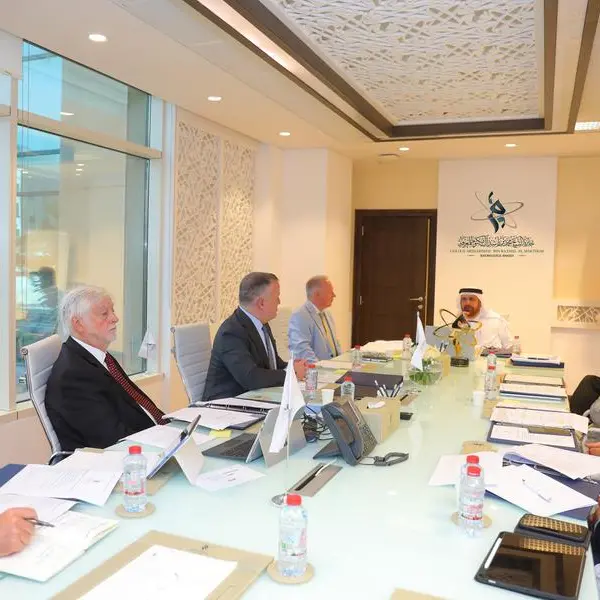
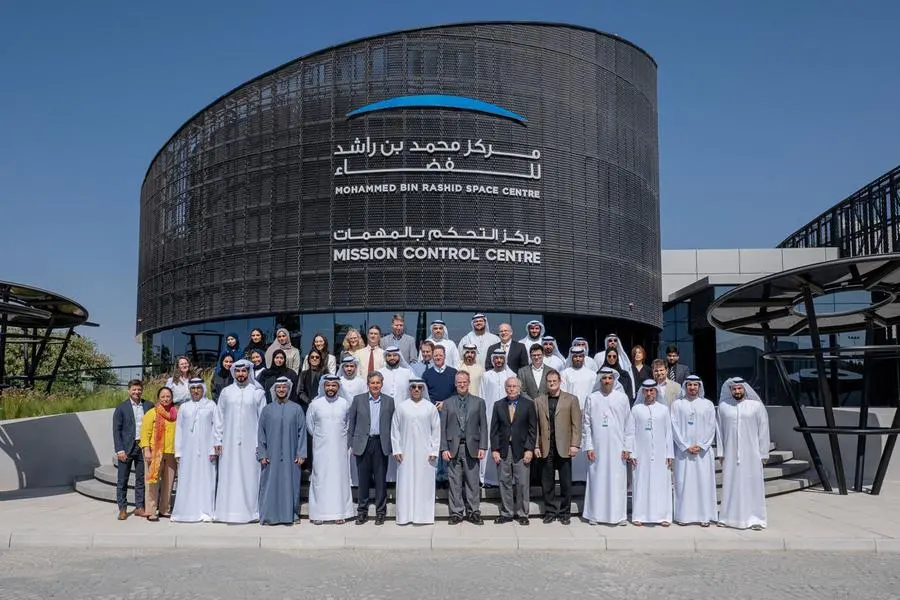
The review, conducted with the participation of Emirati and international experts, confirms that the Ground Segment design is complete and ready to move from design into full-scale implementation, integration, and testing of the UAE-based mission control centre that will operate and communicate with MBR Explorer.
The GS-CDR brought together representatives from the UAE Space Agency, the Mohammed Bin Rashid Space Centre (MBRSC), the University of Colorado Boulder – Laboratory for Atmospheric and Space Physics (LASP), and the Technology Innovation Institute (TII), along with experts from the UAE Space Agency, Space42 and international subject-matter experts and independent reviewers serving in review and advisory roles.
His Excellency Dr. Ahmad Belhoul Al Falasi, Minister of Sport and Chairman of the Board of Directors of the UAE Space Agency, extended his sincere congratulations to the national working teams and strategic partners on this outstanding achievement, which reflects the advanced level of technical maturity attained by the national space ecosystem.
His Excellency stated: "The progression of the Emirates Mission to the Asteroid Belt from the design phase to the implementation phase represents far more than a technical milestone; it constitutes a strategic leap that establishes advanced operational capabilities in space mission management and consolidates the UAE's standing on the global stage as an effective and influential partner in deep space exploration."
His Excellency Dr. Al Falasi further added: "As we approach the mission’s official launch in 2028, we are moving forward with confidence toward the implementation phase, supported by a robust institutional framework, distinguished international partnerships and national talents fully equipped to lead complex space projects in line with the highest global standards, thereby fulfilling the vision of our wise leadership to make investment in space sciences and advanced technologies a foundational pillar of a sustainable future economy."
The review also involved active participation from the UAE National Team, contributing across ground segment development engineering, mission operations, and review activities.
His Excellency Salem Butti Al Qubaisi, Director General of the UAE Space Agency, said: “The completion of the Ground Segment Critical Design Review reflects the strength of the programme’s governance architecture and the disciplined coordination underpinning the mission. As the lead authority overseeing the Emirates Mission to the Asteroid Belt, the UAE Space Agency remains focused on ensuring that each phase advances in alignment with international standards, long-term sustainability, and clear strategic oversight. This milestone confirms that the institutional foundations of the mission are progressing as intended.”
Unlike previous Critical Design Reviews that focused on MBR Explorer and the lander development or mission-wide design, this review was dedicated solely to the Ground Segment. It examined the systems responsible for mission operations, communications, flight dynamic systems, payload data handling, and operational continuity, and validated their readiness to support the mission throughout its lifecycle.
The review evaluated the maturity of the Ground Segment architecture, operational concepts, and system interfaces, as well as the mission’s overall risk posture. Major risks were reduced significantly through confirmation of the Deep Space Network as the mission’s space communications provider and the adoption of an innovative solution that is cloud-enabled architectures that has been previously demonstrated on UAE space missions, including the Emirates Mars Mission in its extended phase.
Operational continuity was further bolstered through built-in redundancy and geographically dispersed operations designed to support long duration deep space activities.
His Excellency Salem Humaid AlMarri, Director General of MBRSC, said: “This milestone signals the Emirates Mission to the Asteroid Belt’s transition into the next stage of development involving preparedness for implementation and operation, reflecting the UAE’s ability to execute one of the most complex scientific undertakings in its history. It is the result of sustained national investment in advanced engineering, disciplined programme management, and the exceptional calibre of our highly capable national cadre and partners.”
Mohsen Al Awadhi, Mission Director of the Emirates Mission to the Asteroid Belt, said: “The completion of the Ground Segment Critical Design Review confirms that EMA’s operational framework is ready to move from design into implementation. The review validated the maturity of the systems, interfaces, and operational concepts that will be used to run the mission on a day-to-day basis. This milestone allows the team to proceed with confidence into integration and testing, with a clear focus on operational readiness for a long-duration deep-space mission.”
The Emirates Mission to the Asteroid Belt is scheduled for launch in Q1, 2028, within a defined launch window. Designed as a long-duration deep-space mission, MBR Explorer is designed to operate for up to seven years following launch.
Once launched, it will travel approximately five billion kilometres, using gravity-assist manoeuvres involving Venus, Earth, and Mars to reach the main asteroid belt. The first asteroid encounter is expected in 2030, marking the beginning of an extended exploration campaign.
The successful completion of the Ground Segment Critical Design Review confirms that the systems responsible for operating and controlling MBR Explorer are ready for development and testing, representing a critical step toward mission execution and long-term operational success.
About the UAE Space Agency (UAESA)
The UAE Space Agency is a federal agency that was created under Federal Law by Decree No. 1 of 2014. The space sector includes all projects, activities and programs related to outer space.
UAESA is responsible for developing and regulating the space sector in the UAE, supporting a sustainable national economy, developing human talents, bolstering R&D projects in the space sector, as well as enhancing and promoting the UAE’s role on the regional and global space map. It is entrusted with providing all administrative services in accordance with the highest standards of quality, efficiency, and transparency, as well as establishing a culture of innovation in the institutional ecosystem.
About the Emirates Mission to the Asteroid Belt (EMA)
The Emirates Mission to the Asteroid Belt marks a new pivotal milestone in the UAE’s space journey, as the first mission of its kind to study seven asteroids in the main asteroid belt between Mars and Jupiter. The mission seeks to deepen understanding of the origins, composition, and evolution of asteroids and their role in the formation of the solar system, as well as to explore water-rich asteroids, assess the presence of organic and volatile materials, and evaluate their potential for future utilisation.
Spanning 13 years, the mission includes the development of the spacecraft MBR Explorer, followed by a series of close flybys to collect unprecedented scientific data, culminating in a flyby and landing on the asteroid Justitia. MBR Explorer, is scheduled for launch in Q1 of 2028, and will travel nearly 5 billion kilometres, relying on advanced planetary gravity-assist manoeuvres.
The mission also carries strategic dimensions that go beyond scientific research. Dedicated activities are allocated to the private sector, contributing to the empowerment of Emirati and startup companies, accelerating the growth of the space economy, building national capabilities, sharing knowledge, and strengthening international partnerships, with support from the National Space Fund. The mission contributes to achieving the UAE’s vision of establishing itself as a global hub for scientific and technological innovation, opening new economic and scientific horizons to serve humanity.