PHOTO
United Arab Emirates: African presidents spoke of investment models, demographic power, sovereignty, and the future of democratic governance in the continent at the World Governments Summit 2026 in a debate on Africa and the coming decade.
The session, titled “Is the Next Decade African?”, brought together Honorable Duma Gideon Boko, President of the Republic of Botswana; His Excellency Julius Maada Bio, President of the Republic of Sierra Leone; and Honorable Emmerson Dambudzo Mnangagwa, President of the Republic of Zimbabwe, who discussed the continent’s future with Tucker Carlson, Founder of The Tucker Carlson Network.
President Boko of Botswana focused on youth innovation and Africa’s long-term global potential, noting that Africa is the world’s youngest continent.
“Young people are digital natives, entrepreneurial, and innovative,” he said. “With a median age of 19.3 years old.”
He noted that young Africans are poised to rule the world, outlining a vision of a more inclusive global order.
“Make it fairer, make it more equitable, to ensure that intellectual property is internalized in every part of the African continent, that innovation serves humanity, not just a predatory elite, and that everybody can partake in equity and benefit from the fruits of the economy,” he told the audience.
Addressing questions around foreign investment and historical extraction of African resources, President Mnangagwa emphasised national sovereignty and pragmatic decision-making.
“Zimbabwe is a sovereign state, and we engage with the West or the East based on what delivers the best outcomes for our people,” he said. “We do not need to please (others); we need to do what is good for ourselves.”
The conversation moved to Africa’s demographic advantage, with President Bio highlighting the continent’s young and growing population as a strategic asset that must be supported through education and long-term planning.
“It is essential to have young people at the right scale to ensure sustainability in development,” President Bio said.
“Our responsibility as leaders is to provide the enabling environment, education, and tools that allow young people to navigate an increasingly complex and digital world.”
President Bio added that his administration has prioritised free primary and secondary education to ensure no child is excluded.
“In the 21st century, without education, you cannot make it,” he said.
“We want our citizens to contribute not only nationally and regionally, but globally.”
The leaders also addressed governance and democracy, with President Bio reaffirming Africa’s commitment despite global uncertainty.
“The world is in a state of flux,” he said. “But we remain committed to democracy because it remains the best system for protecting freedoms, human rights, and accountability.”
The session underscored Africa’s determination to shape its own future economically, politically, and demographically, as the continent positions itself at the centre of global transformation over the next decade.
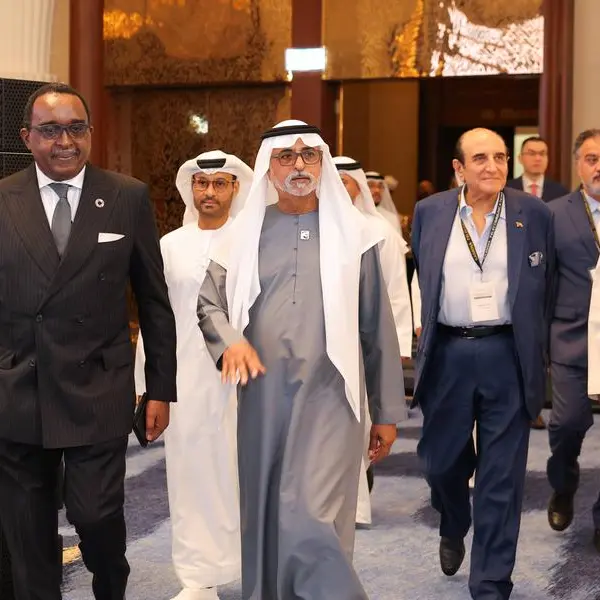
The WGS 2026 brings together more than 60 heads of state and government and their deputies, over 500 ministers and representatives from more than 150 governments. As well it has a select group of global thought leaders and experts, with more than 6,250 participants in attendance.
The Summit features more than 445 sessions with contributions from over 450 global figures, including presidents, ministers, experts, thinkers, and decision-makers.