PHOTO
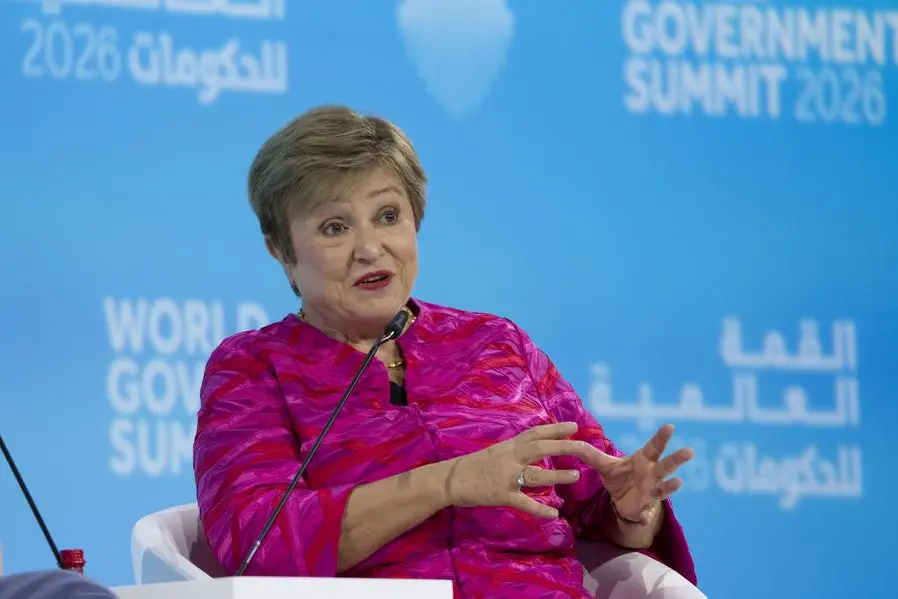
DUBAI: Kristalina Georgieva, Managing Director of the International Monetary Fund (IMF), affirmed that the global economy has proven resilient despite the complexities and rapid shifts imposed by the geopolitical landscape.
Speaking at plenary session during the World Governments Summit (WGS) 2026, which runs for three days under the theme “Shaping the Governments of the Future,” Her Excellency Georgieva commented: “What we see is a world that is more diverse, more multipolar, and more resilient as a result.”
She explained that the IMF’s latest projections indicate an improvement in global growth prospects across a number of economies, including the UAE and the Gulf countries. This improvement is driven by private-sector dynamism, a decline in the severity of expected trade shocks, and growing momentum linked to artificial intelligence technologies and their role in boosting productivity.
Drawing a comparison between the disparities of the word, she noted, “We are in a world that is on one side geopolitically much more complex, a world of transformation - technological, political, geopolitical, and demographic transformation - while on the other side quite resilient.”
The IMF Managing Director praised the experience of the UAE and the Gulf countries, commending the progress they have achieved in investing in human capital and their early commitment to developing national capabilities—factors that have provided them with a competitive advantage amid current technological transformations.
“I admire what you have done in two areas, the first one is investing in human capital. You have done it before AI was popular, but because you have done it, you have such a strong comparative advantage today when these new technologies are coming to life. Secondly, you recognize the importance of dialogue and cooperation.”
Georgieva also emphasised that the culture of dialogue and cooperation adopted by the UAE represents a key pillar in supporting regional and international stability.
She noted that the significant global transformations require countries to strengthen their institutional readiness and adopt flexible policies capable of coping with an international environment characterized by uncertainty.
She added that maintaining sustainable growth requires reinforcing the foundations of national economies, improving the efficiency of public policies, ensuring the sound allocation of financial resources, as well as enhancing regional and international cooperation and building bridges of trust among countries.