PHOTO
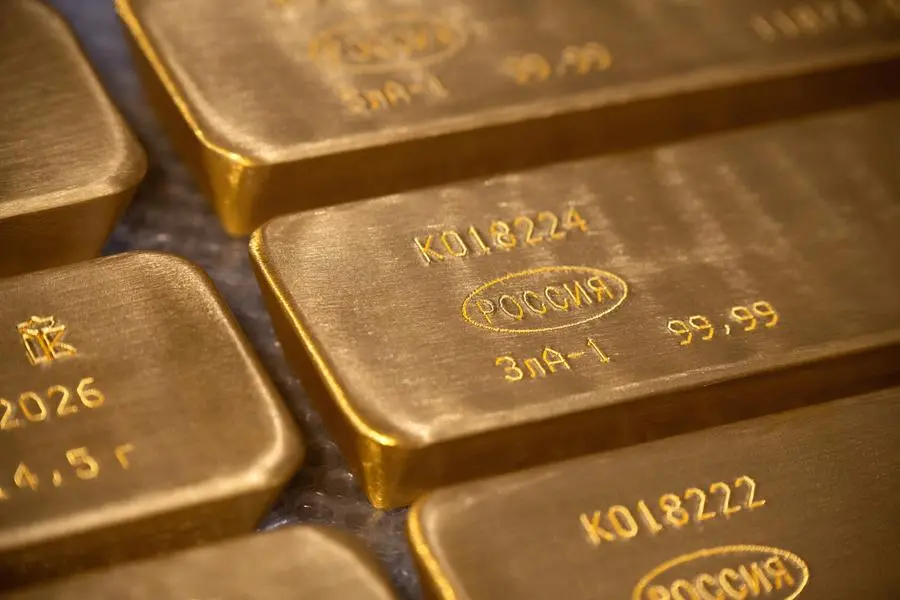
Gold fell on Monday as recent hostilities in the Gulf fueled inflation concerns and added to expectations of U.S. Federal Reserve rate hikes, pressuring the non-yielding metal. Spot gold was down 1.3% at $4,036.19 per ounce, as of 1053 GMT. U.S. gold futures for August delivery fell 1.1% to $4,051/oz.
Bullion posted a 1.7% weekly decline on Friday and was on track for a fourth straight monthly loss of more than 10%. Iran and the United States agreed to halt recent hostilities in the Gulf and renew talks regarding their dispute over the Strait of Hormuz, a U.S. official said on Sunday. Iran launched missiles and drones at U.S. military sites in Kuwait and Bahrain early on Sunday, shortly after President Donald Trump threatened that the Islamic Republic would cease to exist if it did not honor an agreement to end the war. "Gold prices are under pressure as investors remain uncertain about the progress of U.S.-Iran peace talks," said ActivTrades analyst Ricardo Evangelista, adding that renewed flare-ups could lift energy prices, revive inflation concerns and reinforce hawkish central bank expectations.
Crude oil prices were higher on the day.
While gold is often viewed as a hedge against inflation, its appeal tends to diminish in a high-interest-rate environment because it does not yield interest. Markets are pricing in three Fed rate hikes this year, with about a 61% chance of a rate hike in September, CME's FedWatch tool showed. Investors now await June's ADP employment data and the U.S. nonfarm payrolls data, for further clues on the Fed's monetary policy stance.
"A stronger-than-expected U.S. non-farm payrolls reading later this week could reinforce expectations of a more hawkish Federal Reserve, creating the conditions for a sustained break below $4,000," said Evangelista. Among other metals, spot silver fell 2.4% to $57.73 per ounce, while platinum fell 1.4% to $1,590.70 and palladium rose 0.6% to $1,216.67.