PHOTO
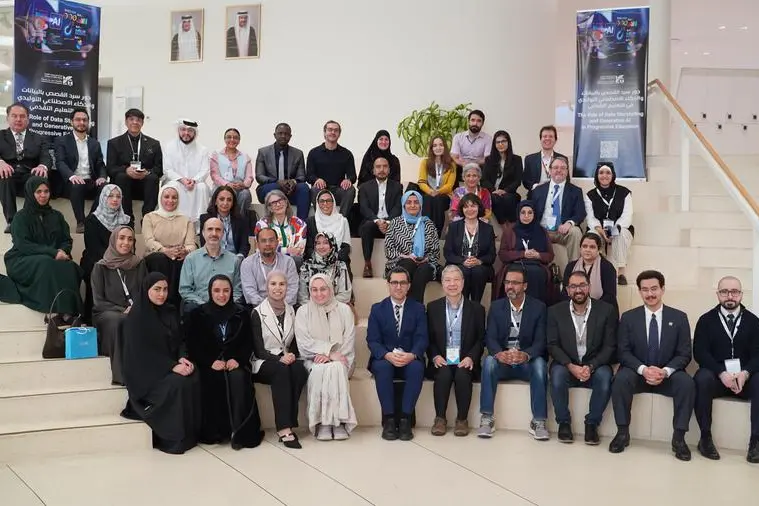
Doha: Hamad Bin Khalifa University has concluded ‘The Role of Data Storytelling and Generative AI in Progressive Education’ workshop, highlighting the role of artificial intelligence (AI) and data-driven narratives in building adaptive, future-ready learning environments.
Organized by the College of Public Policy (CPP), the two-day workshop gathered international and local experts from academia, policy and technology to examine institutional innovation and digital transformation in education and included over 50 speakers. Discussions emphasized the importance of embedding ethical considerations and societal implications into existing governance frameworks to ensure the safe and responsible use of generative AI.
Strategically designed themes, including personalized learning and assessment design, and new models of collaboration and creativity, spanned panels, masterclasses, a book launch, and hackathon, enhancing engagements across sessions. The program further touched on how data storytelling can influence policymaking, support cultural and societal priorities, and enhance human development in the digital age.
By bringing together interdisciplinary expertise, the workshop advances the University’s priority areas by translating research into actionable insights for progressive education, social progress and the responsible application of emerging technologies. In doing so, it connected research, policy, and practice, reinforcing the University’s role as a knowledge hub and impact-driven institution leading informed policymaking at a time when education systems navigate a rapidly evolving landscape. This event was made possible thanks to the Office of the Vice President for Research’s (OVPR) support.
“AI is undoubtedly one of the most important and transformative developments shaping education today,” Dr. Evren Tok, Associate Dean for Community Engagement, CPP, remarked. “Research and use have showcased the benefits; however, growing evidence also points to concerns around ethics, academic integrity, and technology dependence. Our graduates are entering the fastest-moving workforce in history, and our job is to ensure they master the tools they’ll encounter. This gathering reflects our commitment to bridge that gap, and turn these challenges into collaborative action with solutions that benefit Qatar and the world.”
The event additionally demonstrated how HBKU equips future leaders to understand, evaluate, and contribute to the development of innovative frameworks serving Qatar and the global community.
About Hamad Bin Khalifa University
Innovating Today, Shaping Tomorrow
Hamad Bin Khalifa University (HBKU), a member of Qatar Foundation for Education, Science, and Community Development (QF), is a leading, innovation-centric university committed to advancing education and research to address critical challenges facing Qatar and beyond. HBKU develops multidisciplinary academic programs and national research capabilities that drive collaboration with leading global institutions. The university is dedicated to equipping future leaders with an entrepreneurial mindset and advancing innovative solutions that create a positive global impact.
For more information about HBKU, its colleges, research institutes, and initiatives, please visit www.hbku.edu.qa.
To stay up to date on our social media activities, follow our accounts on: LinkedIn, Instagram, X, and Facebook.
For any media inquiries, please contact: media@hbku.edu.qa.
About the College of Public Policy
The College of Public Policy (CPP) accomplishes HBKU’s priority to contribute to effective policy development, evaluation, and dialogue in support of Qatar National Vision 2030. HBKU’s CPP is one of the leading public policy schools and knowledge hubs regionally and globally. It provides a uniquely situated venue for public conversation in Qatar, and a center for teaching and researching responses to policy questions of local and global relevance. Highly dynamic and open to novel ideas and experimentation, the CPP recruits the world’s best faculty, builds research capacity, educates future leaders who engage with their communities, and acts as a bridge for policy innovations that positively contribute to global public good. For more information about HBKU’s CPP, visit www.hbku.edu.qa/en/cpp.