PHOTO
- The flower-shaped “Lily” stent improves fluid drainage by around 30 percent compared with standard devices used to treat gastric leaks, based on laboratory testing.
- Its design better matches the irregular shape of post-surgical cavities, potentially reducing complications and repeat procedures.
- The device could shorten recovery time and lower healthcare costs if validated in further studies.
Abu Dhabi, UAE: Researchers from NYU Abu Dhabi and Cleveland Clinic Abu Dhabi have developed a novel stent design that could significantly improve treatment for gastric leaks in some patients following weight-loss surgery, helping accelerate recovery, enable a faster return to daily life, and reduce the need for certain additional treatment procedures that these cases may require.
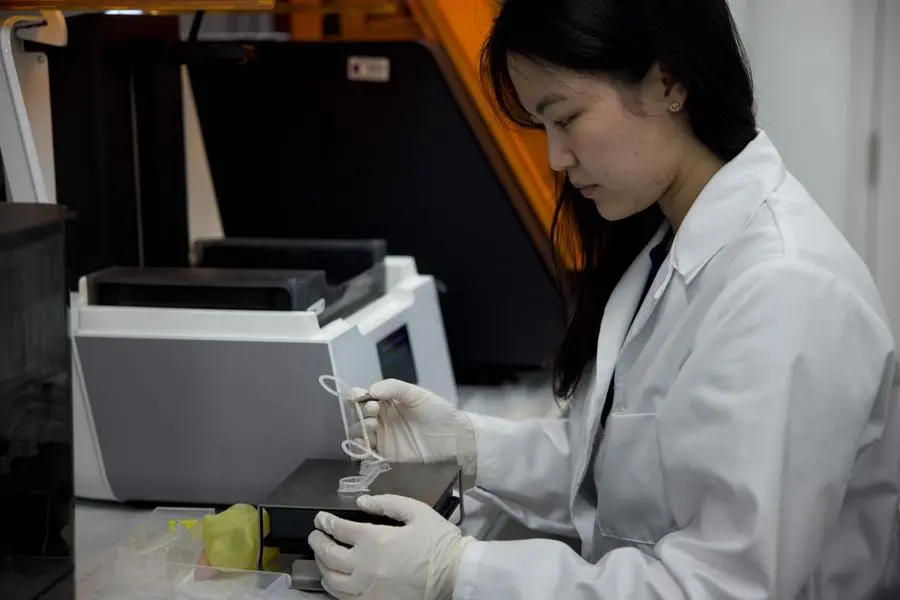
In the study, published in Advanced Healthcare Materials, the team introduced the “Lily” stent, a device inspired by natural geometry and developed using a design framework called PETALS (Personalized Endoscopic Transmural Abscess Leak Solution). The Lily design features a six-part, flower-like structure that creates more efficient pathways for fluid drainage.
Laboratory testing showed the new design increased drainage flow by approximately 30 percent compared with commonly used cylindrical commercial stents. The researchers found that the shape of the stent’s cross-section plays a critical role in how effectively fluid moves, more so than factors such as anchoring features or simply increasing the tube’s diameter.
“The key insight is that the geometry of the tube’s cross-section fundamentally determines how fast fluid moves through it,” said Khalil Ramadi, Assistant Professor of Bioengineering at NYU Abu Dhabi and Global Network Assistant Professor of Chemical and Biomolecular Engineering at NYU Tandon School of Engineering, and the study’s senior author. “We’re not just making it out of a different material. We’re changing the shape to make it work better.”
"Our work shifts the focus from placing a stent to engineering its function at a structural level,” said Parima Phowarasoontorn, a research assistant in Ramadi’s NYU Abu Dhabi lab and the paper’s first author. "Instead of simple tubes, we introduce cross-sectional designs that improve drainage while remaining compatible with existing endoscopic delivery procedures.”
“This collaboration with NYU Abu Dhabi reflects our commitment at Cleveland Clinic Abu Dhabi to advancing clinically relevant research that directly improves patient care,” said Dr. Sawsan Abdel-Razig, Chief Academic Officer at Cleveland Clinic Abu Dhabi. “By bringing together engineering innovation and clinical expertise, this research demonstrates how academic partnerships can help advance meaningful solutions to complex surgical challenges.”
The Lily stent is also more flexible than existing polyethylene devices, which may improve patient comfort and reduce tissue damage. Early testing suggests comparable biocompatibility to current materials, while its structure allows for manufacturing using conventional methods without requiring specialized 3D printing infrastructure.
While the device has so far been tested in simulations and laboratory models, further studies will be needed before it can move toward clinical use. If successful, the innovation could help reduce recovery times and the need for repeat procedures for patients undergoing bariatric surgery.
In addition to Ramadi and Phowarasoontorn, the paper's authors are Yongbin Ko, Sungyun Sohn, Heba Tageldeen Naser, Abdel-Hameed Dabbour, Batoul Khlaifat, Oraib Al-Ketan, and Mohamed Ali, all of NYU Abu Dhabi; Juan S. Barajas-Gamboa, Juan P. Pantoja, Ahmed AlZubaidi, Carlos Abril Vega, and John Rodriguez of the Digestive Disease Institute at Cleveland Clinic Abu Dhabi; and Matthew Kroh of the Digestive Disease Institute at Cleveland Clinic in Cleveland, Ohio. Funding for the research was provided by NYU Abu Dhabi and Sandooq Al Watan.
About NYU Abu Dhabi
www.nyuad.nyu.edu
NYU Abu Dhabi is the first comprehensive liberal arts and research campus in the Middle East to be operated abroad by a major American research university. Times Higher Education ranks NYU among the top 31 universities in the world, making NYU Abu Dhabi the highest globally ranked university in the UAE. NYU Abu Dhabi has integrated a highly selective undergraduate curriculum across the disciplines with a world center for advanced research and scholarship. The university enables its students in the sciences, engineering, social sciences, humanities, and arts to succeed in an increasingly interdependent world and advance cooperation and progress on humanity’s shared challenges. NYU Abu Dhabi’s high-achieving students have come from over 120 countries and speak over 100 languages. Together, NYU's campuses in New York, Abu Dhabi, and Shanghai form the backbone of a unique global university, giving faculty and students opportunities to experience varied learning environments and immersion in other cultures at one or more of the numerous study-abroad sites NYU maintains on six continents.
About Cleveland Clinic Abu Dhabi
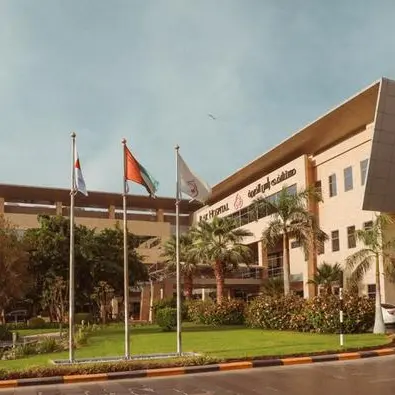
Cleveland Clinic Abu Dhabi, located on Al Maryah Island in Abu Dhabi, is a world-class multispecialty hospital, established under the guidance of the leadership of the UAE to meet the complex and critical care needs of patients locally and regionally. It plays an integral role in the UAE's healthcare system, by delivering world-class, patient-centered care and advancing medical expertise in alignment with national healthcare priorities.
The hospital is organized into eight specialized Institutes including, Heart, Vascular & Thoracic; Neurological; Cancer; Digestive Disease; Medical Subspecialties; Integrated Surgical Subspecialties; Integrated Hospital Care; and Diagnostic, supported by key departments such as Research, Education, Quality & Patient Safety, and Nursing.
The hospital’s state-of-the-art facilities include 411 beds, that include 90 critical care beds, 26 operating rooms, royal suites, and the Fatima bint Mubarak Center, a dedicated cancer facility offering comprehensive diagnostics and advanced treatment. Cleveland Clinic Abu Dhabi is recognized for its leadership in medical innovation, integrating robotics and AI-assisted therapies and programs to enhance patient outcomes and experience.
Designated by the Department of Health – Abu Dhabi as a Centre of Excellence for adult cardiac surgery, stroke, and adult multi-organ transplantation, the hospital is also an accredited research and teaching institution. It is the first in the UAE to earn accreditation from both ACGME-I and ACCME, offering residency, fellowship, undergraduate training, and Continuing Medical Education programs.