PHOTO
Kuwait: The performance of Kuwait equities remained resilient in February 2026, while the performance of other GCC markets was mixed.
The Kuwait All Share Index remained flat in February, gaining 0.1%, with the banking sector index falling 0.3%. National Bank of Kuwait and Kuwait Finance House declined by 0.8% and 0.5%, respectively, for the month. Among sectors, Consumer staples gained the most in February, rising by 11.6%. Jazeera Airways registered a share price gain of 23.1% during the month, driven by a 113.7% y/y increase in its 2025 net income. ACICO Industries gained 17.8% during the month, supported in part by a cooperation agreement signed on 15 February 2026 between Kuwait International Bank and ACICO to provide affordable financing solutions and exclusive incentives for citizens building residential plots.
According to the IMF, Kuwait’s real GDP is expected to expand by 3.8% y/y in 2026, driven by the unwinding of OPEC+ production cuts. Fitch estimates Kuwait’s credit at 9% y/y in 2026, a tad lower than the 11.4% y/y growth in 2025. Kuwait’s real estate sales declined in January 2026 to KD 236 million (-56% m/m), marking the lowest monthly sales figure in the past twelve months. The decline follows a record 26% y/y surge in yearly real estate sales to KD 4.4 billion in 2025. The decline was across the residential, investment, and commercial segments, reflecting normalization after a strong December, though sales were still marginally higher y/y (+2.4%).
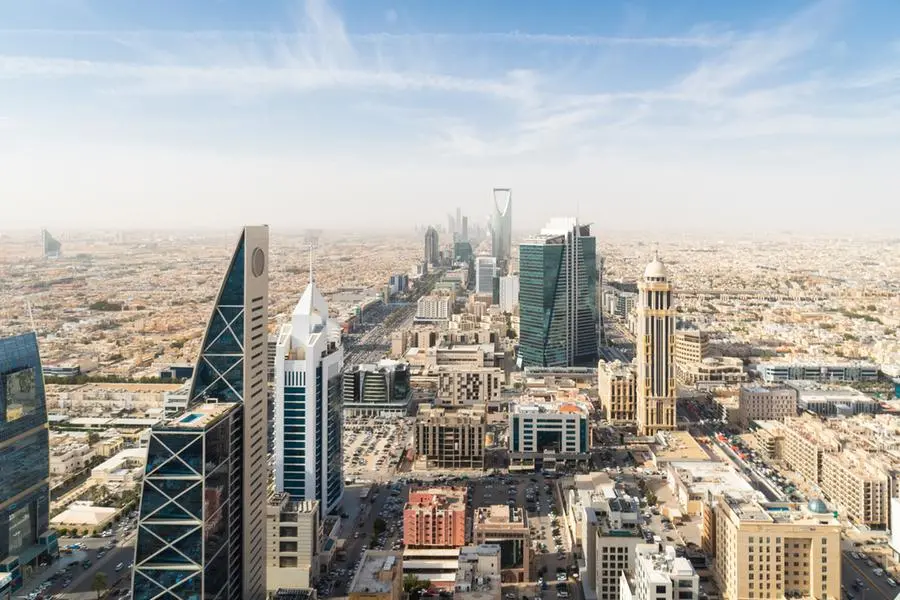
All GCC equity indices, except Saudi Arabia and Qatar, ended the month on a positive note, with Oman’s MSX 30 index leading the gains at 16.8%. MSXI’s gains were mainly driven by the optimism built around the country’s push to be classified as an Emerging Market by global index providers. The 5.9% decline in Saudi Arabia’s Tadawul Index exerted significant pressure on regional performance, contributing to a 2.8% decline in the S&P GCC Composite Index. Market sentiment weakened amid escalating geopolitical tensions between Iran and the U.S., as well as fiscal concerns, with Saudi Arabia’s budget deficit widening to SAR 94.85 billion in Q4 2025 from SAR 88.5 billion in the previous quarter. Saudi Arabia’s leading banks, Saudi National Bank and Al Rajhi Bank, recorded monthly declines of 7.1% and 5.8%, respectively. Saudi Telecom Company declined by 5.8% after reporting a 39.9% y/y drop in net income (SAR 14.83 billion) for 2025, due to a non-recurring gain in 2024. Abu Dhabi’s equity index increased by 1.7% during the month, supported by major blue-chip stocks. Aldar Properties gained 12.6% after recording a 35.8% y/y growth in net income for 2025. Dubai equity index increased by 1.1% during the month, supported by an 8.0% monthly gain in Emaar Properties. Emaar Properties recorded a 27.9% y/y growth in its net income for 2025.
The UAE's Economy and Tourism Minister stated that the UAE economy is expected to grow by more than 5% in 2026, supported by the expansion of non‑oil sectors and extensive business reforms that have led to an increase in the number of registered companies to 1.45 million in 2025, up from 650 thousand in 2020. Meanwhile, GASTAT released Saudi Arabia’s real GDP growth, which stood at 4.9% y/y in Q4 2025 and 4.5% y/y for 2025. Growth was driven by a rebound in the oil sector (5.6% y/y in 2025) and steady non‑oil expansion, despite weakness in government activity. Credit growth, however, eased to an 18‑month low of 11.5% y/y in December 2025, reflecting softer personal lending and tight banking‑sector liquidity. GCC and India signed a joint statement to launch FTA negotiations, which will deepen cooperation across trade, services, and investment. Fitch downgraded Bahrain’s credit rating to ‘B’ with a stable outlook, citing persistently high government debt at 146.8% of GDP in 2025 and large fiscal deficits at 13.4% of GDP in 2025, up from 10.1% in 2024.
The MSCI World Index was largely unchanged during the month, posting a modest 0.6% gain. Similarly, the S&P 500 registered a mild decline of 0.9%. The muted performance reflected sector rotation away from large-cap technology stocks toward industrials, metals and mid-cap companies, as investors became more selective towards AI-related themes and diversified into global equities. The Nasdaq Composite index declined 2.3% during the month amid growing concerns over potential downside in AI stocks. Emerging Markets, as measured by the MSCI EM Index, gained 5.4% during the month, supported by Korean equities. Korea’s KOSPI index registered 19.1% gains for the month, driven largely by Samsung, which grew 34.9% for the month as it is expected to become an exclusive memory chips supplier for Nvidia’s advanced processors. Chinese equities increased by 1.1% during the month, while Taiwan equities registered strong gains of 10.4% for the month.
The yield on the 10-year U.S. Treasury notes decreased by 29 bps during the month, to 3.97%. The FED Governor, Christopher Waller, said strong January payroll growth of over 200,000 and unemployment near 4% could support holding rates in March, while weaker jobs data in February may lead to a possible 25 bps cut. He also cautioned against shrinking the Fed’s $7+ trillion balance sheet, arguing that repeatedly seeking emergency funding is massively inefficient.
Oil (Brent) prices closed at USD 72.48 per barrel for the month, gaining 2.5%. Oil prices are expected to witness a significant increase in volatility due to the escalation of geopolitical tensions between the U.S. and Iran, which can disrupt global supply in the near term.
The key driver of market movements in March 2026 will be, to a large extent, the ongoing geopolitical developments in the Middle East. GCC has suffered collateral damage in this conflict between Israel and the US on the one side and Iran on the other. Markets are assessing the likely duration of this conflict. While the hope is for a swift end, recent examples of geopolitical conflicts point otherwise.
About Kuwait Financial Centre “Markaz”
Established in 1974, Kuwait Financial Centre K.P.S.C “Markaz” is one of the leading asset management and investment banking institutions in the MENA region with total assets under management of over KD 1.52 billion (USD 4.98 billion) as of 31 December 2025. Markaz was listed on the Boursa Kuwait in 1997. Over the years, Markaz has pioneered innovation through the creation of new investment channels. These channels enjoy unique characteristics, and they have helped Markaz widen investors’ horizons. Examples include Mumtaz (the first domestic mutual fund), MREF (the first real estate investment fund in Kuwait), Forsa Financial Fund (the first options market maker in the GCC since 2005), and the GCC Momentum Fund (the first passive fund of its kind in Kuwait and across GCC that follows the momentum methodology), all conceptualized, established, and managed by Markaz.
For further information, please contact:
Sondos Saad
Corporate Communications Department
Kuwait Financial Centre K.P.S.C. "Markaz"
Email: Ssaad@markaz.com
markaz.com