PHOTO
A few years ago, many international companies perceived Dubai mainly as a location to access the global market. Today, the concept is significantly different. Businesses are now looking at the UAE as a place from where they can actually run regional operations, manage investments, coordinate trade activity, and structure cross-border growth.
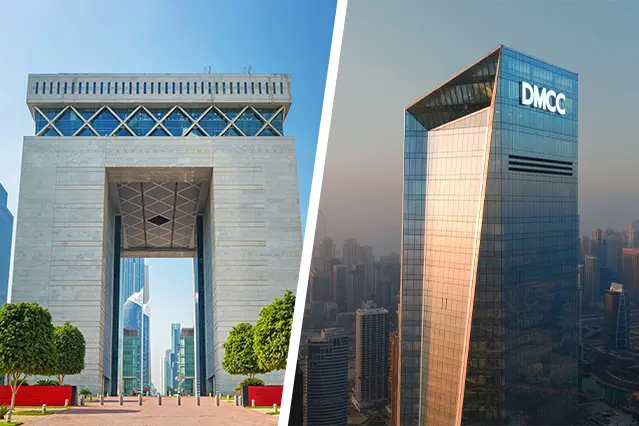
This change is becoming increasingly visible across free zones like the Dubai International Financial Centre (DIFC) and DMCC.
DIFC recently reported continued growth across wealth management, fintech, and financial services, while DMCC has now crossed more than 26,000 member companies. The finance hub in Dubai has already attracted 775 firms as part of the first-quarter surge. The numbers themselves matter, but what matters more is what they reflect. Companies are committing to the UAE with a longer-term mindset instead of treating it as a short-term destination for expansion.
This broader shift is also reflected in the growing volume of setup inquiries coming from businesses across Asia, Europe, and other international markets. These organizations are evaluating structures across the DIFC and DMCC for regional operations.
Regulatory Stability Is Becoming a Bigger Decision Driver
One of the reasons behind this momentum is that the business environment in the UAE has become significantly easier to access compared to even five or six years ago.
The introduction of wider foreign ownership flexibility changed the equation for many overseas investors. Businesses no longer feel the same level of structural limitation that previously existed in certain sectors. At the same time, the regulatory framework has matured in such a way that it gives international companies greater clarity regarding operations.
DIFC continues to stand out particularly for regulated businesses and financial institutions. Companies operating in investment management, fintech, private capital, and advisory sectors are often drawn to the fact that DIFC operates under its own common law framework with an independent court system. For many leadership teams, that familiarity is crucial, particularly when they build long-term regional structures.
DMCC, meanwhile, has evolved well beyond its original commodity-oriented identity. While trading businesses still form a large part of the system, a visible growth has emerged in:
- · Technology firms
- · Consulting companies
- · Distribution businesses
- · Cross-border service providers
A large share of recent interest is coming from South Asian and Asia-Pacific businesses looking to manage Middle East and African operations more efficiently from Dubai.
Tax considerations are also part of the discussion, although not always in the traditional sense. Businesses today are increasingly focusing on predictability, access to treaties, and long-term operational alignment, particularly after global tax developments linked to OECD Pillar Two.
Companies Expanding into the UAE Are Thinking Long Term
The type of businesses entering DIFC and DMCC is also evolving. The current wave includes:
- · Family offices building regional investment platforms
- · Financial services firms establishing regional headquarters
- · Technology businesses centralizing operations
- · Commodity groups expanding international trade structures
What stands out is that many of these businesses are not entering the UAE experimentally. They are building operational structures with the expectation that Dubai will remain part of their regional strategy for years to come.
“Earlier, many companies approached the UAE primarily for market access,” said Mr. Johnson Rajan, Partner at IMC. “Now the discussions are more strategic. Businesses are evaluating governance structures, regional coordination, and how Dubai fits into their long-term operating model across multiple markets.”
Supporting Businesses Through Setup and Compliance
IMC offers a comprehensive range of services to businesses establishing operations across DIFC and DMCC. The professionals specialize in incorporation and regulatory coordination, while providing assistance with licensing and post-incorporation compliance management. The firm also offers valuable advice on broader cross-border structuring considerations associated with regional expansion.
IMC is a collaborating firm of Andersen Global.
About IMC
Founded in 1981, IMC is a cross-border advisory firm with offices across the UAE, Singapore, and India. The firm provides tax, accounting, business setup, regulatory compliance, transaction support, and corporate advisory services. IMC collaborates with Andersen Global, an international association of legally separate, independent member firms.