PHOTO
Abu Dhabi: The Emirates Drug Establishment (EDE) has shed light on the growing role that startups and advanced technologies play in driving pharmaceutical innovation during its participation in Make it in the Emirates 2026.
The Establishment showcased a national approach aimed at building an advanced industrial base capable of strengthening pharmaceutical security, enhancing competitiveness, and opening wider avenues for knowledge transfer and future technologies.
This approach aligns perfectly with EDE’s regulatory mandate to develop an innovation-enabling environment by accelerating procedures and promoting the flexibility of regulatory frameworks, enabling startups to grow and scale within an integrated pharmaceutical ecosystem.
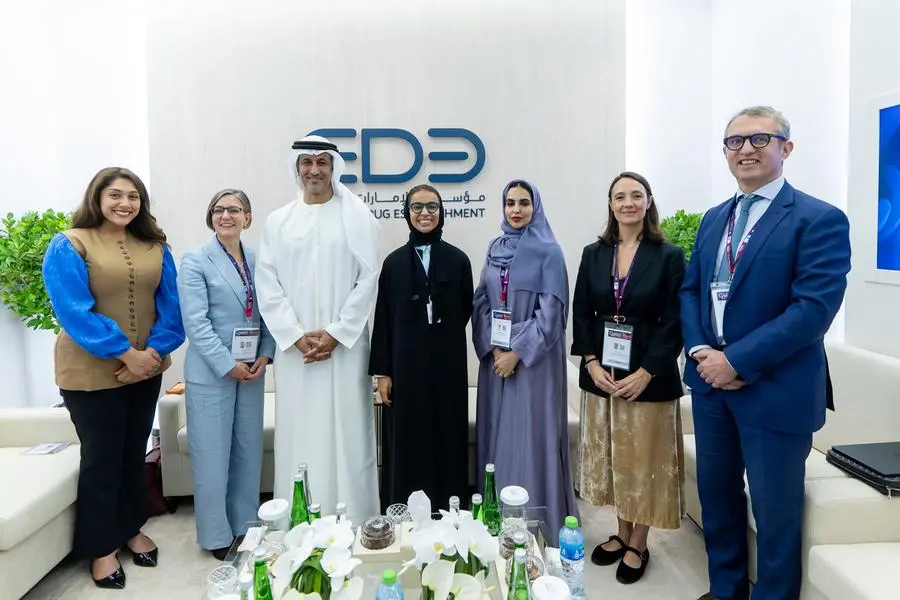
EDE's pavilion at the exhibition has drawn significant interest from pharma startups, many of which are showcasing genuinely innovative approaches to medical product development.
One standout is HIBA Pharma, which is making strides in speciality treatments, particularly in oncology. Another is the Bee Factory for Hearing Aids Production, which reflects how innovation is also finding its way into assistive medical solutions and specialised technologies.
As part of the Emirates Drug Establishment's efforts to strengthen international cooperation in the fields of pharmaceutical industries and health innovation, His Excellency Saeed bin Mubarak Al Hajeri, Minister of State and Chairman of the Board of Directors of the Emirates Drug Establishment, held a meeting with the Institute for Healthier Living Abu Dhabi (IHLAD), a specialized centre focused on healthy longevity medicine, preventive medicine, and precision medicine.
The meeting, which was attended by Her Excellency Dr. Fatima Al Kaabi, Director-General of the Establishment, explored opportunities for collaboration in the areas of innovation and research related to community health and advanced medical technologies. The discussions also reviewed recent initiatives aimed at enhancing quality of life and supporting the sustainability of the UAE's pharmaceutical sector.
Separately, Al Kaabi held a series of strategic meetings with a number of international partners and representatives of major global pharmaceutical companies, including Sandoz and Johnson & Johnson.
The meetings discussed opportunities for cooperation in developing pharmaceutical and medical industries, enhancing pharmaceutical innovation, supporting research and development, and exchanging expertise, thereby ensuring the sustainability of the healthcare sector and strengthening the pharmaceutical security in the UAE.
During the event, Dr Al Kaabi signed a memorandum of understanding with Mohamed bin Zayed University of Artificial Intelligence, represented by Professor Timothy Baldwin, Provost and Professor of Natural Language Processing of the University.
The agreement aims to accelerate digital transformation in the pharmaceutical sector by integrating artificial intelligence into research and development, advancing data-driven studies, and enabling more efficient drug pricing policies.
It also seeks to leverage applications in genomics and pharmacogenomics, supporting enhanced healthcare system performance and driving innovation in medical products.
EDE's pavilion also welcomed a number of official figures and delegations, who took time to look at the models on display. Many praised the pavilion for how seamlessly it brought together advanced regulation, manufacturing, and innovation, describing it as a model that embodies the UAE’s vision of building a knowledge-based and sustainable industrial ecosystem.
The Establishment stressed that its presence at 'Make it in the Emirates 2026' is very much part of a comprehensive institutional approach aiming to connect regulatory policies with real industrial and investment opportunities, strengthen ties between the pharma sector and related industries, and build a more resilient and sustainable national pharmaceutical system in line with 'We the UAE 2031' and the 'UAE Centennial 2071.'