8.5 million children in the region remain excluded - many of them girls from poor communities or children affected by conflict
More than half of primary school age children not learning while in school
Compilation of data and analysis will help direct the future of education policy in the region.
Dubai, UAE, 9 February 2014: A new report published today by the Brookings Institution highlights significant challenges in the quality and availability of education across the Arab World.
Drawing on statistics from several globally respected education indicators, the report, Arab Youth: Missing Educational Foundations for a Productive Life, is accompanied by an interactive Arab World Learning Barometer, available online at www.brookings.edu/arabworldlearning.
The new report highlights several important findings:
- 3.1 million fewer children are out of school since 2002 in the Arab region - but 8.5 million children remain excluded. Many of them are girls from poor, rural communities often living in regions affected by conflict.
- More children are finishing primary school than ever before, yet in many countries more youth are dropping out of lower secondary school than a decade ago.
- More than half of the region's children and youth are failing to learn, as measured by literacy and numeracy scores on international tests. Girls are performing better than boys overall. The average proportion of children not learning while in school stands at 56% at primary level and 48% at lower secondary level.
- There is a mixed, or "boomerang," dynamic for girls. While girls are less likely to enter school than boys, they are more likely to make the transition from primary to secondary education, and they tend to outperform boys in terms of learning. However, despite significant investment and better performance in education, young adult women are much less likely to be employed than are men.
- There are multiple gaps in education data in Arab countries--only a small handful of countries systematically measure literacy and numeracy at both the primary and lower secondary levels.
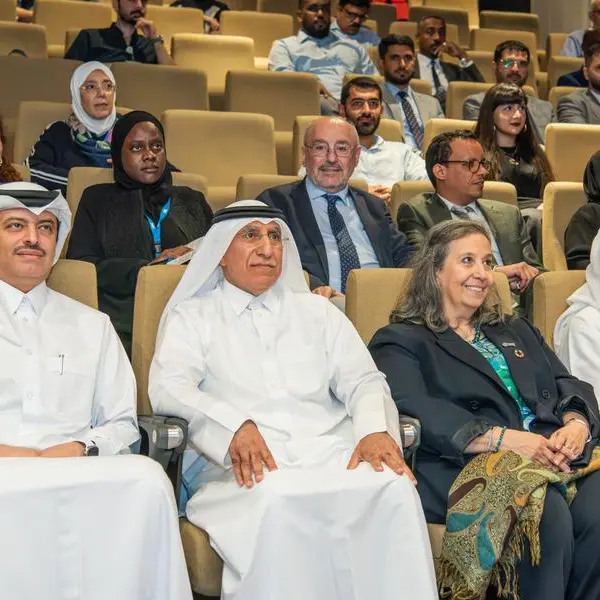
Leading international education experts have gathered in Dubai to unveil the study at a launch event jointly hosted by the Brookings Institution, and the world's largest learning company, Pearson.
Indicatorsexamined by the Arab World Learning Barometer include the number of out-of-school children in the Arab region from 2000 to 2011;enrolment and progression rates of students through the school system; education quality; and the pervasive inequalities at a country level that affect levels of educational achievement.
MaysaJalbout, one of the report's authors, said:
"The median age of the population in the Arab region is just 22 years, and this large youth population comprises more than 30 per cent of the population. Ensuring that this growing youth demographic has access to quality education that equips them with relevant skills for the work force will be central to ensuring the region's continued economic and social development. Creating effective education systems across the Arab World will require a coordinated response from many different stakeholders. While education needs to be made more relevant to employment, education policies also need to be accompanied by initiatives that lead to economic growth and employment generation. We hope the Learning Barometer will help inform regional governments' policy choices as they seek to address these challenges".
The former Prime Minister of Australia, and non-residential fellow of the Brookings Institute's Centre for Universal Education, the Honourable Julia Gillard, pointed to the importance of the Barometer during a recent visit to the UAE. Whilst making a lecture at the Emirates Centre for Strategic Studies and Research, Ms Gillard noted the role the Barometer will play in directing the future of education in the Arab region, saying the Barometer was:
"A major piece of work that charts the quality of education in the Middle East...(and) there is so much we do not know about the performance of schools, (with) so many big gaps in the data".
Mr FadiKhalek, Pearson's Vice President of Strategic Partnerships and Efficacy in the region said that filling these data gaps should be a priority:
"There is certainly some good news in this report: education access in the Arab region has expanded significantly in the past several decades. More children than ever before are finishing primary school, with 3.1 fewer children out of school than in 2002. This is in part to due to substantial investments in education.
"However, significant problems persist including high drop-out and repetition rates;low levels of education quality, learning and relevant skills acquisition; and entrenched inequities in education across particular groups.
"This vital new report shows we simply lack the data to assess how well children are learning in the Arab World. All governments ought to commit to recording and sharing more data, so that we can really understand where the world's biggest educational crises lie, and then find ways of resolving them.
"Pearson has publicly committed to making a positive, measureable impact on learning outcomes around the world. The data contained in the Arab World Learning Barometer will help all of us concerned with education in this region to work together to solve the biggest learning".
About the Arab World Learning Barometer
The Arab Learning Barometer compiles relevant data regarding access to education and the quality of education in the Arab World, providing an accessible and comprehensive look at key learning indicators and contextual challenges in the region. By drawing together multiple assessments and information sources, the authors of the Arab Learning Barometer hope to increase the availability of learning indicators available in the region. The Barometer will also help contribute to global discussions on the region's education issues through an interactive, visual representation of information and the provision of robust evidence and analysis.
The Arab Learning Barometer is the second regional learning barometer from a series generated by the Brookings Institute's Center for Universal Education (CEU). The CEU develops and disseminates effective solutions to the challenges of achieving universal quality education and offers a forum for research, high-level dialogue, and public debate on a range of issues relevant to education in developing countries. The first Brookings' regional barometer, the Africa Learning Barometer, was completed in September 2012 and profiles the extent of the learning crisis across sub-Saharan Africa.
About the Brookings Institute and the Centre for Universal Education:
The Center for Universal Education (CUE) at the Brookings Institution is one of the leading policy centers focused on universal quality education in the developing world. CUE develops and disseminates effective solutions to achieve equitable learning, and plays a critical role in influencing the development of new international education policies and in transforming them into actionable strategies for governments, civil society and private enterprise.
About Pearson:
Pearson is the world's largest learning company, operating in more than 80 countries around the world, bringing powerful learning solutions to millions of learners every year. Pearson takes learning personally. Our courses and resources are available in print, online and through multi-lingual packages, helping people learn whatever, wherever and however they choose. Our digital learning products and services are changing the learning landscape all around the globe and our qualifications are positively transforming the futures of learners of all ages and backgrounds. To find out more, visit www.pearson.com.
© Press Release 2014