PHOTO
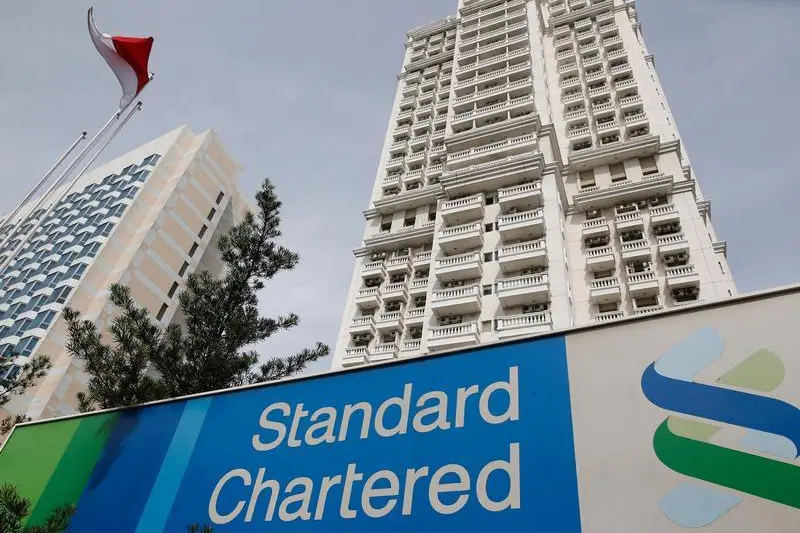
LONDON - A year ago, Standard Chartered Chief Executive Bill Winters touted an “inflection point” for his bank and said return on tangible equity would improve to 10% by 2021. That goal has now been postponed and a generous stock buyback proffered to help tide things over. It leaves investors secure in their gloom.
Winters deserves credit for lifting profitability in a difficult year. As protests rocked Hong Kong and the trade war buffeted Standard Chartered clients, revenue grew 2% to $15.3 billion. Combined with roughly flat costs, and a slight decline in the bank’s tangible equity base, that was enough to boost the return to 6.4% from 5.1% in 2018, excluding restructuring expenses and other one-offs.
Yet 10% may be tough to achieve even by 2022. Ultra-low interest rates will persist, and the economic damage wreaked by the coronavirus could be significant.
Start with tangible equity of around $43 billion, using the median Refinitiv 2022 estimate. A double-digit return would require $4.3 billion of earnings attributable to common shareholders. A 28% tax rate, keeping costs flat for longer and assuming bad-debt provisions of $1.4 billion would require $17.8 billion of revenue to hit the likely cost of capital. That implies rosy 5% compound annual average growth over the next three years.
Who really knows then when 10% profitability will be achievable? A $500 million share repurchase programme announced on Thursday provides a small nudge. So should further capital returns from the sale of a stake in Indonesian lender PT Bank Permata, which Standard Chartered previously said could raise $1.3 billion.
Consistently higher returns are required, however, for the bank’s shares to rise much above their cut-price valuation of about 60% of tangible book value. Winters may believe he has the right strategy and be in the right markets, but there is a costly price to the ongoing expectation of patience.
CONTEXT NEWS
- Standard Chartered on Feb. 27 said it generated $15.3 billion of revenue in 2019, 2% more than the previous year. Adjusted for the bank’s restructuring, underlying pre-tax profit was 8% higher, at $4.2 billion.
- Chief Executive Bill Winters said it would take longer to achieve his previous target of boosting return on tangible equity to more than 10% by 2021. It was 6.4% in 2019.
- The board authorised a $500 million share buyback and said it would consider returning more capital to shareholders after the sale of its holding in Indonesia’s PT Bank Permata. Standard Chartered said in December that an agreed deal with Bangkok Bank, Thailand's third-largest lender by assets, could raise about $1.3 billion.
- The UK-based bank’s Hong Kong-listed shares were up 2.8%, to HK$61.30, at 0630 GMT.
(Editing by Jeffrey Goldfarb and Katrina Hamlin)
© Reuters News 2020