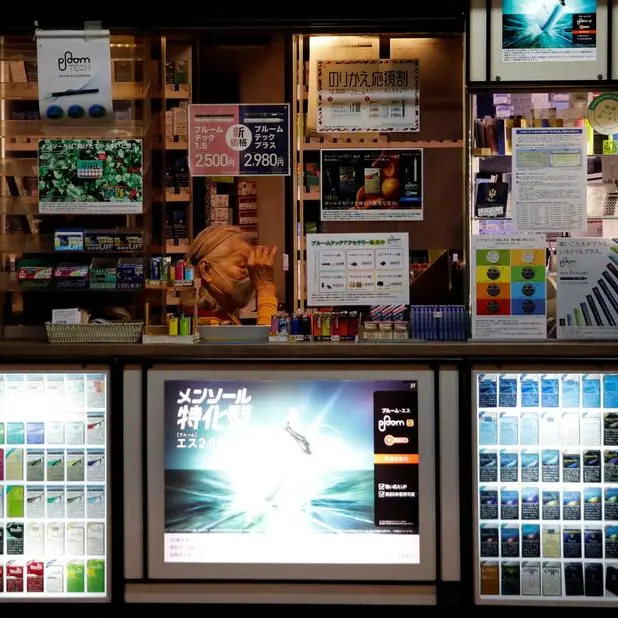
Bahrain's upper chamber is presenting a way out from Parliament’s dispute with the government over allowing tobacco manufacturing to ensure massive investment plans don’t go up in smoke.
The Shura Council will now vote to allow plans to open tobacco manufacturing factories in Bahrain … but it has stipulated products should be for export only.
Plans to open a multi-million dinar tobacco manufacturing plant in Bahrain, creating hundreds of new jobs, appeared to have been stubbed out after MPs rejected the plans in March, despite a committee giving the government a nod of approval only days earlier.
Twenty-nine MPs voted against the move with only four in favour, while the remaining six present of the 40 MPs declined to cast a vote. One MP was absent at the time.
The move comes despite a recommendation to give it the go-ahead following an agreement between the government and MPs on the services committee.
The Shura Council’s services committee has backed its parliamentary counterpart in rejecting plans for tobacco cultivation.
However, it has recommended that the opportunity presented by the new manufacturing plant was too golden an opportunity to miss out on.
However, it stipulated that any product produced should not be sold in Bahrain and should only be exported.
The committee has also overturned a ban on the import, production and distribution of juices for e-cigarettes and e-sheesha.
Industry, Commerce and Tourism Minister Zayed Alzayani said: “In the past, Bahrain was known to be the regional hub for tobacco productions of numerous types with moasil – a ‘sheesha tobacco’– being the most famous.“
Nowadays, our Bahraini-flavoured moasil is being imported from numerous countries like the UAE, Egypt and Jordan. It is being sold using our traditional name tag across the world,” he added.
“We have gotten a request from some investors, from Bahrain and abroad, to open tobacco manufacturing factories in Bahrain with their investments being more than $300 million and offering 400 jobs for Bahrainis, which would be 98pc of the total workforce.
“This move would also help provide beneficiary assistance to our logistics, shipping and cargo sectors.”
He added that opening investment in the field would also help generate revenue for the government and build necessary infrastructure that others could benefit from.
“The infrastructure surrounding the area would ensure electricity and water projects are built amongst other infrastructure,” he explained.
Health Ministry officials told Shura’s services committee in the same meeting that juices were not considered as tobacco under The WHO Framework Convention on Tobacco Control (WHO FCTC).
“We don’t have control over juices since it is not considered tobacco, but that doesn’t mean we cannot monitor the content,” officials added.
“The ministry also inspects cafés and restaurants serving sheesha to ensure they follow service rules and any found violating the rules is referred to the Public Prosecution.”
The Bahrain Anti-Smoking Society fears that by allowing manufacturing in Bahrain the number of smokers would increase too.
Currently it is estimated that 28pc of the total Bahraini adult population smokes tobacco products, just under a third of the population.
This compares with a total of 15.1pc of US adults and in the UAE the figure is estimated at 25.5pc.
“More smoking will increase the cost of healthcare and any investments could be directed towards healthier products,” it added.
“The move contradicts WHO FCTC or else why would tobacco products continue having hazardous materials warnings and associated illnesses?
”The government announced earlier that the biggest investment would be a $200m packaging factory.It rejected amendments by MPs to the 2009 Anti-Smoking Law after being amended will now be voted on by the Shura Council during an extraordinary session on Wednesday.
MPs and the government have been at loggerheads over the suggested legislation for around 19 months.In December 2019, Parliament asked for a study on the pros and cons of allowing tobacco cultivation in the country.
However, the GDN reported in July last year that the services committee was not impressed with the findings, insisting on full details of the proposals, such as the location and size of plantation fields and their production capacity.
The ministers of Health, Industry, Commerce and Tourism and Works, Municipalities Affairs and Urban Planning have stated earlier that amendments to the 2009 Anti-Smoking Law would have positive effects with the products mainly directed towards international markets.
Bahrain’s Cabinet and the Legislation and Legal Opinion Commission earlier expressed their support, which could pave the way for the creation of tobacco plantations and production.
© Copyright 2020 www.gdnonline.com
Copyright 2021 Al Hilal Publishing and Marketing Group Provided by SyndiGate Media Inc. (Syndigate.info).