PHOTO
Tunis – The Higher Committee for Accelerating the Implementation of Public Projects met on Monday morning at the Government Palace in Kasbah, chaired by Prime Minister Sarra Zaafrani Zenzri to review the progress of two major projects: the Tunisia–Italy electricity interconnection (ELMED) and the Mdhilla 2 triple super phosphate (TSP) plant.
At the start of the meeting, the Prime Minister emphasised that the state, under the directives of President Kais Saied, is continuously working to accelerate the completion of all ongoing public projects and initiate new ones, ensuring they are completed with high quality and within the set deadlines.
This will stimulate the national economy, improve the investment climate, create jobs, and open broader prospects for achieving social justice and balanced development in line with citizens’ expectations, she noted.
She stressed the importance of overcoming all obstacles and challenges for every project and finding timely solutions through daily field supervision by all responsible authorities at the central, regional, and local levels, holding fully accountable anyone who neglects their professional duties, whether from the executing entity or the supervising and monitoring body, according to a Prime Ministry statement.
During the meeting, the Tunisia–Italy electricity interconnection project (ELMED) was presented.
The project involves constructing a high-voltage direct current (HVDC) submarine link with a two-way connection between Sicily, Italy, and Nabeul governorate (Mlaabi Industrial Area, Menzel Temime).
The project includes the construction of two conversion stations to convert direct current to alternating current: one in Mlaabi, Menzel Temime, and the other in Partanna, Sicily, along with a subsea cable approximately 200 km long, at a depth of up to 800 meters, with a capacity of 600 MW and voltage of 500 kV DC.
Two landing points are planned on each side, in Kelibia and Sicily, connected via underground cable lines to the conversion stations, along with a continuous communication system and monitoring system for the cable.
This project is a key step in developing electricity exchanges between the two shores of the Mediterranean, strengthening Tunisia’s power system and promoting renewable energy projects.
It will help meet peak demand and prepare for integration into the future Euro-African electricity market.
The Prime Minister highlighted the economic and strategic importance of the Tunisia–Italy two-way electricity interconnection, which aligns with the state’s renewable energy strategy aimed at enhancing national energy security.
Following President Kais Saied’s directives, the strategy encourages electricity production from clean sources, such as solar and wind, aiming to achieve 35% of electricity from renewable sources by 2030, strengthening the country’s energy independence.
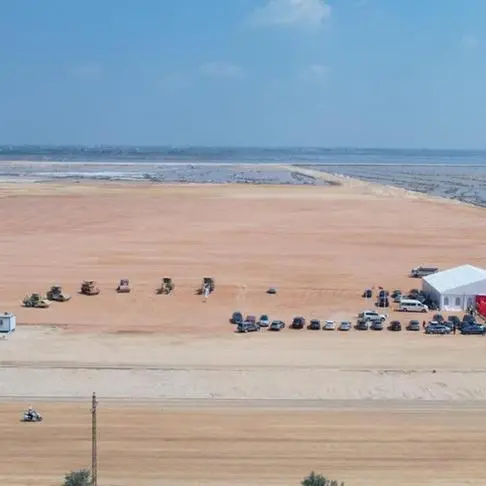
The meeting also reviewed the Mdhilla 2 triple super phosphate plant project, which the Prime Minister described as crucial for revitalising the phosphate sector and transforming it from a mere extractive activity into a high value-added industrial driver, boosting exports, generating direct and indirect jobs and giving a significant push to the national economy.
Given the project’s economic and developmental importance and its expected positive impact once operational, the Mdhilla 2 plant represents a major opportunity to convert natural resources into a source of growth.
In conclusion, the Prime Minister underscored the need to accelerate the implementation of both projects, with strict follow-up through regular and continuous monitoring mechanisms to track progress.
© Tap 2026 Provided by SyndiGate Media Inc. (Syndigate.info).