PHOTO
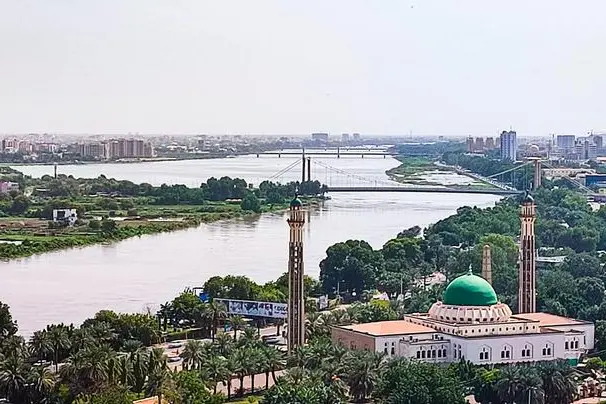
Sudan is emerging as an unlikely economic beneficiary of the geopolitical upheaval triggered by the Israel-US war on Iran, as disruptions in the Strait of Hormuz force Gulf states to rethink supply chains and food security strategies now more than ever, according to Actum Sudan.
Rising shipping costs and constraints on maritime navigation have pushed Gulf economies to seek alternative, nearby suppliers.
Sudan, with its strategic position on the western Red Sea and longstanding agricultural base, is increasingly viewed as a viable substitute for food imports previously routed through more volatile corridors, it stated, citing a senior official.
"“The developments in the Gulf have reshaped supply chains due to tensions in maritime passages," remarked former Sudanese trade minister Al Fatih Abdallah Yousef.
Strategic location a boon for Sudan
"Sudan has not been significantly affected because it lies on the western side of the Red Sea, which gives it a strategic position to serve as a supply hub for Gulf countries, eastern Europe and Asia," he added.
Sudan imports roughly $9 billion annually while exporting between $4 billion and $5 billion, according to Yousef.
He noted that demand for Sudanese goods, particularly livestock and agricultural products, has traditionally existed in Gulf markets, which rely heavily on food imports.
This structural dependence is now being reinforced by geopolitical necessity. Countries such as Qatar, Oman, Bahrain and Kuwait are increasingly turning to Sudan as a food source, potentially boosting export volumes and supporting the country’s fragile currency.
Using the Central Bank of Sudan’s official exchange rate of roughly SDG600 to the dollar, the shift in trade flows could ease pressure on the Sudanese pound if export revenues increase meaningfully, stated the former minister.
Yousef added that Sudan is well-positioned to form “strong economic partnerships”, but warned that success would depend on adopting competitive pricing policies and expanding domestic processing industries to create added value before export.
He also pointed to the potential role of Saudi ports in facilitating trade flows, noting that “the Gulf market is ready to receive Sudanese exports given their high natural quality,” and that current geopolitical conditions could offer a “long-term opportunity”.
Closing the Arab food gap
Economist Mohamed Al Nair argued that Sudan has the capacity to help close the Arab world’s food gap, leveraging its vast agricultural resources and 750km Red Sea coastline.
"The closure of the Strait of Hormuz has increased insurance and shipping costs, placing a heavy burden on global trade," he said.
"At the same time, it has opened opportunities for Sudan to cover supply shortages," he stated.
Unlike other countries more directly exposed to Gulf shipping disruptions, Sudan has maintained relatively stable port operations and trade links with Saudi Arabia and Egypt. This resilience, Al Nair said, could allow it to capture part of the supply deficit caused by the crisis, even as internal conflict continues to weigh on the economy.
Shipping routes adapt to new reality
The logistics sector is already adjusting. Ibrahim Yagoub Malik, a representative of a Sudanese shipping company, said trade flows to the Gulf have increased in recent weeks as firms seek alternative routes and build precautionary inventories.
"Shipping activity to Gulf countries has seen a noticeable increase," he said.
"Companies are looking for alternative routes and building stockpiles in anticipation of delays," he stated.
The disruption of Hormuz has forced some operators to diversify transport modes, including limited use of rail networks, although higher fuel costs and digital transition requirements have added to logistical pressures, said Actum Sudan in its report.
The country's main exports to the Gulf - live and chilled meat - have been partially affected by these challenges, highlighting the fragility of supply chains even as demand rises.
Policy support and export potential
Amin Ali Boushay, economic adviser to the Red Sea state chamber of commerce, said the Iran crisis presents both risks and opportunities for Sudan.
"Tensions in Iran may pressure the Sudanese economy due to reliance on fuel imports," he said.
"But they have also increased demand for Sudanese goods such as livestock, grains and sesame, which has achieved high productivity," he said.
Sudan possesses more than 208 million acres of arable land and around 140 million cattle, positioning it as a major food exporter.
Authorities have introduced measures to support exports, including improvements in port and customs operations and efforts to digitise trade processes.
Boushay said Gulf-led initiatives could further enhance economic cooperation and contribute to stability and development.
Yet the gap between opportunity and execution remains wide. Without reforms to boost productivity, stabilise input costs and improve market access, Sudan’s ability to convert geopolitical disruption into sustained economic gains may prove limited, stated Actum Sudan.
For now, the Iran war has redrawn regional trade dynamics and opened a narrow but potentially transformative window for Sudan to reposition itself as a food supplier to the Gulf, it added.
Copyright 2026 Al Hilal Publishing and Marketing Group Provided by SyndiGate Media Inc. (Syndigate.info).