PHOTO
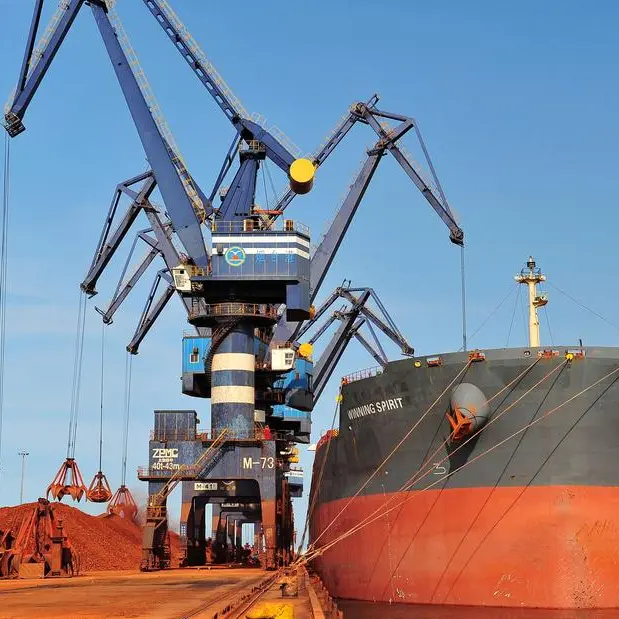
For a region often hailed as the goose that lays the golden eggs, the Niger Delta remains indispensable to Nigeria’s economic fortunes. Rich in hydrocarbon resources, this strategic southern territory accounts for the lion’s share of the country’s oil wealth, which in turn funds the bulk of national revenue and development aspirations. Yet, for decades, the Delta has grappled with militancy, pipeline vandalism, illegal bunkering, and environmental degradation— threats that have repeatedly undermined production targets and national stability. Today, sustained peace and enhanced security measures are unlocking fresh potential, positioning the region as a cornerstone for economic recovery and long-term prosperity.
Achieving the Federal Government’s revenue and growth objectives hinges critically on stability in the Niger Delta. Without secure oil assets, ambitions for increased foreign exchange earnings, budget stability, and diversified development remain elusive. In this context, Tantita Security Services Nigeria Limited (TSSNL), working in collaboration with other security agencies, has emerged as a pivotal player in safeguarding critical infrastructure and fostering lasting peace.
Since its deployment, TSSNL’s pipeline surveillance operations have reshaped the oil and gas landscape. The company’s efforts have contributed to expand production quotas, a sharp reduction in rampant oil theft, and a measurable de-escalation of security incidents across the region. A recent survey highlighted strong local endorsement, with the majority of respondents crediting TSSN’s surveillance initiatives for improved security outcomes.
Decline in violent events in the South-South
Data from the Armed Conflict Location and Event Data Project (ACLED) provides compelling evidence of this positive shift.
Between 2023 and 2025, violent events in the South-South geopolitical zone declined by 20.9 percent. More significantly for human security, the fatality rate linked to these incidents dropped by 8.3 percent over the same period. This improvement stands in contrast to trends in other parts of the country, underscoring the targeted impact of focused security interventions in oil-producing areas.
ACLED tracks various categories of incidents, including violence against civilians, battles between state forces and armed groups, protests, strategic developments, riots, and explosions or remote violence. While the South-East recorded a steeper 26.9 percent drop in overall events, it paradoxically saw an 8.3 percent rise in fatalities. The South-West experienced a 14.1 percent decline in incidents but a 12.21 percent increase in deaths.
In stark comparison, insecurity intensified dramatically in northern regions. The North-West saw a staggering 127.9 percent surge in incidents and a 99.1 percent rise in fatalities. The North-East, already volatile due to long-running insurgency, posted a 19.5 percent increase in events and 26.4 percent more deaths. The North-Central zone was not spared, with incidents climbing 74.1 percent and fatalities rising 38.3 percent.
Nationally, ACLED documented 4,701 incidents in 2023, rising to 5,815 in 2024 and 6,570 in 2025—for a three-year total of 17,086. The North-West dominated with 5,255 incidents across the period, followed by the North-Central (3,656) and North-East (3,011). Southern zones recorded far fewer: South-South totalled 1,886 incidents, South-West 1,719, and SouthEast 1,559.
Fatality figures paint an even grimmer national picture.
Deaths rose from 8,847 in 2023 to 9,862 in 2024 and 12,858 in 2025, totalling 31,567 over three years. The North-East led with 10,485 fatalities, closely followed by the North-West at 10,983. The South-South, however, recorded just 1,203 deaths-399 in 2023, 438 in 2024, and a notable drop to 366 in 2025. Early 2026 data (January to May 23) reinforces the trend: only 158 incidents and 124 fatalities in the South-South, against much higher figures elsewhere.
Experts note that while Nigeria’s overall security environment deteriorated between 2023 and 2025—with the North-West emerging as the primary hotspot and the North-East remaining the deadliest—the southern zones, particularly the Niger Delta, bucked the trend. The South-East saw some elevation in 2023-2024 before declining in 2025. This relative calm in the oil heartland is no accident; it reflects deliberate, terrain-savvy Oil production rebounds to 15-Month high.
The security gains are translating directly into economic deliverables. Data from the Nigerian Upstream Petroleum Regulatory Commission (NUPRC) confirms that Nigeria’s crude oil production hit a 15-Month high in May 2026, surpassing its OPEC quota and reaffirming its status as Africa’s top producer.
Average daily crude output reached 1.53 million barrels per day (bpd), with condensate production adding 170,446 bpd for a combined hydrocarbon total of approximately 1.7008 million bpd. This performance represents 102 percent of Nigeria’s OPEC quota of 1.5 million bpd. It also marks the strongest crude-only figure (excluding condensates) since January 2025 and the highest combined output since July of the previous year.
Such milestones are crucial. Higher production bolsters foreign reserves, supports naira stability, and provides fiscal space for infrastructure, social programmes, and debt servicing. The recovery contrasts sharply with the near-collapse experienced just years earlier, when theft and vandalism pushed output perilously low.
Stakeholder recognitions
Prominent stakeholders have lauded TSSNL’s contributions.
Chairman of the House Committee on Host Communities, Dekor Dumnamene Robinson, emphasised that the company’s efforts and leadership deserve national appreciation. In a strong bipartisan endorsement, the Joint Committee of the House of Representatives on Host Communities and Public Petitions, alongside other stakeholders, commended TSSNL for its “effective and patriotic service” in protecting oil infrastructure.
Lawmakers specifically highlighted the recovery of crude production, reduced pipeline vandalism, and restored peace in host communities under the leadership of High Chief Government Ekpemupolo, widely known as Tompolo. “Tantita Security Services Nigeria Limited, in partnership with NNPCL, has rendered demonstrably effective service in the protection of crude oil pipelines and the recovery of national crude oil production,” the committee stated. They passed a unanimous vote of confidence and urged the Federal Government and Nigerian National Petroleum Company Limited (NNPCL) to renew the surveillance contract on a long-term basis to consolidate gains against theft and illegal bunkering.
“Tompolo and his team have served this country at great personal risk,” one member noted. “They have kept the economic lifeline of the nation running and restored peace to communities that had not experienced peace in decades.”
The National Chairman of Host Communities of Nigeria Producing Oil and Gas (HOSTCOM), His Highness Benjamin Style Tamaranebi JP, echoed this sentiment. He praised President Bola Ahmed Tinubu for entrusting Tantita with a critical security role. “Destroying our oil assets is economic suicide,” Tamaranebi declared.
“It’s a direct attack on the very lifeline of our communities. Our host communities have endured environmental degradation, economic hardship, and neglect for decades.” He described the Petroleum Industry Act (PIA) as a turning point that ensures host communities receive direct benefits.
“Tantita Security Services and other security outfits are crucial in safeguarding Nigeria’s oil assets. Their presence has helped to curb oil theft, improve production levels, and stabilise our national economy.”
Tamaranebi stressed the value of local knowledge: “The unique understanding of the Niger Delta terrain by Tantita and its personnel is vital for effective action against oil theft.” He called on security agencies and stakeholders to recognise the contributions of Tantita and its promoter, describing Tompolo as “our indefatigable Niger Delta crusader” and champion of equitable resource distribution.
Lagos-based social analyst Jamiu Idris provided historical context. “To appreciate the current stability, one must recall the state of near-collapse that defined Nigeria’s oil industry just a few years ago,” he said. “Before the implementation of the TSSNL framework in late 2022, oil production had cratered to a historic low of 1.015 million bpd in September 2022. That decline jeopardised the federal budget, weakened the naira, and pushed the economy toward insolvency.”
Idris and others argue that TSSNLs model—leveraging local intelligence, community engagement, and strategic partnerships—offers a replicable template for addressing insecurity in other challenging terrains.
Broader implications for national development
The Niger Delta’s transformation carries profound implications. Stable oil revenues enable investments in infrastructure, education, healthcare, and alternative economic sectors such as agriculture, tourism, and gas processing. Reduced theft also mitigates environmental damage from spills, supporting sustainable livelihoods for fishing and farming communities long affected by pollution.
Challenges remain. Sustaining these gains requires continuous vigilance, community buy-in, and transparent benefit-sharing under the PIA. Long-term contract renewal for TSSNL, as advocated by lawmakers, could provide the stability needed for further technological upgrades in surveillance—drones, sensors, and data analytics—and deeper integration with formal security architecture.
As Nigeria grapples with multifaceted security threats, the Delta’s success story demonstrates that targeted, locally rooted intervention.
Copyright © 2026 Nigerian Tribune Provided by SyndiGate Media Inc. (Syndigate.info).