PHOTO
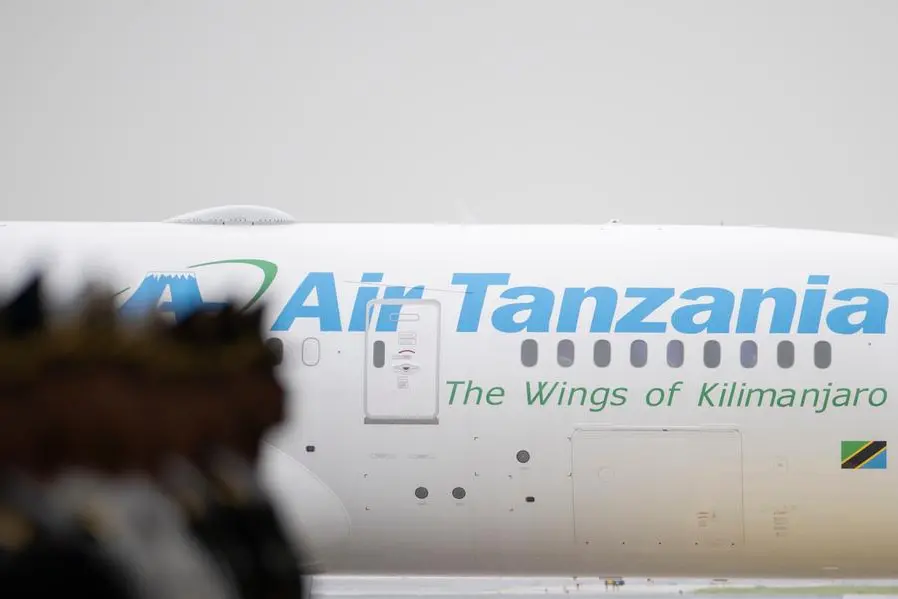
A year after the European Union banned it from operating flights to Europe, forcing it to abandon plans for a service to London, Air Tanzania has reinvented its international strategy by expanding into Eastern Europe, Asia and the Middle East. The airline is expanding rapidly eastwards, launching new routes and increasing frequencies to Russia, Oman, India, China, and the Gulf, as it reshapes its international network.
The latest addition is a direct service between Dar and Moscow, with flights returning through Zanzibar three times a week, every Monday, Wednesday and Friday, starting on July 1. Only two other airlines currently offer non-stop flights from Africa to Moscow: Ethiopian Airlines from Addis Ababa and EgyptAir from Cairo. This makes Air Tanzania one of the few African carriers with a direct link to the Russian capital.
Later this month, the airline is expected to launch direct flights between Dar es Salaam and Muscat, with the return service operating via Zanzibar. This will see Air Tanzania enter a market currently served only by Oman Air. The airline also plans to resume services to Dubai on August 1, increase flights to Mumbai from four to daily, and add a cargo frequency to Guangzhou in China.
For Air Tanzania Company Limited (ATCL), this expansion is about more than making up for the lost European market. The company sees an opportunity in each new destination and growing demand in every expanded network.“Each destination is selected following detailed commercial and operational analysis. Mumbai is an important gateway for business, healthcare and trade,” said Jerry Ngewe, ATCL’s public relations manager and spokesperson. “Guangzhou supports the growing trade relationship between Tanzania and China, while providing significant cargo opportunities. Meanwhile, Moscow opens access to an emerging tourism market and broadens our international footprint.”The eastward expansion comes after the airline was banned from flying to European destinations, putting an end to its plans to launch a service between Dar es Salaam and London, which were central to its long-haul expansion plan. The European Union Aviation Safety Agency (EASA) cited safety concerns when banning Air Tanzania in December 2024 and criticised the Tanzania Civil Aviation Authority for poor standards when banning all Tanzanian airlines in June 2025.
In the latest update last month, Air Tanzania Company Limited (ATCL) and all other Tanzanian airlines remained on the EU’s Air Safety List, meaning they are not permitted to fly to any European destinations, including London.
However, ATCL said that it is not just expanding eastwards because it can, having been locked out of Europe, but because it sees a real opportunity there. “Our expansion is driven by market opportunity rather than geography. Eastern markets currently offer strong demand driven by trade, tourism, investment, and government-to-government cooperation. However, our strategy is balanced and global in outlook,” Mr Ngewe told The EastAfrican.
Analysts agree that there is a real commercial opportunity in the markets that ATCL is exploring and that the carrier might be successful there if it operates well and consistently.“Moscow is a solid opportunity that has never been explored before. ATCL is innovating, setting the pace and leading ahead of the major carriers that might join in later,” said Dickson Omondi, former Kenya Airways head of marketing.
The opportunity lies largely in tourism. According to Mr Omondi, who now works in the hospitality industry, Tanzania has effectively marketed its tourist destinations and is finally receiving global attention.
Since the start of the Ukraine war, which led to multiple sanctions on Moscow, including the banning of its airlines from European and US airspace, tourists from countries such as Russia have also increasingly been travelling to African destinations.“Russian traffic to Africa has been growing since 2022, doubling to destinations such as South Africa. Tanzania clearly wants to attract some of these tourists, either by promoting its own attractions or by offering alternative connections to the wider region,” argued Sean Mendis, an aviation commentator and former operations head at Africa World Airlines.
Historically, Russia has not been a substantial source market for tourism across Africa. Last year, for example, Tanzania received only around 17,000 visitors from Russia, according to the Minister for Tourism, Ashatu Kijaji. A survey by the National Bureau of Statistics showed that, in 2025, more than 75 per cent of Tanzania’s tourists came from just 15 countries, led by the United States, Italy, France, Kenya and the United Kingdom. The absolute number of visitors from these countries was not disclosed. This is changing, however.
Speaking to journalists on ATCL’s inaugural flight to Moscow last week, Ms Kijaji said, “Tanzania is becoming more visible and competitive in new markets”, especially Russia.
After President Samia Suluhu Hassan’s visit last month, Ms Kijaji announced that Dar es Salaam is anticipating an increased number of visitors from Moscow, with projections indicating a surge of over 200,000 tourists this year alone.
Mr Omondi argued that there is anticipated traffic into Dar and Africa as tourism grows from a new segment driven by business and the expansion of BRICS, which is driving a new economic order within Africa. BRICS is a bloc comprising 11 major emerging markets and developing countries.
Initially comprising Brazil, Russia, India, China and South Africa, it has since grown to include Egypt, Ethiopia, Indonesia, Iran, Saudi Arabia and the United Arab Emirates. So far, Air Tanzania says its newly launched and expanded routes are performing well.“We are pleased with the encouraging performance of several recently launched international services, in terms of both passenger demand and cargo uplift,” said Ngewe, though he fell short of disclosing specific load factors or demand on the new routes.
However, the question remains: can the Eastern markets make up for the loss of the European market? Europe is considered more lucrative due to higher demand and greater consumer spending power, which is driven by high average incomes.
Analysts believe that markets such as Moscow, Mumbai, Muscat, Dubai and Guangzhou could sustain the carrier’s long-haul operations, even without Europe. While Europe does have higher demand and spending power, Mr Omondi says that several established carriers are already competing for the same market.“In the East, it is pioneering and tapping into a growing demand that has not yet been explored. In Europe, it would just be splitting the market with more established airlines,” he said.
Nevertheless, the carrier has not given up on its European ambitions. It plans to launch its London flights as soon as the ban is lifted. The government and TCAA are reportedly working hard to address the safety concerns raised by the EU.“London remains one of Air Tanzania’s strategic long-haul destinations,” said Ngewe. “The United Kingdom is an important market for tourism, business, education and the Tanzanian diaspora.”Meanwhile, experts say that its ventures into the east may inspire its peers in the region, such as Kenya Airways and RwandAir, to also try their luck in seemingly booming untested markets.
© Copyright 2026 Nation Media Group. All Rights Reserved. Provided by SyndiGate Media Inc. (Syndigate.info).