PHOTO
Russia has announced that it will present a new proposal to enhance trade and investment in Africa, indicating a shift in its approach or a learning from past experiences in engaging with the continent.
Moscow is set to host the third Russia-Africa Summit from October 28-29, where dozens of African heads of state and government are expected to discuss the future of relations.
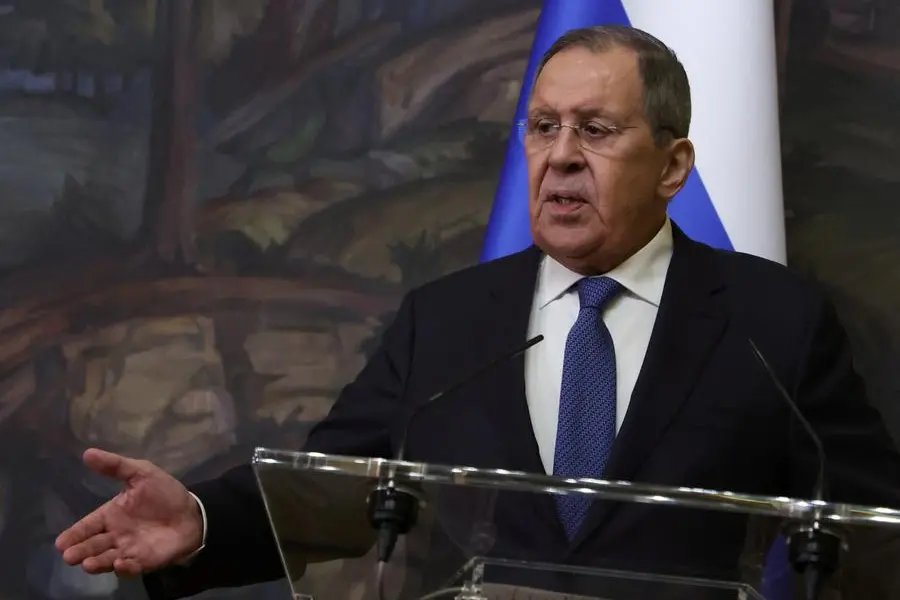
This week, Russian Foreign Minister Sergey Lavrov toured Addis Ababa, home to the African Union headquarters, where he reiterated Moscow’s previous promises of non-interference in internal affairs, solidarity, and shared aspirations. Lavrov also met with Ethiopian government officials, including Prime Minister Abiy Ahmed. This was his first visit to Ethiopia since 2022.
Yet the summit received more attention. Russia has announced that it will propose a new working formula based on an 'economic architecture' with Africa. The aim is to promote trade and investment in food security, fertiliser, energy, digital infrastructure, defence cooperation, and cultural cooperation, including education scholarships, language centres, and humanitarian aid.
Essentially, Moscow wants to increase its sales to Africa, so it will be interesting to hear what other products it is willing to buy beyond minerals. This proposal comes at a time when other world powers, such as China, have offered zero tariffs to African countries with which they have diplomatic ties. The US and the European Union are also negotiating trade deals to take advantage of the African Continental Free Trade Area agreement.
Previous Russian summits have been vague about actual investment in Africa. Both the 2019 and 2023 meetings produced declarations endorsed by both sides, including the Partnership Action Plan for 2023–26. At the time, the leaders said that they would work on joint plans to improve trade.“We have identified the main areas for further joint work and outlined plans to strengthen foreign policy coordination and increase trade and investment flows, as well as industrial cooperation between Russia and the countries of the African continent,” said the declaration in July 2023, after the summit in St Petersburg, Russia.
Implementation of that declaration remains scant, and Russia itself has faced Western sanctions that have restricted its formal business dealings in Africa.
This time, Russian officials say they will propose the Russia-Africa Cooperation Plan 2026-2029.
At a meeting with AU Commission Chairperson Mahmoud Ali Youssouf, Lavrov discussed food security, debt burdens and disrupted supply chains.“The Chairperson of the African Union Commission and the Minister of Foreign Affairs of the Russian Federation expressed concern over the global food security situation, particularly its effects on African countries,” a statement from the African Union said on Tuesday.“They underscored the importance of ensuring the uninterrupted supply of food, fertilisers, and agricultural inputs to African markets and reaffirmed their commitment to strengthening cooperation in agriculture, enhancing food production and resilience, and supporting efforts aimed at achieving sustainable food security across the continent.”Russia had been a key source of fertiliser and grain for Africa. When it invaded Ukraine, the disruption to supplies that followed saw the prices of these products rise significantly. Russia blamed the West.
Yet, beyond grain and fertiliser, Russia has not built wider trade relations beyond the military support it provides to some African countries, such as the Central African Republic, Mali, Niger and Burkina Faso.“Both sides recognised the importance of expanding economic cooperation and increasing mutually beneficial trade and investment flows. In this regard, they encouraged closer engagement between African and Russian public and private sector institutions and welcomed ongoing efforts to strengthen Africa-Russia business cooperation mechanisms.”
Unlike other world powers, which hold regular summits with Africa, Russia’s summits have not always provided specifics, and no figures for actual investment or trade targets have been given. Moscow’s trade with Africa pales in comparison with that of the European Union or China. It is less than a tenth of China’s estimated $288 billion trade volume with Africa, largely because of the lack of networks between African and Russian businesses and Russia’s reputation for engaging mostly on security grounds, which has isolated private sector players.
Some experts argue that Russia’s modus operandi benefits itself just as much as African countries keen to hedge their bets in a multipolar world.“For many African actors, ‘gaining Western attention’ is a good in and of itself, and courting Russian engagement is one surefire means to do so,” argued Frances Z. Brown and Nate Reynolds in a paper for the Carnegie Endowment for Peace earlier this year."Several Sahelian regimes are leveraging Russia to advance their own priorities, generally regime survival and concession-oriented deals. Some are also harnessing Russian information tools."They also argued that instability and opportunism drive Moscow’s engagement, as much as grand plans do, enabling it to deepen political ties with some African countries despite being on the periphery of trade.
This means that Moscow’s provision of security to these countries is also driven by immediate economic and geopolitical imperatives, ensuring the survival of regimes in order to guarantee access to critical natural resources.
Meanwhile, Russia claims that it is not abandoning its long-standing principles in Africa, and continues to advocate African-led and African-owned approaches to conflict prevention, mediation, peacebuilding, and post-conflict reconstruction.
However, previously it expressed support for these issues while also actively promoting mercenary involvement in the Sahel, capitalising on the French withdrawal. However, the actual measure of influence rests on how many African leaders attend the summit in Moscow in October.
In 2023, 17 heads of state and government attended the St Petersburg summit, which was nearly a third of those who attended the inaugural Sochi summit. Russia blamed Western pressure on African countries and sanctions affecting travel for the lower turnout. Some 49 countries were represented in St Petersburg.
© Copyright 2026 Nation Media Group. All Rights Reserved. Provided by SyndiGate Media Inc. (Syndigate.info).