PHOTO
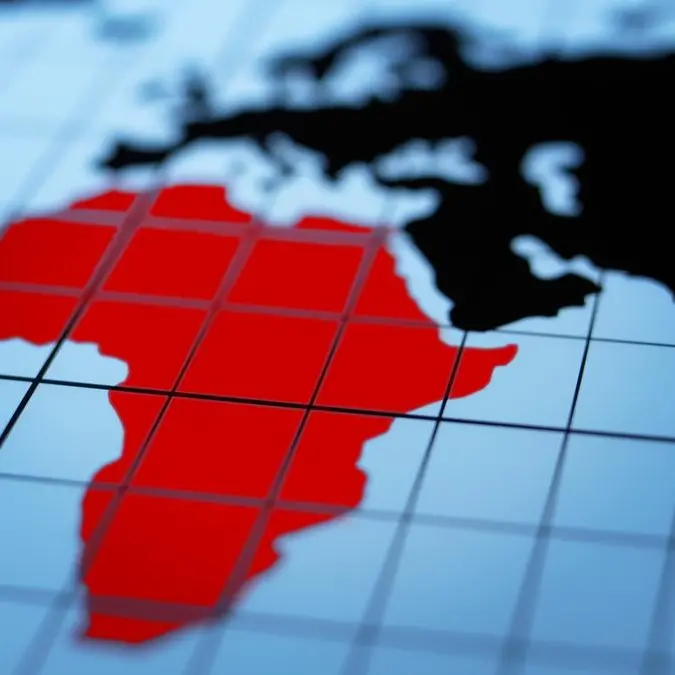
Africa’s displacement crisis is often told through the language of emergency appeals, aid shortfalls and growing camps. But a new study argues that the millions forced from their homes also represent a largely untapped economic force.
The Amahoro Coalition, a coalition of private sector players, says Africa’s 43.1 million displaced people generate about $27.7 billion in annual income through what it describes as a “hidden” economy, challenging the view of refugees and internally displaced persons solely as recipients of humanitarian support.
Its report, Hiding in Plain Sight: Africa’s $27B Displacement Market Opportunity, says displaced communities across the continent are already working, trading, farming and building businesses despite legal, financial and structural barriers.
The social impact group argues that the private sector should treat displacement not only as a humanitarian concern, but also as a market opportunity in agriculture, finance, supply chains and manufacturing.
Rather than viewing displacement solely through the lens of loss, crisis and dependency, the coalition argues that displaced people constitute an estimated $27.7 billion market annually.“They [the displaced] work, trade and create value for themselves and their communities despite facing systemic barriers at every turn. Their resilience is not only admirable; it represents one of the most significant untapped commercial opportunities in Africa,” said Isaac Kwaku Fokuo Jr, a curator at the Amahoro Coalition, in the report’s preface.“Behind humanitarian statistics are viable customers, capable workers, and innovative entrepreneurs. The question is whether the private sector is ready to recognise what has long existed,” he said.
One of the factors holding back displaced people, he notes, is the reluctance of financial institutions, arguing that people living away from home face barriers that are more “structural than inherent”.
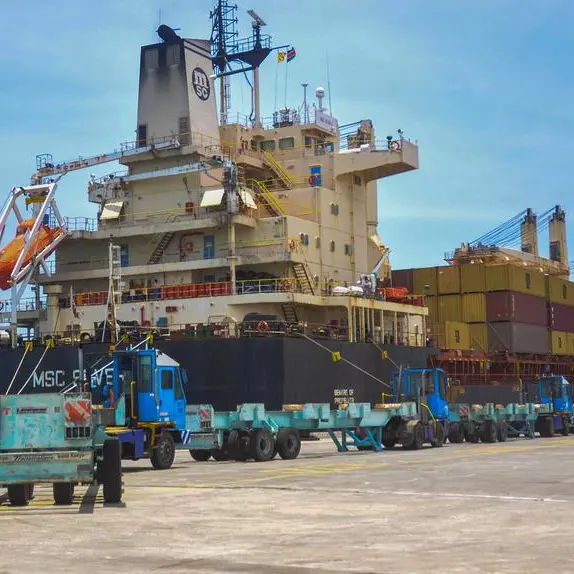
The report identifies agriculture, finance, supply chains and manufacturing as sectors in which displaced people can thrive, highlighting examples from across Africa.
Mr Tito Mbathi, the Amahoro Coalition’s Head of Partnerships, said Africa’s displaced populations represent significant economic potential.“Africa’s displaced communities are not waiting for rescue. They are running businesses, farming land, and moving goods across borders,” he said.
Uganda modelUganda, which hosts the largest refugee population in Africa at about two million people, has sought to tap that potential by giving about 91 percent of refugees access to land to settle and farm.
Uganda’s self-reliance model, the report argues, grants many refugees access to land, freedom of movement and the right to work, allowing settlements to function as production zones rather than holding areas.
More than $200 million has been invested in refugee-hosting districts in Uganda since 2017. The Omia Agribusiness Farmer Hub model, cited in the report, has served more than 49,000 refugee and host-community farmers and channelled more than $413,000 directly to them.
Markets that have emerged around Uganda’s refugee settlements are now home to grain traders, mobile money agents, motorbike mechanics, farmers, tailors, food vendors and young entrepreneurs moving goods between settlements and nearby towns.
Displacement surgeThe scale of displacement across Africa continues to grow.
According to the 2026 Internal Displacement Monitoring Centre (IDMC), sub-Saharan Africa recorded 17.3 million internal displacements in 2025, of which 14.5 million were triggered by conflict and violence, accounting for nearly 45 percent of the global conflict total.
The IDMC says Eastern and Central Africa remain at the centre of the crisis. In the Democratic Republic of Congo, conflict and violence triggered 9.7 million internal displacements in 2025, the country’s highest figure on record and nearly one-third of the global total.
Sudan remained the world’s largest internal displacement crisis for a third consecutive year, with about 9.1 million people uprooted within its borders by the end of 2025, according to the IDMC.
The war in Sudan has reshaped the global displacement landscape. According to the International Organization for Migration’s (IOM) Displacement Tracking Matrix, nearly one in three people in Sudan has been forced from their homes, either within the country or across borders, since fighting erupted in 2023.
UNHCR’s latest Global Trends report says 117.8 million people were forcibly displaced worldwide at the end of 2025, including 41.6 million refugees and others in need of international protection, as well as 68.7 million internally displaced people displaced by conflict or violence.
Read: DRC and Sudan record highest IDP numbersUganda alone hosted about 1.9 million refugees and others in need of international protection, making it both Africa’s largest refugee-hosting country and one of the largest globally.
Business caseAt the beginning of the year, humanitarian agencies warned that 2026 was likely to be grim for the region, with conflict, climate shocks, disease outbreaks, food insecurity and declining aid budgets converging.
Sudan’s war, the long-running violence in eastern Democratic Republic of Congo, renewed instability in South Sudan, and insecurity across parts of Somalia and Ethiopia were all expected to keep displacement high even as donor funding tightened.
While the Amahoro Coalition’s report acknowledges the scale of displacement, it says its objective is to challenge the dominant assumption that displaced people are economically passive.
It estimates labour-force participation among displaced populations at 56 percent and entrepreneurship at 12 percent. On that basis, it projects about three million displaced entrepreneurs and 3.4 million displaced-led micro, small and medium-sized enterprises across Africa, with annual earning potential of about $4 billion.
The report also argues that displaced people have the potential to transform the economies of their host communities.
On mobile money, it notes that “adoption rates in displacement settings frequently exceed host community levels”.
The same applies to access to credit.“Refugee-focused lenders demonstrate [at least] 95 percent loan repayment rates comparable to those of non-refugee microfinance clients, with refugee rates often even better than host-community rates.
This superior performance indicates strong financial discipline and reliability despite challenging circumstances,” the report says.
The Amahoro Coalition produced the report in partnership with Uganda-based DFCU Bank.
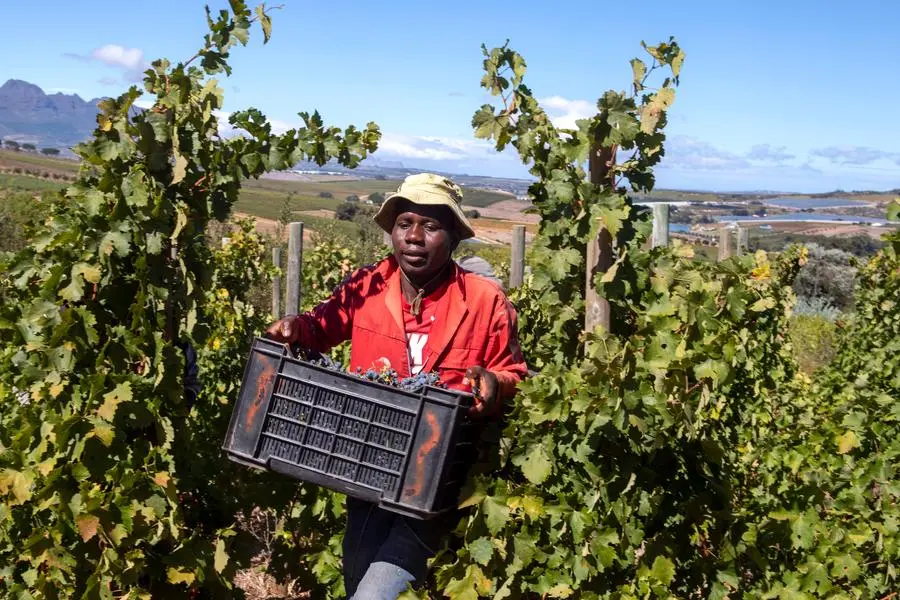
In a press statement, the bank’s Chief Business Solutions and Marketing Officer, Maryanne Wanjiku, said: “This report reinforces what we see across Uganda: Displaced people are not only participants in the economy; they are entrepreneurs, farmers, customers and partners in growth.”Agriculture is identified as another sector with significant potential. The report estimates a $2.4 billion agricultural opportunity if displaced households had adequate access to land, but notes that 88 percent of African countries still lack formal land-access frameworks for displaced people.
Manufacturing also presents substantial opportunities.
The report estimates that displaced workers already active in agro-processing, textiles, repair services, small-scale assembly and light industry could generate $2.8 billion in annual output.
© Copyright 2026 Nation Media Group. All Rights Reserved. Provided by SyndiGate Media Inc. (Syndigate.info).