PHOTO
A fragile return to calm in the Gulf is set to test whether Kenya’s multibillion-dollar Lamu Port has secured a lasting place in global shipping, or merely enjoyed a war-driven windfall.
For months, Lamu was an unlikely beneficiary of the conflict involving Iran, Israel and the United States, as disruptions around the Strait of Hormuz forced vessels bound for Dubai’s Jebel Ali Port to seek safer alternatives.
That diversion sent thousands of luxury and heavy-duty vehicles to Kenya’s newest commercial port, briefly turning a long-struggling infrastructure project into a visible alternative on international shipping routes.
Marine transport experts say the port’s future will depend less on crises abroad than on whether Kenya completes the roads, railways and other links needed to connect Lamu to markets in East and Central Africa.“The recent surge demonstrated what Lamu is capable of, but whether that continues after the Middle East situation normalises will depend on connectivity rather than conflict,” said maritime analyst Elijah Mbaru.
Experts warn that without efficient road, rail and pipeline links inland, cargo owners are likely to return to the region’s traditional ports once shipping through the Gulf stabilises.
The crisis nevertheless delivered what years of marketing and infrastructure investment had struggled to achieve: global attention.
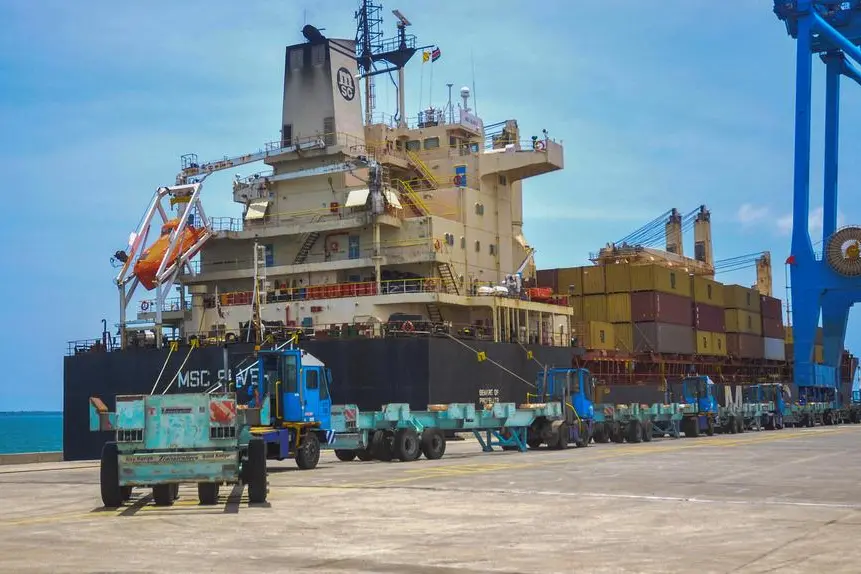
Between March and April this year, more than 6,000 high-end and heavy-duty vehicles, including trucks, tractors and luxury brands such as Porsche, were rerouted to Lamu after vessels encountered disruptions accessing Dubai’s Jebel Ali Port.
The arrival of the vehicles turned the port into a vast temporary storage yard as importers sought to avoid additional charges caused by delays in the Gulf.
Natural advantageThe diversion also highlighted Lamu’s strategic advantages.
Unlike many ports in the region, Lamu was built to accommodate larger container ships than those handled at Mombasa.“Lamu Port is deep enough and well built enough for large ships to sail in with little or no dredging,” said Lamu Port General Manager Abdulaziz Mzee.“Many other African ports require constant dredging to deepen seabeds enough to accommodate mega ships and remain competitive. That is a major advantage for us.”The port’s first three operational berths are each 400 metres long and 18 metres deep, enabling them to receive some of the world’s largest container ships.
Even as some cargo owners begin collecting their vehicles, thousands remain parked in the port’s expansive storage yards.
Mr Mzee acknowledged that while some units have been cleared, most are still awaiting onward movement.
Their prolonged stay has also become an unexpected revenue stream for the Kenya Ports Authority (KPA).
After the 30-day free storage period for transit cargo expired in May, vehicle owners began paying daily storage charges.
Under KPA’s revised tariff structure, vehicles weighing up to 1.5 tonnes are charged $10 a day after the free period. Those weighing between 1.5 and two tonnes pay $15, vehicles between two and five tonnes pay $30, those between five and 10 tonnes pay $80, while heavy vehicles above 10 tonnes are charged $100 a day.
With thousands of vehicles still occupying the yards, the port continues to generate significant revenue from storage in addition to cargo handling and port service fees.
The authority revised its tariff schedule in December 2025 to cover services at both Mombasa and Lamu ports.
Industry observers, however, caution that storage income generated during a crisis cannot underpin the port’s long-term viability.“Lamu cannot depend on wars to fill its yards. Its competitiveness must come from efficient logistics, lower transport costs and strong regional connectivity,” said John Mwangecho, a Mombasa-based clearing and forwarding agent.
Beyond the boomThe Kenya Ports Authority (KPA) appears aware of that challenge.
The authority is accelerating work on the Lamu Port-South Sudan-Ethiopia Transport (Lapsset) Corridor to enable cargo to move inland instead of piling up at the port.
Working with Marsabit and Turkana counties, KPA plans to establish a dry port in Moyale and introduce ferry services across Lake Turkana.
The projects are intended to strengthen links with Ethiopia and South Sudan while extending Lamu’s reach into inland markets.
During a recent inspection of the proposed sites, KPA Managing Director Capt William Ruto said the plans formed part of Kenya’s broader strategy to open new trade routes and deepen regional commerce.“What we are planning is part of the nation’s plan to develop towns along the Lapsset Corridor and support wider trade across the region,” he said.
For Lamu, improving inland connectivity could prove more important than attracting another crisis-driven shipment.
Despite its modern facilities, the port has had an uneven start since it officially opened on May 20, 2021.
Only 12 vessels called at the port during its first year of operation. Traffic fell sharply in 2022, when just four vessels docked, raising concerns over whether the $2.5 billion investment would attract sufficient business.
Activity recovered in 2023, with 36 vessel calls, before declining again to 20 in 2024, when the port handled just over 74,000 tonnes of cargo.
The Middle East shipping disruption dramatically altered that trajectory. Cargo throughput jumped to nearly 800,000 tonnes in 2025 as more shipping lines turned to Lamu as a practical alternative to congested and disrupted Gulf ports.
The conflict gave Lamu the global exposure that years of reforms, investment promotion and diplomatic engagement had failed to achieve.
The increase in vessel calls generated additional revenue from cargo handling, port charges and transport services while creating business for transport firms, vehicle handlers, warehouses and other service providers.
More importantly, the port demonstrated that it could function as more than a complement to Mombasa.
During one of the most difficult periods for global shipping in recent years, Lamu showed it could handle large vessels and receive cargo diverted from established maritime routes.
Next testWhether that role endures will now depend more on decisions made in Nairobi than on events in the Persian Gulf.
If Kenya completes the highways, dry ports, rail links and transport infrastructure planned under the Lapsset Corridor, Lamu could emerge as East Africa’s second major seaport.
If those connections continue to lag, the port may return to the low levels of activity seen in its early years once vessels resume their normal routes through the Strait of Hormuz.
For now, the rows of luxury vehicles still parked in Lamu’s storage yards illustrate how global crises can create unexpected opportunities.
Whether Kenya can turn that opportunity into sustained business remains the bigger test.
© Copyright 2026 Nation Media Group. All Rights Reserved. Provided by SyndiGate Media Inc. (Syndigate.info).