PHOTO
East and North African airlines are navigating a volatile mix of opportunity and constraint as conflict between Iran and the alliance of Israel and the United States ripples through global aviation networks.
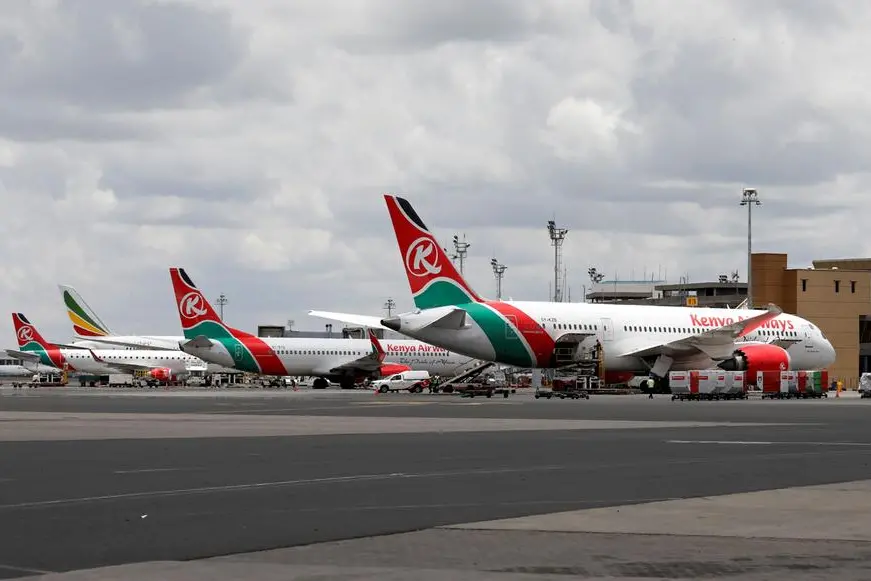
With major Middle Eastern hubs disrupted, African carriers have recorded a temporary boost in passenger traffic, driven by the diversion of transit flows that would ordinarily pass through the Gulf. Kenya Airways, for instance, reported a 30 percent surge in traffic in the early days of the crisis.
Yet industry analysts caution that the uptick may prove fleeting.
Sean Mendis, an aviation expert, argues that while African airlines—particularly in East and North Africa—are benefiting from short-term displacement of transit traffic, structural limitations will quickly reassert themselves.“ No African airline has enough spare capacity to capitalise on this significantly in the medium term,” he noted, predicting a return to pre-crisis patterns once the Gulf hubs resume operations.
At the heart of the constraint is fleet capacity. Most African carriers operate lean fleets with limited redundancy, leaving little room to scale up operations even when demand spikes. This structural rigidity is compounded by the more immediate threat of fuel supply disruptions.
The conflict has raised the prospect of supply bottlenecks linked to the Strait of Hormuz, a critical artery for global oil shipments. Any sustained blockage risks tightening the availability of Jet A-1 fuel, a scenario already weighing on airline operations.
While Kenya Airways reported holding 56 days’ worth of jet fuel reserves earlier in the week, with contingency supplies arranged from India, the reliability of these alternatives is uncertain.
Indian refineries themselves depend heavily on crude sourced from the Gulf, exposing African carriers to cascading supply risks.“More than fuel prices, it is actual availability of jet fuel that is likely to be a constraint,” Mendis explained. “Across much of Africa, aviation fuel is imported by sea and transported inland via road networks, often under just-in-time logistics systems that leave little buffer against disruption. As those margins erode, the risk of grounded aircraft rises sharply.”Attempts to offset rising fuel costs through surcharges offer only limited relief. Such measures, designed to bridge the gap between past ticket pricing and current fuel costs, tend to push fares higher—ultimately dampening demand in price-sensitive markets.
For smaller and less diversified carriers, the impact is even more acute. At Uganda Airlines, the crisis has directly affected its international network. Its Dubai route—one of only three intercontinental services and a key channel for both cargo and passenger traffic—has been suspended since late February.
Chief financial officer Allan Kyeyune notes that the effects of the crisis will not be uniform across the continent. Larger airlines with broader networks and deeper reserves are better positioned to absorb the shocks, while smaller operators face sharper trade-offs.
The disruption is also exposing a longstanding vulnerability in African aviation -- weak intra-African connectivity. Limited domestic and regional networks mean that many airlines remain heavily reliant on long-haul international routes, leaving them exposed to external shocks.
Mendis argues that resilience lies in rebalancing that model. Airlines with the ability to pivot capacity into domestic and regional markets are more likely to weather the crisis better.
Strategic flexibility, rather than sheer size, will ultimately determine which carriers emerge stronger.
Meanwhile, conditions remain fluid in southern Africa. According to Cape Town-based consultancy PlaneTalking, jet fuel prices at coastal airports in South Africa have surged by as much as 145 percent since the start of the month, with further increases expected as inland pricing catches up.
Despite the turbulence, demand for domestic and regional travel remains relatively robust. However, traffic linked to Gulf connections has declined—a global trend reflecting the wider disruption of established air corridors.
Some international carriers are already adjusting. Lufthansa, for instance, has added additional frequencies on its Frankfurt–Cape Town route, redeploying aircraft to capitalise on shifting demand patterns.
Regional operators are also recalibrating. Airlink, Southern Africa’s largest regional carrier says it is monitoring fuel costs closely and adjusting surcharges accordingly, with the option of consolidating flights if conditions deteriorate further.
For now, African carriers find themselves in a narrow window of opportunity—benefiting from a temporary realignment of global traffic flows. But without the fleet depth, fuel security, and network flexibility to sustain that advantage, the current gains may prove as fleeting as the crisis that created them.
© Copyright 2026 Nation Media Group. All Rights Reserved. Provided by SyndiGate Media Inc. (Syndigate.info).