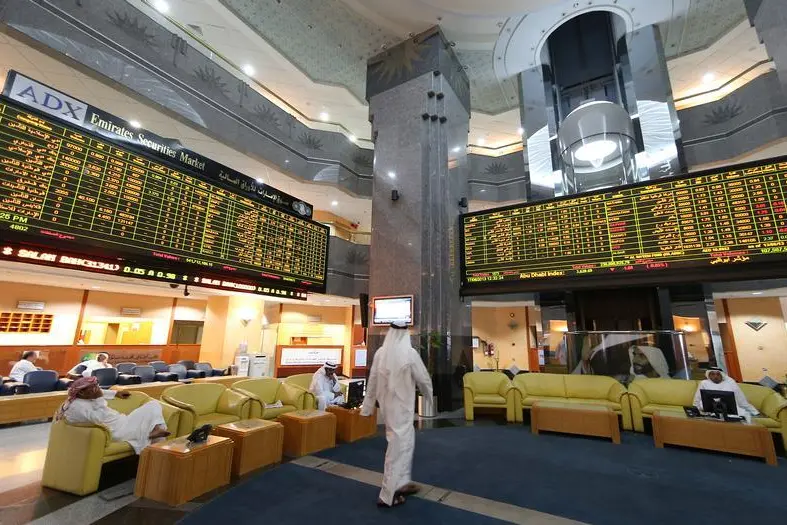
PHOTO
Most Gulf markets ended lower on Thursday after fresh U.S. strikes on Iran, with President Donald Trump warning of further attacks unless a peace deal is secured.
The U.S. and Iran traded airstrikes for a second straight day, with the latest escalation having been triggered earlier this week by the downing of a U.S. Apache helicopter near the Strait of Hormuz, which set off reciprocal strikes across Iran and against U.S. bases in the region.
Tehran closed the Strait of Hormuz after the U.S. strikes. Dubai's main share index declined 0.4%, with blue-chip developer Emaar Properties losing 2.4%.
In Abu Dhabi, the index eased 0.3%.
The Qatari index was down 0.3%, weighed down by a 1.5% slide in the Gulf's biggest lender Qatar National Bank.
Geopolitical tensions continue to weigh on sentiment, but indications that diplomatic talks remain active have helped cushion the impact despite lingering escalation risks, said Joseph Dahrieh, managing director at Tickmill. Saudi Arabia's benchmark index reversed early losses to finish 0.3% higher, helped by a 0.4% gain in oil major Saudi Aramco.
Meanwhile, Brent futures fell $1.10, or 1.2%, to $92 a barrel by 1206 GMT, as traders assessed the actual impact of the renewed hostilities on supply.
Outside the Gulf, Egypt's blue-chip index retreated 0.9%.
- Saudi Arabia rose 0.3% to 11,042
- Abu Dhabi fell 0.3% to 9,546
- Dubai down 0.4% to 5,734
- Qatar lost 0.3% to 10,264
- Egypt dropped 0.9% to 50,819
- Bahrain eased 0.2% to 1,981
- Oman down 0.2% to 7,634
- Kuwait added 0.1% to 9,187
(Reporting by Ateeq Shariff in Bengaluru; Editing by Sonia Cheema and Jonathan Ananda)